Easing Tariff Risks and Improved Semiconductor Earnings Prospects
Sustained Demand for Medium- and Long-Term Bonds
$2.4 Billion Net Inflow Recorded
Last month, foreign investors recorded net investments totaling $4.8 billion in the domestic stock market. Analysts attribute this to continued stock investments driven by expectations of easing tariff uncertainties and improved semiconductor earnings prospects, as well as sustained demand for medium- and long-term bonds.
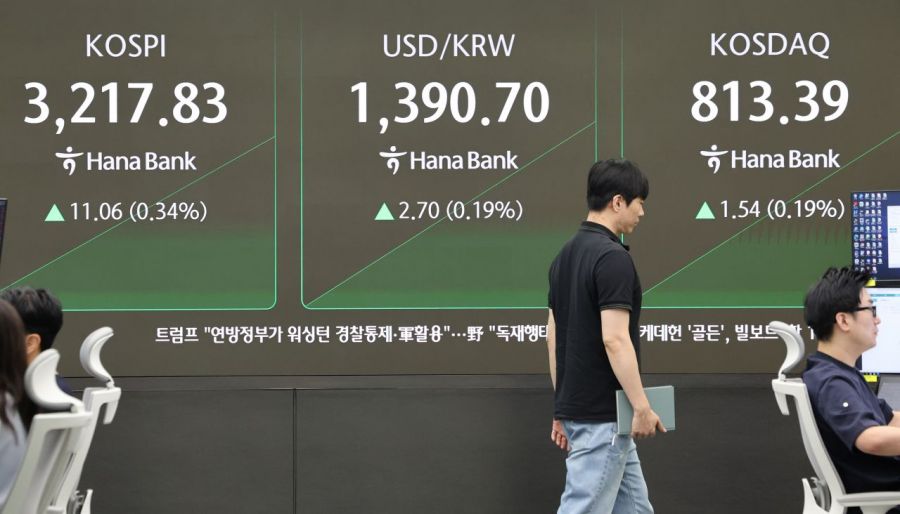
According to the "Trends in International Financial and Foreign Exchange Markets After July 2025" released by the Bank of Korea on August 12, foreign capital posted a net inflow of $4.83 billion into the domestic stock and bond markets last month. This marks the third consecutive month of net inflows. However, the net inflow amount decreased compared to June, when it stood at $5.08 billion.
Stock funds saw a net inflow of $2.44 billion. This trend of net inflows continued for the third consecutive month, supported by expectations for easing tariff uncertainties and improved earnings forecasts for major companies such as semiconductor firms. Bond funds recorded a net inflow of $2.4 billion, marking the sixth consecutive month of net inflows. A Bank of Korea official explained, "Despite the maturity and redemption of Treasury bills, investment demand for medium- and long-term bonds continued, resulting in net inflows at a level similar to previous years." Over the past five years (2020-2024), the average net inflow of foreign bond funds in July was $2.62 billion.
The won-dollar exchange rate rose to 1,387.0 won at the end of July, up from 1,350.0 won at the end of June. As of the weekly closing price on the 11th, it stood at 1,388.0 won. A Bank of Korea official stated, "Following the trade agreement between the United States and the European Union (EU), the euro weakened, and the U.S. dollar strengthened due to robust U.S. economic indicators and the hawkish interpretation of the U.S. Federal Open Market Committee (FOMC) results. As a result, the exchange rate exceeded 1,400 won on August 1. However, as expectations for a Federal Reserve rate cut grew due to weak employment data, the extent of the increase was reduced." The average daily volatility in July was 0.37%, down from 0.64% in the previous month.
© The Asia Business Daily(www.asiae.co.kr). All rights reserved.

















