"What we are selling is not space, but self-esteem"
As China's economy has entered a downturn, the job market has frozen. With the youth unemployment rate in China remaining high at over 14%, it has recently become popular among young unemployed people to pay money to pretend to work at a company. As a result, the number of businesses offering such services is steadily increasing. As it becomes increasingly difficult to find real jobs, some people are choosing to pay to go to an office rather than stay at home. The owner of one such business explained, "What we are selling is not a space, but self-esteem."
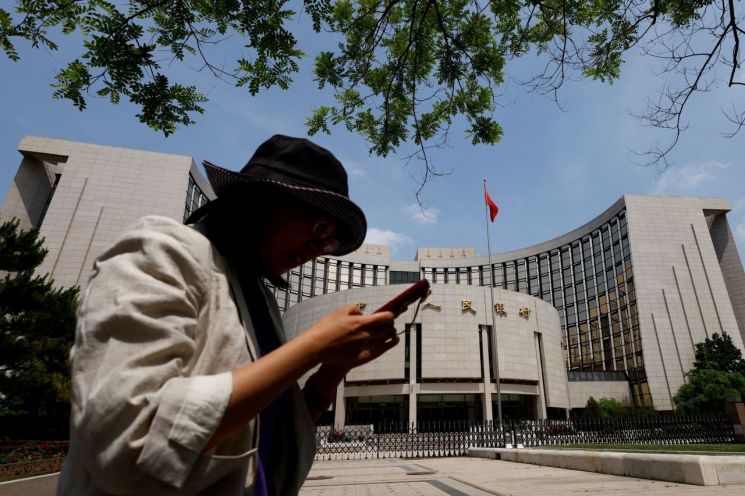 As China's economy slows down, the job market has frozen. With the youth unemployment rate in China exceeding 14%, it has recently become popular among young unemployed people in China to pay money to pretend to work at a company. The photo is not related to the specific content of the article. Photo by Reuters and Yonhap News Agency.
On August 12, the BBC reported that paying to "pretend to go to work" has become popular among young unemployed people in China. So-called "fake offices," which resemble shared office spaces, are rapidly appearing in major Chinese cities such as Shenzhen, Shanghai, Nanjing, Wuhan, Chengdu, and Kunming. Most of these offices are equipped with computers, internet access, meeting rooms, and break rooms, making them virtually indistinguishable from real offices. People who visit these places do more than simply sit and pass the time; they use the computers to browse job postings or work on their own startup plans. The daily fee is about 7,500 KRW. Some offices also provide lunch, snacks, or drinks.
Sui Zhou, 30, is a young person who tried to start a restaurant business but failed last year. In an interview with the BBC, he said that since April this year, he has been paying 30 yuan (about 5,700 KRW) per day to go to a fake office run by a company called "Pretending to Go to Work" in Dongguan, Guangdong Province, about 114 km north of Hong Kong. Zhou said, "I am very happy," adding, "It feels like working as a team with everyone."
The reason for the growing popularity of such facilities is the high youth unemployment rate in China, which exceeds 14%. Even highly educated university graduates are finding it difficult to secure jobs. According to official statistics, 12.22 million university graduates are entering the job market this year alone. Christian Yao, a professor of management at Victoria University of Wellington in New Zealand and an expert on the Chinese economy, explained, "The phenomenon of pretending to work has now become very common in China." He added, "The economic structure is undergoing a transition, and there is a mismatch between the education and employment markets. For young people, these fake offices provide a place to contemplate their next step or do something temporarily during this transitional period, making them a necessary solution."
"What We Are Selling Is Not Space, But Self-Esteem"
The owner of the "Pretending to Go to Work" office in Dongguan is a 30-year-old named Feiyu (an alias). In an interview with the BBC, he said, "I'm not selling a workspace, but the self-esteem of not being a useless person." Feiyu himself became unemployed when the retail business he was running closed down due to the COVID-19 pandemic. He recalled, "I was very depressed at the time and somewhat impulsive. I wanted to change my situation, but I felt powerless."
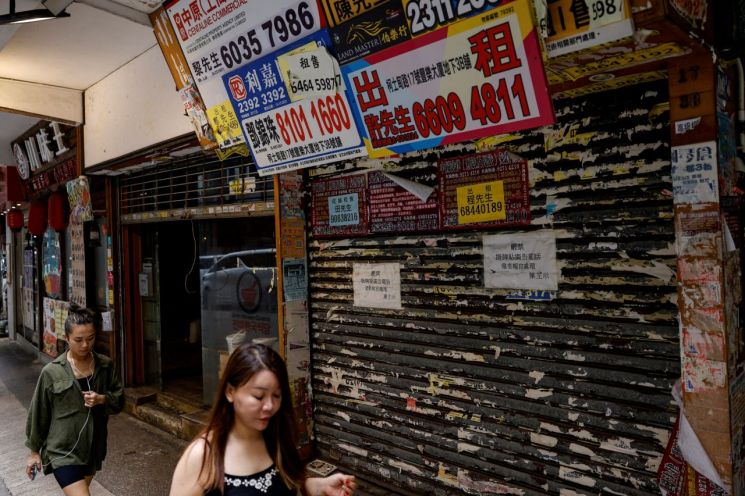 As China's economy slows down, the job market has frozen. With the youth unemployment rate in China exceeding 14%, it has recently become popular among young unemployed people in China to pay money to pretend to work at a company. The photo is not related to the specific content of the article. Photo by Reuters and Yonhap News.
Then, in April this year, he opened a fake office and began advertising the "Pretending to Go to Work" service. Within a month, all workspaces were fully booked, and new members now have to wait. Feiyu said that 40% of his customers are recent university graduates who come to take photos to prove internship experience to their academic advisors. Some visitors come because they feel pressured by their parents. The remaining 60% are freelancers, including employees of large e-commerce companies, online writers, and mostly digital nomads. The average age is about 30.
However, Feiyu expressed doubts about whether this business can be profitable in the long term. He said he prefers to view it as a kind of social experiment. "On the surface, it appears to be a place where people maintain appearances through deception, but some people actually find the truth here," Feiyu pointed out. "If all we do is help customers extend their act, then we are merely complicit in passive deception," he said. He concluded, "This social experiment only becomes meaningful when this fake workplace becomes a real starting point for someone."
© The Asia Business Daily(www.asiae.co.kr). All rights reserved.


















