"Since I left my job earlier this year, I keep coming to the library. If I stay at home, I end up just watching YouTube."
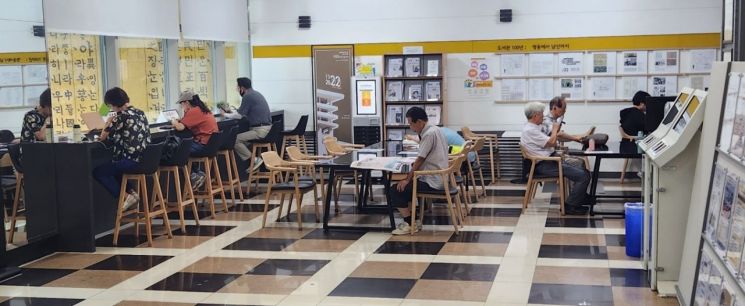
At around 1 p.m. on the 13th, the fifth-floor reading room at Namsan Library in Seoul was bustling. Among the approximately 100 visitors, about 70 were middle-aged or older. The studious atmosphere was reminiscent of a university library during exam season. Mr. Yoon (59), who retired in March after working in manufacturing for 30 years, now visits the library every day to study for the real estate agent certification. Yoon said, "I thought opening a real estate agency would be more stable than starting a cafe or convenience store, so I decided to prepare for it. I also like that there are many people my age here, so I don't feel out of place."
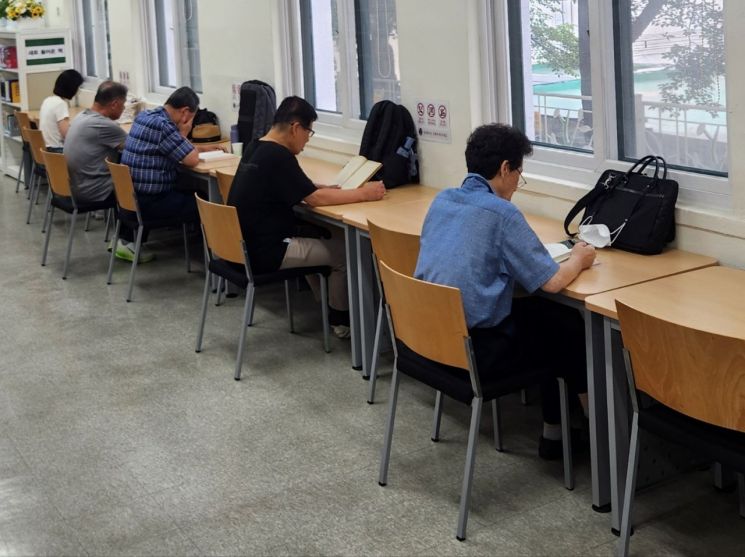
The number of 'active seniors' visiting libraries is gradually increasing. Active seniors are middle-aged and older adults who remain proactive in work, hobbies, and self-development even after retirement. In the past, libraries were mainly considered spaces for young people preparing for exams, but as life expectancy has increased, more middle-aged and older adults are frequenting libraries to prepare for a second chapter after retirement.
According to a recent analysis by the National Library of Korea of members from 1,580 libraries nationwide, the proportion of people in their 50s and those aged 60 and older rose from 7.69% and 4.77% respectively in 2021, to 10.07% and 7.37% this year. Active seniors commonly said, "With longer life expectancy, we come to the library to focus on studying for new job opportunities."
At Yongsan Library that day, Kim Cheolyong (64) was also diligently studying for security guard and housing manager certifications. He said, "Since it's not easy to get a job after retirement due to my age, I'm trying to broaden my opportunities by taking as many exams as possible. I spend more than four hours a day at the library." Son Miyoung (65) is currently studying for a barista certification at Cheongpa Library. Son said, "My dream is to run a small cafe. When I study at home, I keep getting distracted, but at the library, I can really focus."
The enthusiasm of active seniors for job-seeking is also reflected in statistics. According to employment administration data from the Korea Employment Information Service, the number of new job seekers in their 50s and those aged 60 and older last month was 77,000 and 73,000, respectively. This represents an increase of 18.9% and 10.5% compared to the same month last year. These growth rates are steeper than those of other age groups during the same period, such as those under 29 (8.9%) and those in their 40s (7.0%).
Some active seniors also visit libraries for self-development related to financial investment for a stable retirement. At the second-floor reading room of Jeongdok Library, Mr. Ha (61) was reading books about investing in U.S. stocks. Ha said, "Before investing my retirement funds in major U.S. stock markets, I am spending time at the library to study. I want to gain knowledge on which stocks to include in my portfolio and which ones pay dividends."
Commenting on this trend, Professor Heo Joonsu of the Department of Social Welfare at Soongsil University said, "With a lack of opportunities for social participation and suitable activity spaces after retirement, seniors seem to be flocking to libraries. Institutional improvements and support from local governments and the central government should be implemented together to ensure that acquiring certifications actually leads to employment."
© The Asia Business Daily(www.asiae.co.kr). All rights reserved.


















