Sharp Increase in Cases Among Infants and Young Children
Thorough Hygiene Management Urged
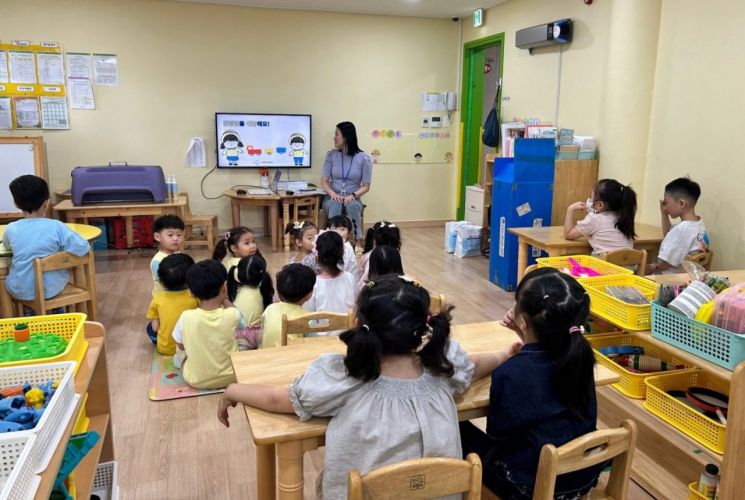 Naju City Public Health Center is visiting daycare centers to provide proper handwashing education. Photo by Naju City
Naju City in South Jeolla Province has urged citizens to practice thorough personal hygiene to prevent the rapid spread of hand, foot, and mouth disease (HFMD), which is spreading quickly among infants and young children during the summer season.
On August 11, Naju City stated that HFMD is currently prevalent and emphasized that adhering to basic hygiene practices, such as handwashing and environmental disinfection, is the most effective way to prevent the spread of infection.
According to the Korea Disease Control and Prevention Agency, from July 27 to August 2 (week 31), 22.7 suspected HFMD cases per 1,000 outpatients were reported at 110 sentinel medical institutions nationwide, representing an 11.8% increase compared to the previous week (20.3 cases).
After steadily increasing for five consecutive weeks since week 23, when the summer season began (3.4 cases), the number of cases temporarily slowed but has recently started to rise rapidly again.
By age group, infants and young children aged 0 to 6 accounted for the highest proportion, with 30.4 suspected cases per 1,000, while children and adolescents aged 7 to 18 recorded a relatively lower rate of 6.6 cases per 1,000.
HFMD is an acute viral disease caused by enterovirus infection and is transmitted through the saliva, nasal discharge, feces, or fluid from blisters of infected individuals.
It is characterized by vesicular rashes on the hands, feet, and inside the mouth, and may be accompanied by gastrointestinal symptoms such as fever, lethargy, loss of appetite, diarrhea, and vomiting.
To prevent HFMD, it is essential to wash hands thoroughly after going outside, before and after meals, after changing diapers, and after caring for patients; to thoroughly wash clothing and bedding contaminated with excreta; and to strengthen hygiene management in group facilities such as daycare centers and kindergartens. In particular, infected infants and young children, who are highly contagious, should refrain from attending daycare or kindergarten until they have fully recovered.
Kang Yonggon, Director of the Public Health Center, stated, "There is no vaccine or specific treatment for HFMD, so prevention is the best approach," and urged, "Please make thorough hygiene management a part of daily life, and we ask for active cooperation from guardians and teachers to ensure that infected children return to daycare or kindergarten only after full recovery."
© The Asia Business Daily(www.asiae.co.kr). All rights reserved.

















