Stock Price Plunges 30% on Disappointing Sales Outlook
"Changing Consumer Preferences... Annual Tariff Impact Reaches 125 Billion Won"
The share price of Crocs, a well-known American footwear brand, plummeted by about 30% in a single day after the company projected that its third-quarter sales would decline by 9-11% compared to the previous year. Analysts attribute this outcome to a combination of shifting consumer preferences and tariff pressures from U.S. President Donald Trump.
"Ugly shoes are out... Demand for sneakers is rising again"
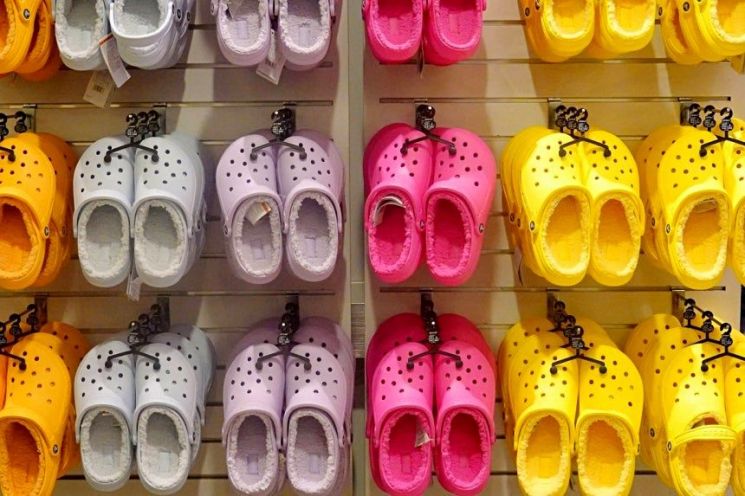
According to the Financial Times (FT) on August 7 (local time), Crocs announced in its second-quarter earnings release that it expects third-quarter sales to decrease by 9-11% year-on-year. Previously, analysts surveyed by Reuters had predicted slight growth. Crocs’ outlook, which fell far short of market expectations, caused its stock price to drop 29.2% by the close of trading that day, marking its lowest point in about three years. The decline was the largest since October 2011.
One factor darkening Crocs’ outlook is the shift in consumer tastes. The “ugly shoe” trend, which had previously brought Crocs significant profits, is no longer resonating in the market. Andrew Rees, CEO of Crocs, stated, “Demand for sneakers is rising again,” and projected that the 2026 North and Central America World Cup and the 2028 Los Angeles (LA) Olympics would work in favor of sports brands such as Nike and Adidas.
Double burden of tariff pressure and weakening consumer sentiment
Tariff pressure is also directly contributing to Crocs’ deteriorating performance. Susan Healy, CFO of Crocs, estimated that tariffs in the second half of this year would cost the company about $40 million (approximately 55 billion won). She also projected that, based on current sourcing regions, the annual impact could reach about $90 million (approximately 125 billion won). The company explained that it is working to manage costs amid rising expenses due to President Trump’s tariff policies, while also reducing discount sales.
CEO Rees commented, “While Crocs enjoys broad popularity, some consumer segments are being extremely cautious about making purchases.” He added, “These consumers are not buying, and they are not visiting stores. Foot traffic is declining,” and predicted that Crocs’ wholesale and outlet divisions?which are especially popular among lower-income consumers?would be most affected. FT analyzed that high interest rates, rising product prices, uncertainty surrounding the Trump administration’s trade and tax policies, and a slowing labor market are all weighing on U.S. consumer spending.
© The Asia Business Daily(www.asiae.co.kr). All rights reserved.

















