Revisiting Resident Training Environment Improvements and Increasing Physician Numbers
Ensuring Young Doctors' Participation in the Innovation Committee to Reflect Voices from the Field
As the government and the medical community have agreed to allow the reinstatement of resigned residents, exceed the existing training quotas, and grant military service deferrals, a large number of residents are expected to return for the second half of the training period, which begins next month. With medical students already returning to classes and residents set to rejoin training sites, the medical conflict between the government and healthcare professionals?which has persisted for nearly a year and a half?appears to be nearing its end.
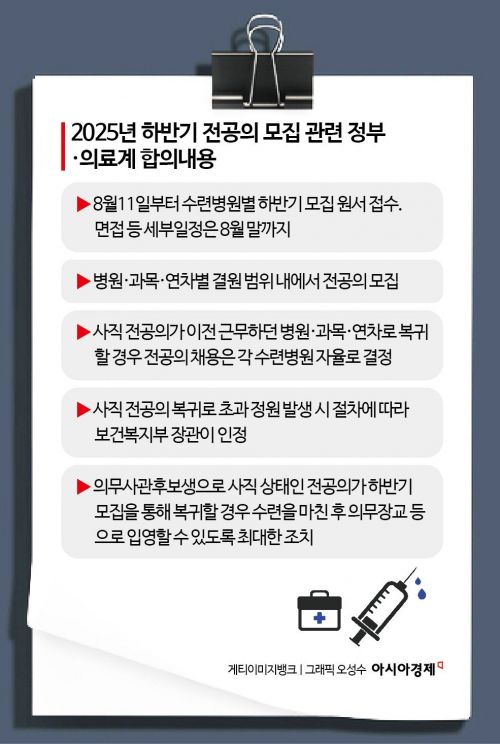
However, even if discussions on the return of residents are concluded, there are concerns that the aftereffects of confusion and conflict within the medical field will be significant. The policy to increase the medical school enrollment quota by 2,000 students has been reversed after just one year, and there is criticism that the process of reinstating residents has provided them with various preferential measures that cannot be justified.
First, the government’s ongoing healthcare reform measures will now enter full-scale discussions. According to the government and the medical community on August 8, the Ministry of Health and Welfare, resident organizations, and training hospitals have agreed to continue biweekly discussions through a consultative body to improve the training environment for residents. Measures to reduce excessive working hours for residents and to enhance the quality of training are expected to be explored. Residents are also insisting on the establishment of leave-of-absence systems for unavoidable circumstances such as pregnancy, childbirth, childcare, illness, or military service.
The issue of medical school enrollment quotas, which triggered the conflict between the government and the medical community, has not yet been properly addressed. At the end of last month, the Medical Workforce Supply and Demand Estimation Committee?composed of representatives recommended by the medical community, civic and patient groups, and academia?was formed. The committee will soon hold its first meeting to estimate medical school quotas for 2027 and beyond, and based on the results, the quota will be finalized by April of next year.
The “National Participation Medical Innovation Committee” (tentative name), which will spearhead medical reforms promised by President Lee Jaemyung, will also be launched next month. Through this committee, the government plans to raise reimbursement rates for undervalued essential medical services such as high-difficulty surgeries and procedures, establish a public compensation system for medical accidents to address the avoidance of high-risk essential care, and develop a legal protection system for doctors who do their best in essential medical fields, thereby building a safety net for medical accidents.
The Ministry of Health and Welfare stated the previous day, “With the recruitment of residents for the second half of the year, we will accelerate key policies to create an environment where doctors working in essential medical fields are given preferential treatment,” adding, “(Even during the innovation committee’s discussions) we will ensure that residents and young doctors who will lead the future of Korean healthcare can fully participate so that the voices from the field are reflected.”
On the other hand, if discussions on establishing a public medical school and introducing a regional doctor system?both campaign pledges of President Lee Jaemyung?gain momentum, there is a high likelihood that strong opposition from the medical community will reignite conflict between the government and healthcare professionals. The attempt to establish a public medical school was also made during the previous Moon Jaein administration but was thwarted by a collective strike by doctors. The government plans to gather public opinion on this issue as well through the National Participation Medical Innovation Committee.
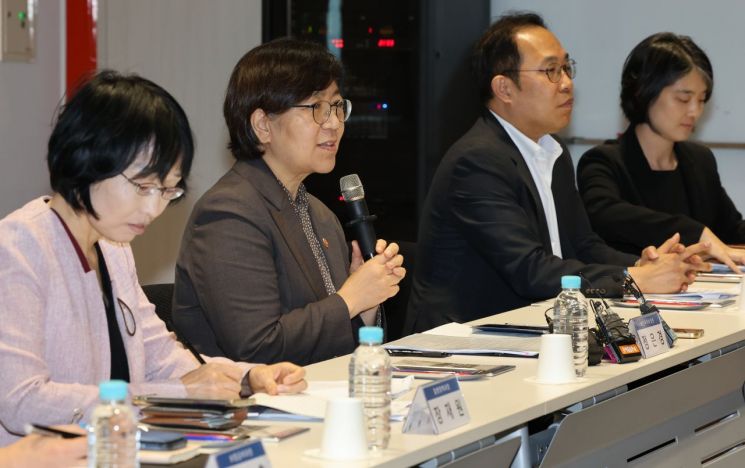
Perhaps mindful of these various obstacles, Minister of Health and Welfare Jeong Eun-kyeong visited a patient advocacy group the previous day and apologized, saying, “I sincerely apologize to the public and patients who have experienced much anxiety and inconvenience due to the year-and-a-half-long conflict between the government and the medical community,” and pledged, “We will firmly strengthen regional, essential, and public healthcare based on restored trust with the public and the medical community.”
Minister Jeong emphasized, “Government healthcare policies have accumulated and become highly complex, making them difficult to resolve easily. There are also issues such as a rapid increase in healthcare costs due to super-aging, and irrational systems like non-reimbursed services and indemnity insurance. We plan to establish a Healthcare Reform Promotion Committee and an Innovation Committee that can comprehensively address these issues, creating healthcare reform measures with participation from the public, healthcare professionals, and various experts.”
© The Asia Business Daily(www.asiae.co.kr). All rights reserved.



















