U.S. Average Tariff Rate Soars from 2.3% to 15.2% Due to Reciprocal Tariffs
Major Countries Including South Korea Accept High Tariffs
Concerns over Slowing Growth Rise within the United States
The "reciprocal tariffs" policy pushed by U.S. President Donald Trump has been increasingly applied to major trading partners, causing the average U.S. tariff rate to soar to its highest level since World War II. While South Korea, Japan, and the European Union (EU) have agreed to a 15% tariff rate, negotiations are still ongoing with China, Canada, and Mexico.
On August 7 (local time), Bloomberg reported, "The United States has effectively begun imposing much higher tariffs than before on most of its trading partners," adding, "As a result, the average U.S. tariff rate has risen from the previous 2.3% to 15.2%." Major foreign media outlets in the U.S. stated, "President Trump is fundamentally shaking the international trade order that has persisted for decades," and described it as "the signal flare for a new era of trade competition."
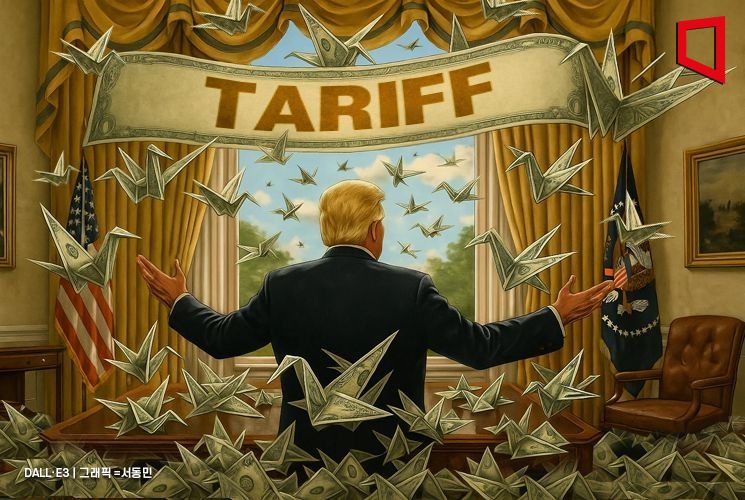
Switzerland has been notified of a 39% tariff, the highest among developed countries, while India has been hit with a 50% high tariff as a retaliatory measure against imports of Russian oil. China, which the U.S. has designated as a strategic competitor, as well as neighboring Canada and Mexico, remain at the negotiating table.
President Trump is emphasizing the reduction of the trade deficit and the revival of U.S. manufacturing. However, concerns over high inflation and slowing growth are mounting within the United States. Amid recent downward revisions to employment indicators and signs of economic slowdown, Wall Street has raised the possibility of a 10% to 15% decline in the S&P 500 index.
The University of Auckland in Australia projected that these measures would cause the U.S. gross domestic product (GDP) to fall by 0.36% and South Korea's GDP by 0.29%. According to the U.S. Treasury Department, tariff revenues reached a record high of $113 billion (about 15.6 trillion won) as of June this year. However, experts are questioning the sustainability of the policy, stating, "Tariff revenue and job creation are difficult to achieve simultaneously."
© The Asia Business Daily(www.asiae.co.kr). All rights reserved.
![Clutching a Stolen Dior Bag, Saying "I Hate Being Poor but Real"... The Grotesque Con of a "Human Knockoff" [Slate]](https://cwcontent.asiae.co.kr/asiaresize/183/2026021902243444107_1771435474.jpg)
















