July Agricultural and Livestock Product Prices Rise 1.4% Year-on-Year in July
"Expanded Meeting for Monitoring Supply and Demand" Held to Discuss Stabilization Measures
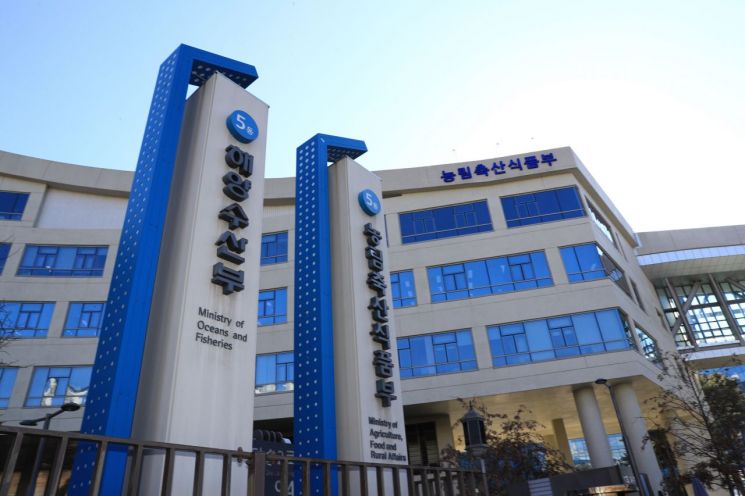
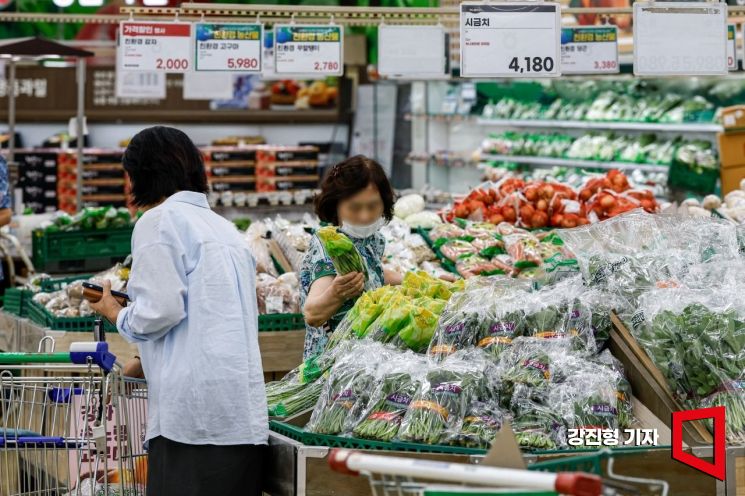
The Ministry of Agriculture, Food and Rural Affairs announced on August 6 that, according to the July Consumer Price Index survey by Statistics Korea, the prices of agricultural and livestock products increased by 1.4% compared to the same month last year (an increase of 1.9% compared to the previous month), indicating that price stability continues.
However, as recent heatwaves and heavy rains have repeatedly occurred, the poor growth of agricultural and livestock products has worsened. In response, the Ministry held an 'Expanded Meeting for Monitoring the Supply and Demand of Agricultural and Food Products' on this day, attended by private sector experts, to discuss trends in production areas and consumer markets, as well as future measures to stabilize supply and demand.
Upon reviewing the production trends of major items, it was found that rice prices remain higher than both last year and the average year, as some distributors in production areas failed to secure sufficient rice during last year's harvest and are now struggling to procure raw grains. To ease the burden on consumers, the Ministry is conducting a rice discount event, offering a 3,000 won discount on the purchase of a 20kg bag of rice until September 30. The duration of this event may be adjusted later depending on trends in rice prices at production sites.
Cabbage production has been further hampered by heatwaves and other factors, leading to worsening crop conditions. In particular, the volume shipped in September, before Chuseok, is expected to increase, while the August shipment volume is likely to decrease due to reduced cultivation area and poor crop conditions, raising the possibility of additional price increases. However, distributors and kimchi companies have increased their spring cabbage storage by 5% compared to last year, which is expected to limit the extent of price hikes. The Ministry plans to strengthen crop management by doubling the supply in July to 200-300 tons per day to wholesale markets and other channels using government reserves (26,800 tons), and by immediately supplying reserve seedlings (2.3 million seedlings in stock) in case of losses due to heavy rain or other damages.
For radishes, carrots, and cabbages, where the cultivation area has increased and prices are expected to remain stable, the Ministry plans to encourage their use as alternative consumer goods to cabbage in cooperation with the National Agricultural Cooperative Federation and consumer organizations.
Lettuce, spinach, and young radish tend to see rapid price increases if high temperatures persist, as their growth is severely affected. In particular, this year, the number of heatwave days in July increased by 4.3 days to 14.5 days compared to last year, affecting the crop conditions of cold-loving vegetables such as lettuce. A Ministry official stated, "For this reason, it is common for vegetable prices to rise in July compared to June every year, and this trend has also been observed this year. However, unlike last year, flood-related damages such as inundation have not been significant this year, and since the growing period is relatively short at around 30 days, we expect that crop conditions will recover quickly if weather conditions improve going forward."
Early-maturing apples are expected to see a slight decrease in shipment volume in August due to heatwaves and insufficient rainfall during the growing season (May to June), which have delayed growth. However, the overall apple production is expected to remain at the same level as last year and the average year, so stable supply is anticipated during peak demand periods such as Chuseok. To prepare for poor crop conditions caused by ongoing heatwaves and heavy rains, the Ministry plans to provide region-specific weather information using the agricultural meteorological disaster early warning system and support the supply of chemicals that can reduce heat damage.
For fruit vegetables, production in the main production areas is favorable, so prices are expected to weaken, especially for cucumbers and zucchini, where shipment volumes have increased. In particular, the shipment volume of watermelons, which saw high prices due to surging demand, is also expected to increase. However, as fruit vegetables are sensitive to sunlight, continued cloudy weather due to rain may limit the increase in shipment volumes. The Ministry plans to strengthen on-site technical support from experts such as the Rural Development Administration and support the supply of chemicals, nutrients, and shading agents to enhance crop management.
The supply of Hanwoo beef has increased compared to the average year but decreased compared to last year, resulting in prices that are lower than the average year but higher than last year. In particular, the price of sirloin, which has seen increased demand due to the issuance of consumption coupons, is on the rise, while prices for other cuts such as brisket and flank are declining. To respond to growing demand, the Ministry plans to increase supply by more than 30% compared to normal levels using National Agricultural Cooperative Federation stocks, and to hold discount events using mutual aid funds to support domestic economic revitalization following the issuance of consumption coupons.
Pork prices have risen slightly due to heatwaves and the outbreak of African swine fever (on July 16), but the supply situation remains stable as inventories of popular cuts such as pork belly and shoulder are higher than last year. Chicken supply is also expected to exceed last year's levels despite damage from heatwaves and heavy rains. In particular, with the resumption of imports of Brazilian chicken, which had been suspended due to avian influenza, the market is expected to stabilize quickly as imports are scheduled to arrive in mid-August, according to the Ministry.
Egg production is expected to increase, leading to price stabilization. Layer farms have increased the number of layers since the beginning of the year in response to the expansion of cage rearing space that will take effect from September. As these layers begin full-scale egg production after September, a significant drop in prices is expected. During periods when prices are higher than average, the Ministry will support reductions in delivery prices to ease the burden on consumers, and will disclose the current supply and demand situation weekly to encourage price adjustments at production sites through negotiations between farms and distributors.
For processed foods, where price increases have been significant due to rising import raw material prices, labor costs, and energy expenses, the Ministry plans to continue expanding the list of items eligible for tariff quotas on imported raw materials. In addition to increasing financial support for the purchase of domestic agricultural raw materials, the Ministry will also collaborate with processing and distribution companies to hold discount events to ease the burden on consumers, and will continue promotional events to help activate public delivery apps with lower fees in order to reduce the delivery fee burden for food service businesses.
Kim Jonggu, Director General of Food Policy at the Ministry of Agriculture, Food and Rural Affairs, stated, "Despite adverse weather conditions such as heatwaves and heavy rains, we will thoroughly analyze and manage risk factors at every stage from production areas to consumer markets to prevent sudden changes in the supply and demand of agricultural and livestock products. We also ask producer groups and distributors to cooperate with the government's supply and demand management efforts to ensure the stable supply of food for the public, so that agricultural and livestock products held in private storage can be supplied stably to the market."
© The Asia Business Daily(www.asiae.co.kr). All rights reserved.
![Clutching a Stolen Dior Bag, Saying "I Hate Being Poor but Real"... The Grotesque Con of a "Human Knockoff" [Slate]](https://cwcontent.asiae.co.kr/asiaresize/183/2026021902243444107_1771435474.jpg)












