KRISS Develops Core Component for Radar Stealth Performance Using Purely Domestic Technology
Technology Transferred to Korean Defense Company
Securing a Technological Foundation for Self-Reliant National Defense
Core technology for 'radar stealth', which is essential for domestic production of stealth weapon systems that are difficult to introduce even overseas, has been developed by a Korean research team.
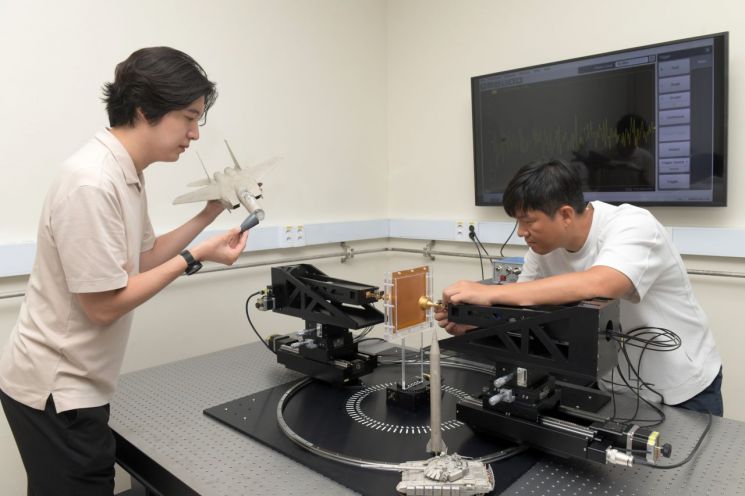
The Korea Research Institute of Standards and Science announced on the 5th that it has successfully developed its own 'frequency selective surface (FSS) design software' for radomes?which are essential for realizing radar stealth?and 'electromagnetic wave evaluation and verification equipment.' The FSS is a planar structure that allows electromagnetic waves of specific frequencies to pass through while reflecting or blocking others.
This technology forms the foundation of stealth technology, which absorbs or disperses electromagnetic waves to prevent detection by enemy radar. Aircraft or vessels equipped with stealth technology are difficult to detect by radar, significantly increasing the likelihood of successful covert operations.
Countries that already possess this technology classify it as a military strategic technology and strictly control its export. Even related software and testing equipment are difficult to import, making it challenging for latecomers to catch up.
A radome is a hemispherical structure that encloses the radar or communication antenna of an aircraft or missile. It must be precisely designed to protect the antenna from external environments while allowing necessary electromagnetic signals to pass through effectively. In particular, defense radomes must satisfy multiple requirements simultaneously, such as electromagnetic wave transmittance and phase stability, while withstanding intense heat and shock during high-speed flight.
The entire process?from design and prototype production to performance verification?was developed using purely domestic technology, and the related software has also been secured.
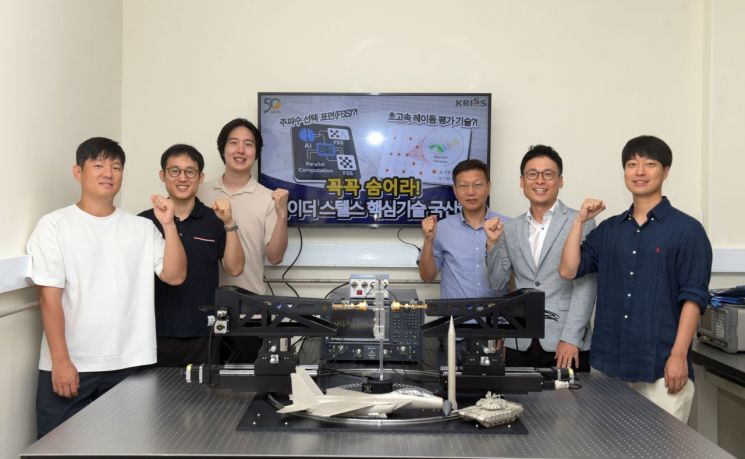
Currently, widely used commercial software worldwide costs over 100 million won per license, with annual maintenance fees exceeding 20 million won.
The Korea Research Institute of Standards and Science has transferred the technology developed this time to KER, a company specializing in advanced defense weapon systems and electromagnetic wave precision measurement equipment, for a technology fee of 500 million won.
Dr. Hong Youngpyo stated, "The technology developed this time can be applied not only in the defense sector but also in various radar application industries such as mobility, shipbuilding, and aerospace."
© The Asia Business Daily(www.asiae.co.kr). All rights reserved.


















