Tax Deductions Offered for Certain Animals
As Controversy Grows, Zoo States "It's Simply the Natural Food Chain"
Aalborg Zoo in northern Denmark is facing growing controversy after requesting donations of pets that have reached the end of their lives or are no longer wanted by their owners. On July 31, Aalborg Zoo posted an official message on its social media account stating, "We are willing to accept animals that have reached the end of their lives for any reason," and added, "Donated pets will be humanely euthanized by trained staff and then used as food for predatory animals." The zoo specified that it accepts pets such as guinea pigs, rabbits, chickens, and even small horses under 147 cm in shoulder height, as long as they are at the end of their lives. Aalborg Zoo houses a variety of predatory animals, including lions, tigers, and Eurasian lynxes.
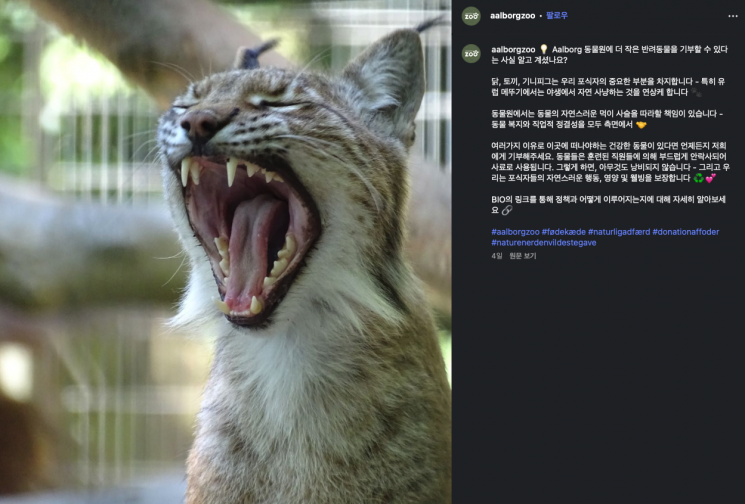 On the 31st of last month, Aalborg Zoo posted on its official social media account stating, "We willingly accept animals that have reached the end of their lives for any reason," and added, "Donated pets will be gently euthanized by trained staff and then used as food for predators." Photo by Aalborg Zoo Instagram
The zoo's post explained, "This way, nothing is wasted, and it ensures natural feeding behavior, nutrition, and welfare for the zoo's predators." It also stated that chickens, rabbits, and guinea pigs can be donated between 10 a.m. and 1 p.m. on weekdays, and up to four animals per person can be donated without a reservation. In addition, the zoo's website describes the procedure for donating horses. According to the website, "Horses are sent to Aalborg Zoo alive, where they are euthanized by both zookeepers and veterinarians before being butchered."
In particular, those who donate horses are eligible for tax deductions. Donated horses must be accompanied by an official document (horse passport) containing information about the horse's identity, health status, and owner, and must not have received any medical treatment for illness within the past 30 days. The value of horse meat is estimated at approximately 1,000 won per kilogram. The zoo added that "the demand for donated pets varies throughout the year, so there may be a waiting period."
Mixed Reactions from the Public to the Zoo's Post
In response, one commenter described this as "a sign of the growing indifference to animals in Denmark," while another wrote, "Feeding pets to carnivores is an absolutely unacceptable and barbaric act." However, some users viewed the zoo's proposal positively and requested more detailed information about the donation process. One person who had previously donated a rabbit to the zoo said, "It was truly a kind and professional experience." Another commenter criticized, "It is contradictory for humans to criticize the zoo's policy while consuming large amounts of meat every day," and pointed out, "Ironically, donating pets to the zoo is closer to following the natural order."
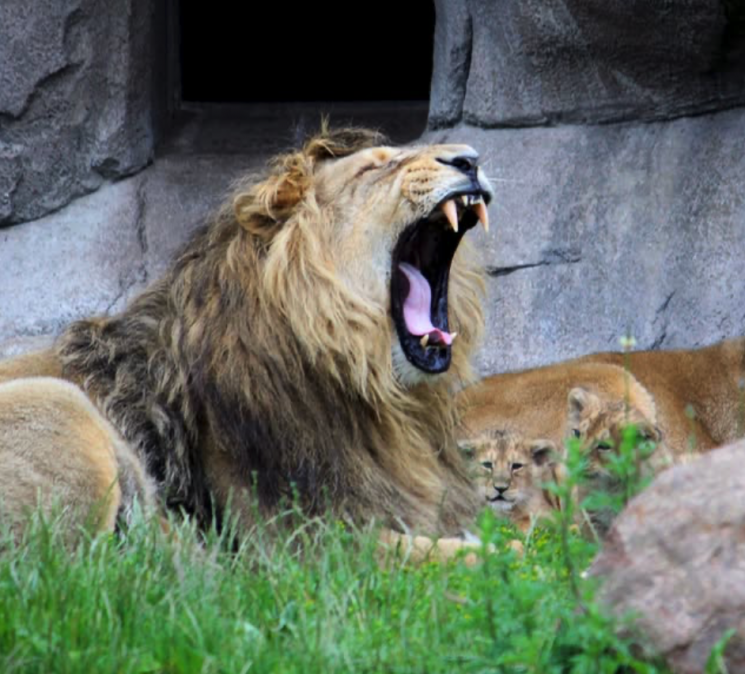 Copenhagen Zoo in Denmark euthanized four lions, including the parents and two cubs. This was done to prevent the male lion from biologically breeding with his own female and to stop other males from attacking the cubs. The photo is not related to the specific content of the article. Photo by Aalborg Zoo Instagram
As the controversy grew, the zoo stated, "We have an obligation to follow the natural food chain of animals, and small livestock are an important part of the diet for predatory animals." The spokesperson emphasized, "The food provided in this way is similar to what predators would hunt in the wild, especially for Eurasian lynxes."
The way Danish zoos handle the breeding and death of animals in their care has sparked controversy before. In 2014, Copenhagen Zoo euthanized a healthy young giraffe named Marius. The zoo explained that there was no need to keep Marius because his genetic traits were already present in other giraffes at the zoo. The zoo then publicly dissected Marius in front of visitors as an educational opportunity and fed his carcass to lions and other large predators.
A few weeks later, the same zoo euthanized four lions, including two cubs and their parents. This was done to prevent the male lion from breeding with his own offspring and to protect the cubs from being attacked by other males. The New York Times reported that while American zoos control breeding through contraception, European zoos encourage natural behavior by allowing breeding and then euthanizing surplus animals.
© The Asia Business Daily(www.asiae.co.kr). All rights reserved.


















