The government has projected that the financial package included in the Korea-US tariff negotiations, concluded on July 30, will contribute to strengthening economic cooperation between the two countries and securing a stable supply chain.
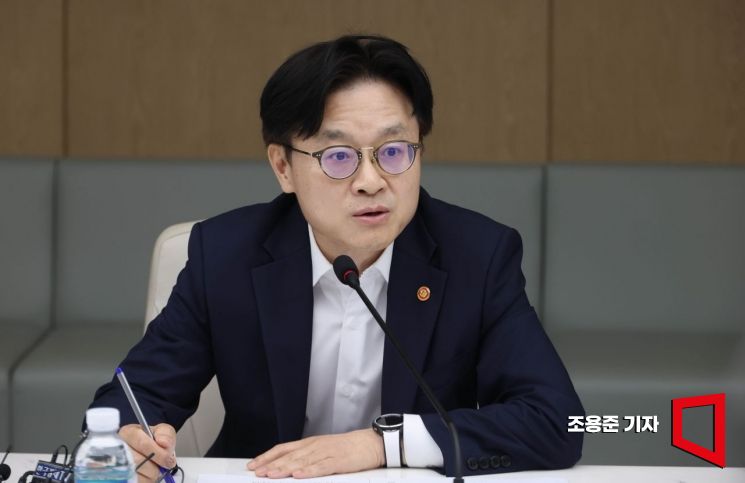
On August 5, during the first meeting of the Growth Strategy Task Force chaired by Deputy Prime Minister and Minister of Economy and Finance Koo Yooncheol, the Ministry of Trade, Industry and Energy assessed the conclusion of the Korea-US tariff negotiations, stating, "Ahead of the expiration of the mutual tariff suspension on August 1, we have significantly alleviated the tariff burden on exports to the US, which account for 19% of our total exports, and resolved uncertainties for businesses."
The ministry further analyzed, "For Korea's key export items, such as automobiles and semiconductors and pharmaceuticals that were subject to announced tariffs, we can now maintain competitiveness in the US import market under conditions that are not disadvantageous compared to rival countries."
Korea and the US concluded the tariff negotiations on July 30, just before the expiration of the mutual tariff suspension. The US agreed to reduce country-specific and automobile tariffs on Korean goods to 15% and pledged most-favored-nation treatment for future Section 232 tariff items, including semiconductors and pharmaceuticals.
In return, Korea decided to establish a financial package worth a total of $350 billion for the US, including investments, loans, and guarantees, to strengthen cooperation in strategic industries between the two countries. Specifically, $150 billion will be allocated to shipbuilding cooperation, including building new shipyards in the US, workforce training, supply chain restructuring, ship construction, and maintenance, repair, and overhaul (MRO). The remaining $200 billion will be used for cooperation in economic security sectors such as semiconductors, pharmaceuticals, secondary batteries, energy, and critical minerals.
Additionally, Korea pledged to purchase $100 billion worth of US energy during the Trump administration's term. Korea also agreed, during the negotiations, to strengthen bilateral cooperation on sanitary procedures for US fruits and vegetables imports and to accept US automobile safety standards.
An official from the Ministry of Trade, Industry and Energy stated, "We will support companies in overcoming difficulties caused by tariffs and in entering alternative markets," adding, "Domestically, we will work to stimulate short-term domestic demand, strengthen trade remedies such as unfair trade investigations, and enhance industrial competitiveness through mid- to long-term support for R&D tax incentives, funding, and technology development."
© The Asia Business Daily(www.asiae.co.kr). All rights reserved.

















