'Bird Strikes' Frequently Occur Right After Takeoff or Just Before Landing
182 Passengers Were On Board the Aircraft
Bird Strike Incidents Are Also Increasing in South Korea
Bird strikes, also known as "bird strikes," are among the most significant risks that occur during aircraft takeoff and landing. Airports around the world are making efforts to prevent bird strikes near runways, but hundreds of aircraft incidents caused by bird strikes still occur every year. Among these, on August 3 (local time), a passenger plane departing from Madrid, Spain, and heading to Paris, France, collided with a large bird shortly after takeoff, suffered severe damage, and was forced to make an emergency return.

According to reports from foreign media such as The Sun in the United Kingdom, Iberia Airlines flight IB579, an Airbus passenger plane that took off from Madrid Barajas International Airport that afternoon, collided with a large bird at an altitude of 2,000 meters shortly after takeoff and had to return urgently. The aircraft shook violently immediately after the incident. The crew declared an emergency and requested a return, making an emergency landing at Barajas Airport about 20 minutes later.
At the time, there were 182 passengers on board, and until landing, they had to wear oxygen masks and endure fear. Fortunately, all passengers and crew were unharmed, and the passengers departed for Paris on another flight later that evening. According to foreign media, the aircraft involved in the incident was an Airbus A321XLR, a new model that had only been in operation for a few weeks. The price of this model is reported to be approximately 170 billion won.
As a result of this collision, the front section of the aircraft was severely damaged. The radome, which protects the weather radar, was badly damaged, and one of the jet engines was also affected. In photos taken after landing, the nose of the plane appears almost half destroyed, and what is believed to be bird remains can be seen inside the engine. The bird involved in the collision was reported to be a bird of prey, such as an eagle. Juan Gomez, an air traffic controller at Madrid Airport, said in an interview with local media, "The front part of the aircraft is made of very light and impact-sensitive materials because it must house the weather radar," adding that in the case of this incident, the impact at the moment of collision was actually less severe than it appears in the photos.
The impact of a bird strike can reach up to 5 tons
According to the Ministry of Land, Infrastructure and Transport, bird strike incidents are also increasing in South Korea. By year, there were 108 cases in 2019, which decreased to 76 in 2020 due to reduced air traffic during the pandemic, but then increased to 109 in 2021, 131 in 2022, and 152 last year. During this period, seven aircraft had to return due to bird strikes. Above all, as bird habitats near domestic airports are developed, displaced birds are moving into green areas within airports, which is cited as a major cause of bird strikes.
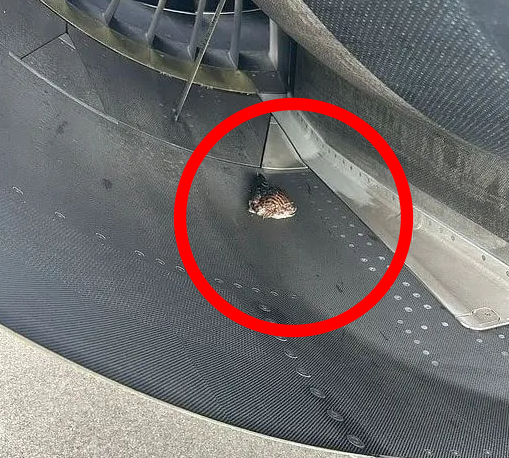
Among these, collisions between birds and airplanes are known to occur most frequently just after takeoff or just before landing. When an aircraft is cruising at altitudes above 10,000 meters, the risk of collision with birds is minimal due to the height, but at altitudes below 2.5 kilometers during takeoff or landing, the likelihood is relatively high. In fact, if a bird collides with an aircraft rapidly ascending or descending, the impact can be tremendous. For example, when a departing aircraft collides with a mallard duck weighing 900 grams, the instantaneous impact is reported to reach 4.8 tons. Especially if a bird is sucked into an engine, the fan blades can be damaged, potentially causing a fire, and in severe cases, it can affect the operation of landing gear and lead to major accidents.
© The Asia Business Daily(www.asiae.co.kr). All rights reserved.


















