Jung Jongseop and Kwon Jinho
Discuss the Historical and Cultural Identity of Gumi
Consultation Held on the Name and Calligraphy of Gyeonginsa
Commemorating the Spirit of Independence Activist Heo Wi
Gumi Aims to Become a City of Spiritual Culture
In Gumi, North Gyeongsang Province, which is emerging as the center of Korea's spiritual culture, Jung Jongseop, President of the Korea Studies Advancement Center (former Minister of the Ministry of the Interior and Safety), and Kwon Jinho, Director of the Korea National Studies Institute, visited to spend a meaningful time re-examining the region's historical identity and cultural assets.
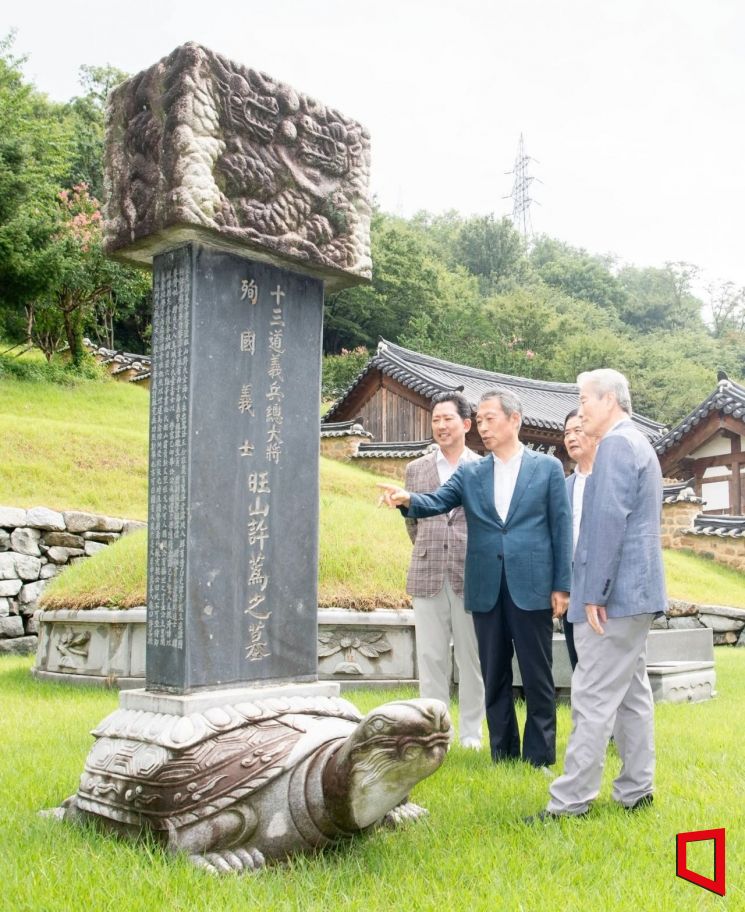 Jongseop Jeong, Director of the National Institute of Korean Studies, is having a conversation with Mayor Jangho Kim and Director Jinho Kwon in front of the tombstone of Wangsan Heo Wi. They visited to consult on the name and calligraphy of the newly built pavilion "Gyeonginsa (景仁祠)" dedicated to Wangsan Heo Wi.
This visit was arranged to provide consultation on the name and the calligraphy style of the signboard for 'Gyeonginsa,' a newly constructed pavilion in front of the shrine dedicated to Hwangsan Heo Wi.
The two experts examined the historical and aesthetic symbolism of Gyeonginsa, held in-depth discussions on the harmony between calligraphy and architecture, and explored the connection to the spirit of independence activist Heo Wi.
Jung Jongseop stated, "Hwangsan Heo Wi was a pioneer who dedicated everything to the independence of our nation," and emphasized, "Establishing a calligraphy style and commemorative space befitting a place imbued with his spirit will be key to shaping the region's spiritual culture."
The visiting group then toured the Hwangsan Heo Wi Memorial Hall, reflecting on the life of Hwangsan and the historical significance of his independence movement against Japanese colonial rule. Heo Wi is recognized as a representative anti-Japanese activist who led the resistance against the Eulsa Treaty and spearheaded the Righteous Army movement, ultimately sacrificing his life. Among figures from Gumi, he is regarded as the most symbolic independence activist.
Kwon Jinho also remarked, "Gumi has ample assets to grow beyond an industrial city into a city of spiritual culture," and added, "It is time to make the spirit of Hwangsan the foundation of the city's identity."
Kim Jangho, Mayor of Gumi, stated, "The noble spirit of sacrifice shown by Hwangsan Heo Wi is a great legacy that Gumi must inherit," and added, "Based on the roots of spiritual culture, we will develop Gumi into a refined cultural city where tradition and the future coexist in harmony."
Gumi City is preparing to leap forward as a cultural city where tradition and modernity coexist, taking this visit as an opportunity. The city plans to systematically preserve and utilize the region's biographical figures and spiritual cultural assets centered around Hwangsan Heo Wi.
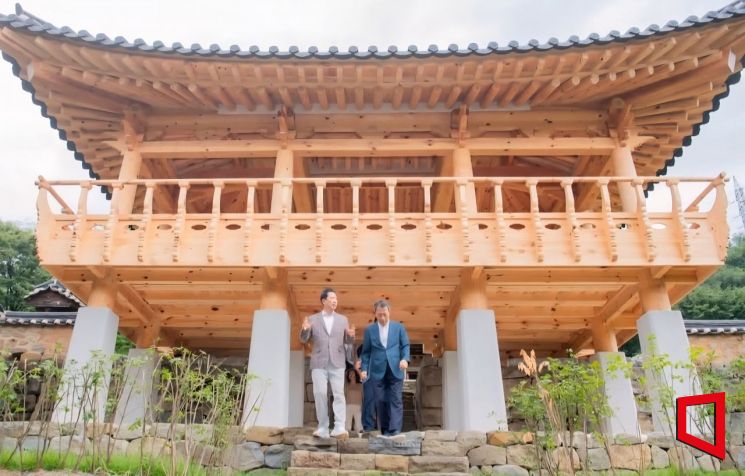 Jongseop Jeong, President of the National Institute of Korean Studies (right), and Jangho Kim, Mayor of Gumi (left), are walking out from the newly built pavilion 'Gyeonginsa (景仁祠)' in front of the shrine of Wangsan Heowi.
© The Asia Business Daily(www.asiae.co.kr). All rights reserved.
![Clutching a Stolen Dior Bag, Saying "I Hate Being Poor but Real"... The Grotesque Con of a "Human Knockoff" [Slate]](https://cwcontent.asiae.co.kr/asiaresize/183/2026021902243444107_1771435474.jpg)

















