PF Loan Guarantees Opened for Non-Residential Sites... Legal Basis Established for Mutual Aid Association Guarantees
Airport Facility Standards Strengthened to Meet International Criteria... Bird Strike Prevention Management System Established
Improved Convenience for Construction Workers... Simplified Procedures for Small Mutual Aid Claims
The Ministry of Land, Infrastructure and Transport announced on August 4 that amendments to the Framework Act on the Construction Industry and the Airport Facilities Act have passed the National Assembly's plenary session. With these amendments, project financing (PF) loan guarantees will now be available for non-residential business sites that have struggled to secure funding, and the safety standards for aircraft at airports will be significantly strengthened to meet international levels.
A Lifeline for Non-Residential Business Sites Facing Funding Shortages... Amendment to the Framework Act on the Construction Industry
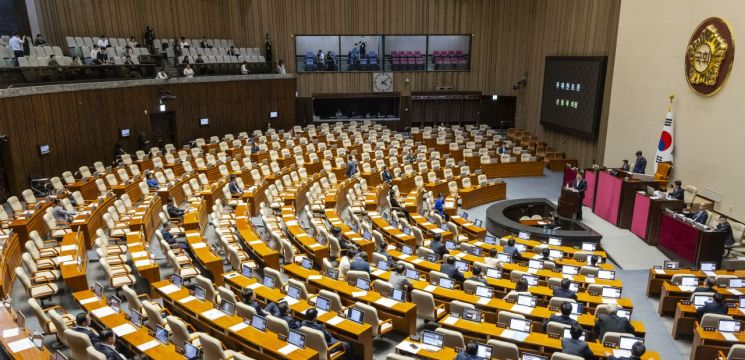
The core of this amendment to the Framework Act on the Construction Industry is the establishment of a legal basis allowing construction-related mutual aid associations to provide project financing (PF) loan guarantees for non-residential business sites. Previously, residential business sites could obtain PF loan repayment guarantees through institutions such as the Housing and Urban Guarantee Corporation (HUG), but non-residential business sites such as shopping malls and logistics centers were left in a blind spot for funding due to the absence of guarantee-providing institutions.
The amendment expands the business scope of mutual aid associations to include "guarantees for clients (PF loan debtors) who have signed contracts with association members." As a result, non-residential business sites that are profitable but have faced difficulties in securing funds due to instability in the construction market can now obtain PF loans backed by the high credit rating of mutual aid associations. The Ministry of Land, Infrastructure and Transport expects this will reduce funding costs and ease excessive joint guarantee requirements imposed on construction companies.
In addition, convenience for construction industry workers will be improved. The process for claiming actual loss medical benefits from mutual aid associations will be simplified. Previously, insured members had to obtain documents directly from hospitals and submit them to the mutual aid association, but going forward, hospitals will be able to send the necessary documents directly to the mutual aid association via an electronic system. This is expected to increase the number of claims for small benefit amounts that were previously abandoned due to the cumbersome process, thereby enhancing the convenience for insured members.
Strengthening Runway Safety and Preventing Bird Strikes
The amendment to the Airport Facilities Act focuses on enhancing safety around airport runways and establishing a system to prevent bird strikes. First, navigational safety facilities installed near runways must now be made of easily breakable materials and installed at minimal weight and height to minimize the risk of collision with aircraft. These requirements, previously only administrative regulations (notifications), have been elevated to the level of law and are now legally binding. Furthermore, when constructing or improving airport facilities, it is now explicitly required to comply with international standards under the International Civil Aviation Organization (ICAO), aiming to enhance international trust in aviation safety.
A comprehensive management system for bird strike prevention will also be established. The Minister of Land, Infrastructure and Transport must formulate a basic bird strike prevention plan every five years, and airport operators are required to establish and evaluate annual bird strike risk management plans for each airport. The legal basis has also been provided for establishing and operating a Bird Strike Prevention Committee to review related plans. In addition, land or buildings at risk of bird strikes can be purchased by the state or airport operators in consultation with owners, and a fine of up to 5 million won will be imposed for installing bird-attracting facilities around airports.
The amended Framework Act on the Construction Industry will take effect three months after promulgation following deliberation by the Cabinet, and the Airport Facilities Act will take effect six months after promulgation.
© The Asia Business Daily(www.asiae.co.kr). All rights reserved.

















