Acupuncture Accounts for the Largest Share, Making Up 28.8% of All Medical Statements
A study has found that the proportion of Parkinson's disease patients who used Korean medicine treatment at least once increased by approximately 65% over the past 10 years.
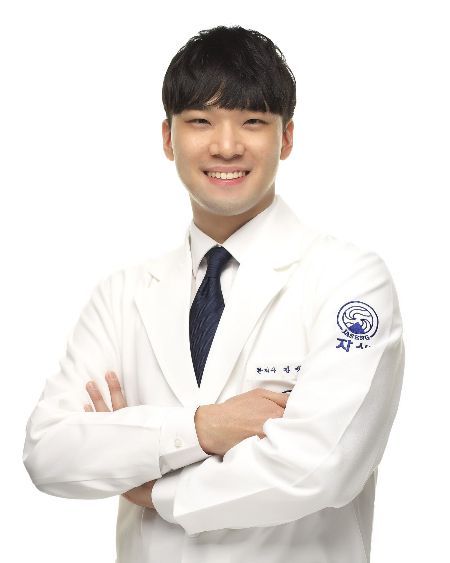 Baekjun Kim, Oriental Medicine Doctor at Jaseng Spine and Joint Research Institute, Jaseng Hospital of Korean Medicine.
The Spine and Joint Research Institute of Jaseng Hospital of Korean Medicine announced on August 4 that it had published a research paper analyzing the current status and trends of Korean medicine treatment among domestic Parkinson's disease patients in the SCI(E)-level international journal 'Healthcare' (IF=2.4).
Parkinson's disease is a degenerative neurological disorder caused by the gradual loss of nerve cells in the midbrain that secrete dopamine. The main symptoms include resting tremor, muscle rigidity, slow movement, postural instability, and gait disturbances. In addition, non-motor symptoms such as cognitive impairment and depression may also occur.
Currently, the medical community utilizes dopamine-based medications and surgical treatments such as deep brain stimulation (DBS). However, long-term use of medications can cause side effects, and surgery can also be a burden for elderly patients.
In response, the research team led by Korean medicine doctor Kim Baekjun at the Spine and Joint Research Institute of Jaseng Hospital of Korean Medicine analyzed the trends in the use of Korean and Western medical services by domestic Parkinson's disease patients over a 10-year period from 2010 to 2019, using patient sample data (HIRA-NPS) from the Health Insurance Review and Assessment Service.
HIRA-NPS is a large-scale healthcare dataset created by randomly extracting a sample representing about 3% of the entire Korean population by gender, age, and social class. The research team selected 18,562 individuals who had been diagnosed with Parkinson's disease and received at least one Korean or Western medical treatment over the 10-year period as the subjects of their analysis.
The results showed that the proportion of Parkinson's disease patients who used Korean medicine treatment at least once increased steadily from 6.4% in 2010 to 10.6% in 2019, representing an increase of approximately 65.6% over the 10 years.
In the analysis by category of Korean medicine treatment, acupuncture accounted for the highest proportion, making up 28.8% (18,806 cases) of all medical statements, and also represented the largest share in terms of cost, accounting for more than half (50.6%) of the total. The cost per acupuncture treatment was calculated to be about 20 dollars. In addition, consultation fees (18.6%), cupping (9.1%), and moxibustion (7.3%) were identified as major categories of Korean medicine treatment for Parkinson's disease.
Previously, in May, Jaseng Hospital of Korean Medicine also published a case report and literature review in the SCI(E)-level international journal 'Journal of Clinical Medicine' (IF=3.0), demonstrating that integrative Korean medicine treatment is effective in improving symptoms of Parkinson's disease patients. In a case involving a patient in their 70s with Parkinson's disease accompanied by kyphosis deformity, there was a significant improvement in back pain and function, showing that integrative Korean medicine treatment is an effective therapeutic method. In particular, the ODI (Oswestry Disability Index; 0~100) decreased from 70 before treatment to 31 after treatment, more than halving, and the NRS (Numeric Rating Scale for pain; 0~100) also decreased from 50 to 40.
Kim Baekjun, a Korean medicine doctor, stated, "This study is the first case of systematically analyzing the current status of Korean medicine treatment among domestic Parkinson's disease patients using nationwide healthcare big data." He added, "It was found that a significant number of Parkinson's disease patients use Korean medicine treatment for musculoskeletal disorders. We hope that the results of this study will contribute to the establishment of future medical policies and research on Parkinson's disease."
© The Asia Business Daily(www.asiae.co.kr). All rights reserved.

















