The court has recognized death from overwork in the case of a bank employee in his 30s who died of a myocardial infarction after suffering mental stress from new duties assigned through a personnel transfer.
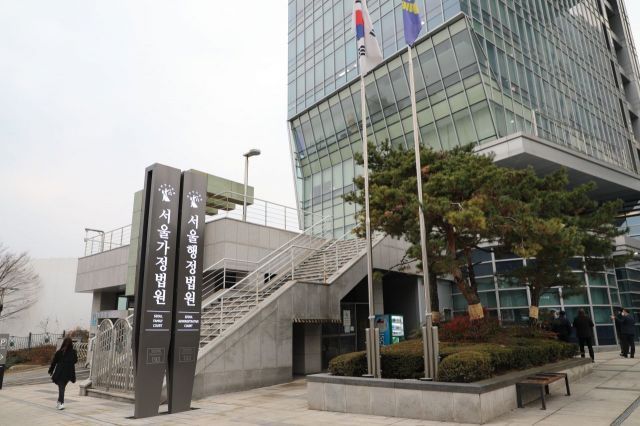
On August 4, Yonhap News reported that "the Seoul Administrative Court's Administrative Division 7, presided over by Chief Judge Lee Jooyoung, ruled in favor of the plaintiff in a lawsuit filed by the bereaved family of bank employee A against the Korea Workers' Compensation and Welfare Service, ordering the agency to pay survivor benefits and funeral expenses."
According to the report, A joined a bank in 2012 and, starting in January 2023, was assigned to the credit review center to handle corporate loan assessments due to a personnel transfer. In this new position, A was responsible for reviewing loans exceeding the amount that could be approved at branch level. If A violated regulations or neglected the review process and approved loans for companies with insufficient repayment ability, A could face disciplinary action or be held liable for damages. It is known that A experienced significant stress during this process.
Just two months after taking on the new role, in March, A was found dead in the driver's seat of a car in the parking lot of a golf practice range due to acute myocardial infarction. A was 38 years old at the time. In January of the following year, the agency decided not to pay survivor benefits or funeral expenses, stating that there was no significant causal relationship between A's death and work duties. In response, A's parents filed an administrative lawsuit against the agency.
The court of first instance recognized a significant causal relationship between A's death and work duties. The agency argued that, based on A's work PC login records, the average weekly working hours during the 12 weeks prior to the onset of illness were only 46 hours, suggesting that overwork was not a factor. However, the court pointed out that A often performed work using external network PCs or a personal laptop, and thus determined that the actual average weekly working hours likely exceeded 52 hours.
The court also found that A's workload increased and mental stress intensified after the personnel transfer in January 2023. The court stated, "Even if A had personal risk factors, if there were work-related factors that could increase the risk of acute myocardial infarction, it is possible that these factors caused or aggravated the disease."
© The Asia Business Daily(www.asiae.co.kr). All rights reserved.

















