Switzerland Considers Expanding LNG Purchases and Investments
Canadian Prime Minister Carney Seeks Breakthrough Through Direct Talks With Trump
After U.S. President Donald Trump announced plans to impose a high tariff of 39% on Swiss imports, the Swiss government stepped back, stating it would revise its previous negotiation proposal. Countries that have not reached trade agreements with the United States are now preparing countermeasures as the implementation of reciprocal tariffs approaches.
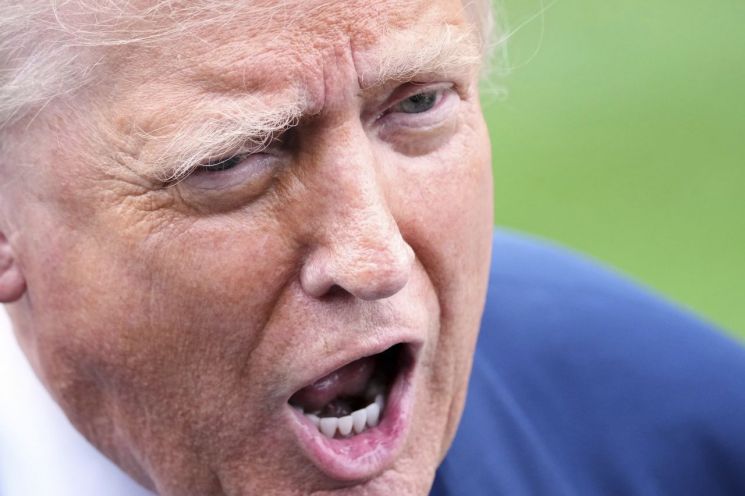
On August 3 (local time), Swiss Economy Minister Guy Parmelin told Reuters in an interview that a special meeting of the Federal Cabinet would be held on August 4 to discuss response measures. He said, "We first need to clearly understand why the U.S. President made this decision. Only after that can we decide what action to take."
He added, "Time is tight, so it may be difficult to make meaningful progress before the reciprocal tariffs take effect on August 7, but we will do everything possible to show goodwill to the United States and revise our previous proposal." Minister Parmelin mentioned expanding purchases of U.S. liquefied natural gas (LNG) and increasing Swiss corporate investment in the United States as additional options.
On July 31, President Trump announced a 39% reciprocal tariff on Swiss watches, pharmaceuticals, machinery, and other goods. This is an 8 percentage point increase from the 31% first announced in April. Foreign media interpreted this as a result of President Trump's anger over Switzerland's perceived lack of sincerity in addressing its trade deficit with the United States. Minister Parmelin explained that the phone call between the two countries' leaders at the time "was not successful," but added, "There was no argument between the leaders. President Trump had a completely different perspective from the beginning."
Unlike Switzerland, Canada has failed to reach a trade agreement with the United States. However, Canada is seeking a last-minute breakthrough to avoid high tariffs. Dominic LeBlanc, Canada's chief trade negotiator, appeared on CBS's "Face the Nation" program and said, "We expect Prime Minister Mark Carney and President Trump to speak directly soon," and added, "We are looking for ways to lower some tariffs and increase investment certainty."
The Trump administration raised tariffs on Canada from 25% to 35% on August 1, citing Canada's retaliatory tariffs as the reason. However, since duty exemptions remain in place for items covered by the United States-Mexico-Canada Agreement (USMCA), the effective tariff rate remains the lowest among major trading partners. The Bank of Canada estimated that, taking the USMCA exemptions into account, the effective tariff rate is about 5%, and even after this increase, it will remain at 6?7%.
Previously, in February, the Trump administration imposed a 25% tariff on Canada, citing inadequate action on synthetic opioid fentanyl trafficking and illegal immigration. Prime Minister Carney commented on the latest increase, saying, "It is disappointing, but we will continue negotiations while focusing on matters within our control."
© The Asia Business Daily(www.asiae.co.kr). All rights reserved.

















