Reflecting $3.8 Billion Loss from Kraft Heinz Stake
Net Stock Selling for 11 Consecutive Quarters... Cash Holdings Near Record High
No Share Repurchases for Fourth Straight Quarter
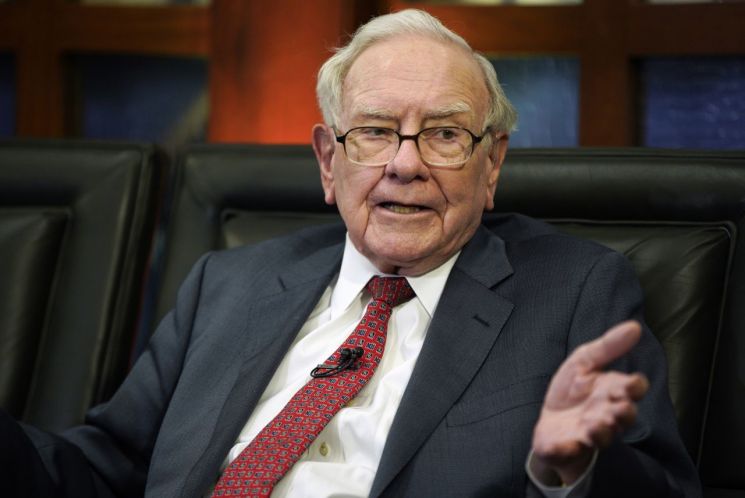
According to the Wall Street Journal (WSJ) and CNBC on August 3 (local time), Berkshire's second-quarter net profit, including subsidiaries such as Geico and railroad company Burlington Northern Santa Fe (BNSF), was $12.37 billion, a sharp decrease from $30.3 billion (or $21,122 per share) in the same period last year. This was largely due to a $3.8 billion loss recognized from its stake in Kraft Heinz, a chronically underperforming holding. Kraft is considering a spinoff of its food division, and two Berkshire executives resigned from the Kraft Heinz board in May.
Excluding investment performance, second-quarter operating profit was $11.16 billion, down 4% from the previous year. The main reason was a decrease in profits from the insurance division. In contrast, non-insurance subsidiaries?including railroads, energy, manufacturing, services, and retail?saw increased profits compared to the previous year. Buffett has consistently emphasized that operating profit is the best indicator of the company's fundamental strength. Due to accounting rules, Berkshire must reflect unrealized gains from its large investment portfolio in its net profit, so quarterly net profit can fluctuate significantly depending on stock price movements.
In its latest earnings report, Berkshire pointed out that tensions caused by the Trump administration's trade and tariff policies rose sharply in the first half of the year, warning that such policies could significantly impact not only the operations of most subsidiaries but also its stock investments.
Cash holdings remain close to an all-time high. As of the end of the second quarter, cash holdings stood at $344.1 billion (about 478 trillion won), not far from the previous record of $347 billion at the end of the first quarter. The WSJ analyzed, "Such a massive cash pile gives Berkshire the capacity to acquire new companies, but at the same time highlights the difficulty in finding attractive investment opportunities."
There were no share repurchases for the fourth consecutive quarter. Even though Berkshire's share price fell more than 10% from its all-time high, Buffett did not act. He maintains his principle of only repurchasing shares when the price is below his conservatively estimated intrinsic value.
Cathy Seifert, an analyst at CFRA Research, pointed out, "The absence of share buybacks amid such lackluster results neither instills confidence in investors nor sends a positive signal for stock repurchases."
Berkshire sold $4.5 billion worth of stocks in the first half of this year, marking its 11th consecutive quarter of net selling. Major holdings include American Express, Apple, Bank of America, Coca-Cola, and Chevron. The detailed portfolio is scheduled to be disclosed at the end of this month.
This earnings announcement is the first since Buffett revealed he would step down as CEO at the end of 2025. Greg Abel, Berkshire's vice chairman of non-insurance operations, is set to become the next CEO, while Buffett will remain as chairman of the board.
© The Asia Business Daily(www.asiae.co.kr). All rights reserved.

















