Shoe and Clothing Prices Expected to Soar Up to 40%
"America Has Not Truly Won... Everyone Loses"
As a result of the "tariff war" initiated by the second Trump administration, the average effective tariff rate has reached its highest level in 91 years.
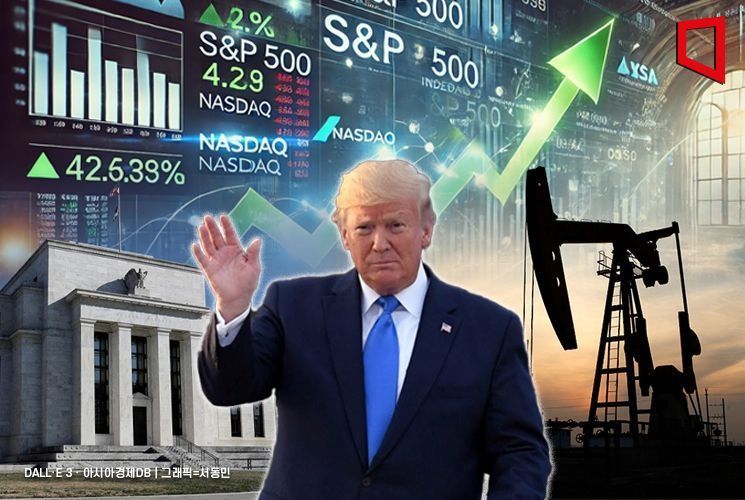
On August 2 (local time), the Associated Press, citing analysis from the Yale Budget Lab (TBL), reported that the average effective tariff rate in the United States rose from 2.5% at the beginning of this year to 18.3% in just seven months. This is the highest level since 1934. This figure also reflects the "reciprocal tariffs" by trading partners, announced by the Trump administration on the evening of July 31 and scheduled to take effect from August 7.
According to the analysis, the tariff policies introduced by President Trump this year are expected to raise the price level in the United States by 1.8% in the short term. This is equivalent to a decrease of $2,400 (3.3 million won) in household income.
In particular, the price increase is expected to be significant in the clothing and textile sectors. Ninety-seven percent of clothing and shoes sold in the United States are imported, with China, Vietnam, Indonesia, and India being the main exporters of these items to the U.S. Considering the effect of the tariffs, it is predicted that, in the short term, the prices consumers pay for shoes and clothing will rise by 40% and 38%, respectively. In the long term, it is estimated that these prices will remain 19% and 17% higher, respectively.
The impact of this year's tariff measures on the real GDP growth rate is expected to be a decrease of 0.5 percentage points in both 2025 and 2026, and a further decrease of 0.4 percentage points each year thereafter. This equates to an annual decrease in GDP of $120 billion (170 trillion won) based on the 2024 dollar value.
Foreign media pointed out, "President Trump describes tariffs as if they are taxes imposed on foreign countries, but in reality, it is U.S. importers who pay the tariffs, and they attempt to pass on the impact to consumers through higher prices." In fact, companies such as Walmart, Procter & Gamble, Ford, Best Buy, Adidas, Nike, Mattel, and Stanley Black & Decker have all raised their prices in response to the Trump tariffs.
Barry Appleton, co-director of the International Law Center at New York Law School (NYLS), stated, "Import tariffs are a form of consumption tax, so they have a greater impact on people with lower incomes." He added, "Prices for sneakers, backpacks, and white goods will rise. Video game consoles will also become more expensive, because none of these items are produced in the United States."
Appleton further commented, "Countries that have yielded to Trump's demands and thus avoided greater pain may be closer to being winners, but in the long run, it is doubtful that any country, including the United States, can be said to have won. In many respects, everyone is a loser."
Alan Wolff, senior fellow at the Peterson Institute for International Economics (PIIE), said, "The biggest winner is Trump," adding, "American consumers are the big losers."
Meanwhile, on August 1, President Donald Trump abruptly dismissed the Director of the Bureau of Labor Statistics. He cited "manipulation for political purposes" as the reason, in response to the Department of Labor's release of disappointing employment statistics. The Department of Labor announced the previous day that nonfarm payroll employment in July increased by only 73,000 compared to the previous month, and also released revised data lowering the employment growth for May and June by 258,000. This result runs counter to Trump's pledge to revive American manufacturing through tariffs and indicates that the economy is rapidly contracting.
© The Asia Business Daily(www.asiae.co.kr). All rights reserved.

















