Successive Prime Ministers Have Issued Statements Every Ten Years Since 1995
Plans Likely to Be Put on Hold Amid Opposition from Conservative Factions within the LDP
Japanese Prime Minister Shigeru Ishiba is expected to postpone the announcement of the postwar 80th anniversary message, which he had previously expressed enthusiasm for. As a result, it is anticipated that neither a prime ministerial statement nor a message regarding war and colonial rule will be issued for the time being.
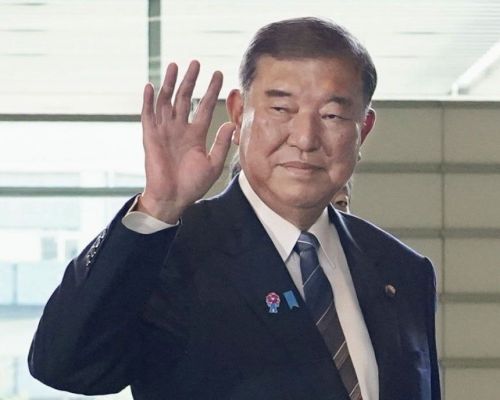
On August 2, Yonhap News quoted the Asahi Shimbun, reporting that multiple Japanese government officials had conveyed this information. According to the report, Prime Minister Ishiba considered issuing a message marking the 80th anniversary of the end of the war, but taking into account opposition from conservative factions within the ruling Liberal Democratic Party, he has decided not to make any announcements on August 15, the anniversary of the end of the war, or on September 2, the day Japan signed the instrument of surrender.
Since 1995, when the 50th anniversary of the end of the war was marked, Japanese prime ministers have issued statements around the anniversary through cabinet meetings every ten years.
Former Prime Minister Tomiichi Murayama issued a statement for the 50th anniversary of the end of the war. At that time, Murayama acknowledged that "as a result of colonial rule and aggression, Japan caused tremendous damage and suffering to many countries, especially to the people of various Asian nations," and expressed "deep remorse and heartfelt apology" in the present tense.
Former Prime Minister Junichiro Koizumi, in his statement for the 60th anniversary, inherited the main content of the Murayama statement. He stated, "Our country (Japan), through past colonial rule and aggression, caused great damage and suffering to many countries, especially to the people of various Asian nations," expressing both apology and remorse for colonial rule.
In August 2015, then-Prime Minister Shinzo Abe, in his statement for the 70th anniversary, said that "the feelings of apology have already been expressed," thus delivering a so-called "past tense" apology. He also stated, "We must not allow our children, grandchildren, and future generations to be predestined to continue apologizing," indicating that Japan would stop apologizing as a defeated nation, which drew criticism from countries such as South Korea.
Prime Minister Ishiba has generally taken a relatively moderate stance on historical issues between Japan and South Korea. Instead of issuing a direct statement, he reportedly planned to establish an advisory body to investigate the circumstances leading up to the war and then release a message in a personal capacity.
However, following the ruling party's defeat in the upper house election on July 20, demands for Ishiba's resignation have intensified, especially among conservative factions within the party, leading him to put his plans on hold. The conservative wing of the Liberal Democratic Party has argued that, since the Abe statement included the notion that future generations should not be burdened with the fate of continued apologies, there is no need for any additional statements.
Nevertheless, the Asahi Shimbun suggested that, since Prime Minister Ishiba has consistently emphasized the significance of the postwar 80th anniversary, he may consider issuing a message after the autumn if he remains in office.
© The Asia Business Daily(www.asiae.co.kr). All rights reserved.

















