Simultaneous Weakness in Technology and Banking Stocks
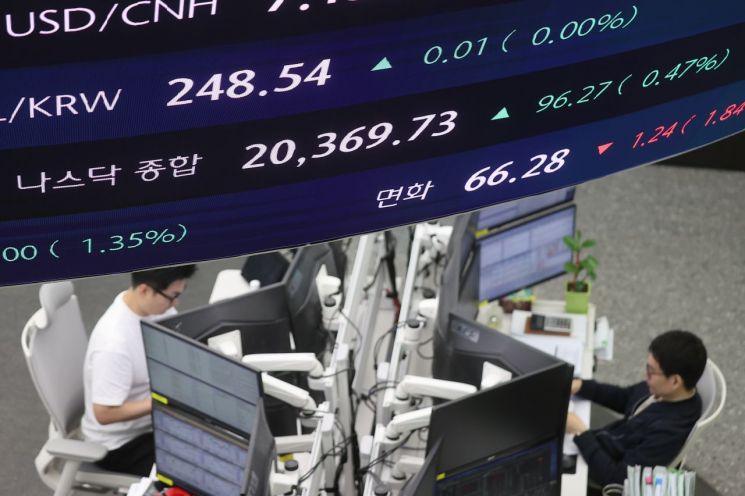
The tariff policies of the Trump administration in the United States have become a burden on the U.S. economy, leading all three major New York stock indexes to fall simultaneously. On August 1 (local time), the July employment data was released and fell short of market expectations, intensifying concerns about an economic slowdown. In addition, the previous day, President Trump signed a new executive order on reciprocal tariffs, further impacting the markets.
On this day, the Dow Jones Industrial Average closed at 43,588.58, down 542.40 points (1.23%) from the previous trading day. The Standard & Poor's (S&P) 500 Index dropped 101.38 points (1.60%) to 6,238.01, and the Nasdaq Composite Index finished at 20,650.13, down 472.32 points (2.24%).
According to the U.S. Department of Labor, nonfarm payrolls in July increased by 73,000 compared to the previous month, falling short of experts' forecasts of 100,000. The job gains for May and June were also revised downward by 258,000 from previously announced figures. The unemployment rate rose from 4.1% to 4.2%. As the recent trend of slowing job growth continued, concerns about a possible recession caused by tariff shocks became more pronounced.
Major bank stocks such as JPMorgan Chase (-2.32%), Bank of America (-3.41%), and Wells Fargo (-3.53%) fell due to concerns about loan defaults resulting from the economic slowdown. Amazon plunged 8.27% amid projections of declining operating profit in its cloud division, while other major technology stocks such as Apple (-2.50%), Google (-1.51%), Nvidia (-2.33%), Tesla (-1.84%), Meta (-3.05%), and Microsoft (-1.74%) also showed widespread weakness.
In the bond market, U.S. Treasury yields fell sharply on expectations of a Federal Reserve rate cut. The yield on the 2-year Treasury dropped by 27 basis points to 3.68%, while the 10-year yield fell by 15 basis points to 4.21%. The possibility of a rate cut in September increased further with news that Federal Reserve Governor Adriana Kugler, known as a hawk, will resign on August 8.
The value of the dollar weakened, and the Volatility Index (VIX) rose to 20.38, reaching its highest level since June. International oil prices fell as concerns about a recession overlapped with expectations of increased production by OPEC Plus, causing Brent crude futures to drop 2.79% to $67.33 per barrel. In contrast, gold prices rose 1.78% to $3,348.71 per ounce as demand for safe-haven assets strengthened.
© The Asia Business Daily(www.asiae.co.kr). All rights reserved.

















