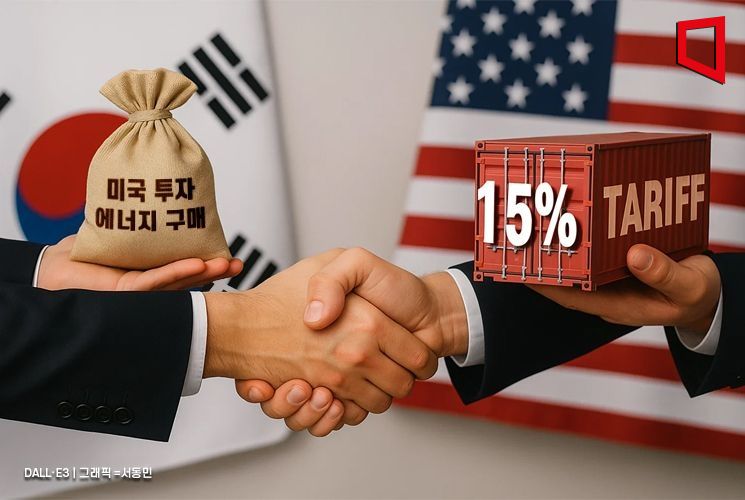
South Korea and the United States recently reached an agreement in trade negotiations to lower tariffs on South Korean imports from 25% to 15%. However, several key issues remain unresolved, including the continued imposition of a high 50% tariff on core metal items such as steel and aluminum, pressure regarding the Online Platform Fairness Act (Onplebeop) and the export of precision map data, demands for further opening of the agricultural market, and currency issues. There is an urgent need for sector-specific strategies and follow-up negotiations going forward.
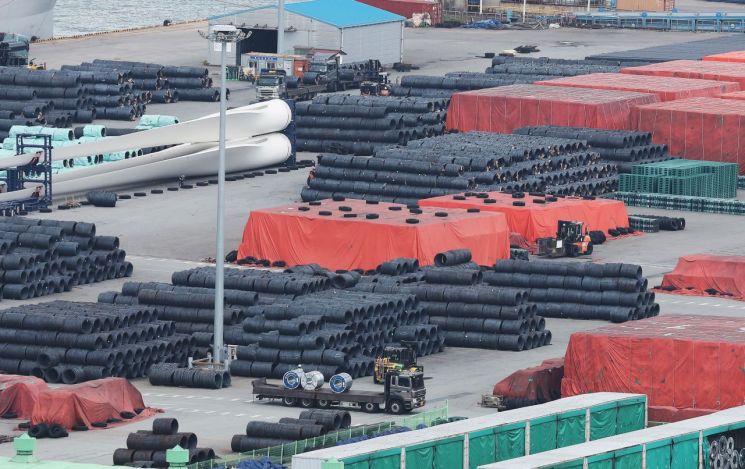
According to the government and related industries on August 1, metal items such as steel, aluminum, and copper were excluded from this round of negotiations, so the existing high tariff rate of 50% remains in place. Although South Korea is one of the major exporters of steel to the United States, being excluded from the tariff exemption negotiations has put South Korea at risk of losing price competitiveness in the U.S. market.
While Japanese companies have established production bases in the United States to avoid the impact of tariffs, the South Korean steel industry is seen as responding more slowly. This is not just a simple export barrier; it fundamentally weakens the price competitiveness of South Korean steel products, which could lead to a decrease in exports to the U.S., deteriorating profitability, and pressure for restructuring. In particular, this issue is not limited to the steel industry alone but could also burden related sectors such as shipbuilding, automobiles, and construction. Furthermore, the fact that the United States is considering expanding additional tariffs on derivative products (such as wires and cables) beyond steel further increases the risk for South Korea. An industry official expressed concern, stating, "South Korean steel products have now almost lost their price competitiveness in the U.S. market," and added, "The core competitiveness of exports to the U.S. will be significantly weakened."
The issues of the Onplebeop and the export of precision map data were also not addressed in the trade negotiations. These matters are directly related to digital sovereignty and corporate competitiveness. It is highly likely that South Korea chose to use the U.S. demands as bargaining chips for future separate negotiations rather than addressing them in this round. Currently, the United States views the Onplebeop, which South Korea is pursuing, as disadvantageous to American companies such as Google and Meta, and is demanding both the suspension of the legislation and permission to export map data overseas.
South Korea strictly controls the overseas export of precision map data, judging that it is closely related to national security, in accordance with laws such as the Act on the Construction and Management of Spatial Information. As a result, U.S. platform companies are forced to provide location-based services that are inferior in quality compared to local services such as Naver and Kakao.
Although these issues were excluded from this negotiation, the U.S. Congress has still sent letters stating that South Korea's platform legislation is unfair to American companies, and the government is reportedly preparing follow-up measures through a consultative body composed of the Ministry of Land, Infrastructure and Transport, the Ministry of Foreign Affairs, and the Ministry of National Defense.
Pressure to open the agricultural market also remains a potential risk. In this negotiation, South Korea maintained rice and beef as protected items, and there were no additional demands for market opening. However, the agreement did not clearly state whether there was a consensus on expanding overall market access for U.S. agricultural products. In particular, the United States may continue to demand the opening of the market for other agricultural products such as corn, soybeans, and fruits. This is because there are precedents where Japan and the European Union (EU) allowed partial opening of agricultural markets in past negotiations with the United States. The agricultural sector is strongly concerned about the removal of protection for sensitive items, and there are calls for the government to prepare sensitivity analyses and response strategies for each sector in advance.
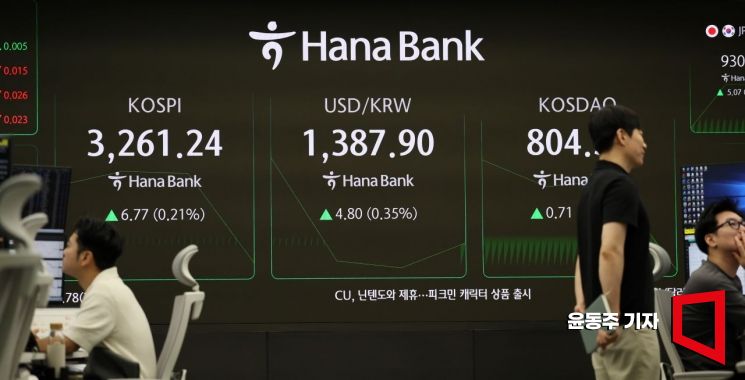 On the 31st, as the KOSPI index renewed its all-time high and started the session in the 3,270 range following the news of a 'customs agreement,' the KOSPI index is displayed on the index status board in the Hana Bank dealing room in Jung-gu, Seoul. 2025.07.31 Photo by Yoon Dongju
The currency issue was not officially addressed in this negotiation, but it has been reported that South Korea and the United States have agreed to establish a separate channel for discussions on foreign exchange policy. The United States has continuously criticized the possibility of artificial currency intervention to secure competitiveness, and if currency volatility increases, it could not only hurt exporting companies but also provide the U.S. with a means of policy pressure.
Although these major issues were excluded from the written negotiations, there are expectations of practical impacts by industry and political or legislative repercussions. The government and industry share a consensus that concrete solutions must be prepared through follow-up negotiations and summit meetings. Moving quickly to develop tailored responses for each sector, rather than settling for short-term achievements, is expected to be the key to securing future competitiveness.
© The Asia Business Daily(www.asiae.co.kr). All rights reserved.



















