U.S. Drug Prices Three Times Higher Than Global Average
Expansion of Most Favored Nation Pricing... Applied to New Drugs
Lutnick Announces, "Pharmaceutical Tariffs to Be Announced Within Two Weeks" on the 29th
U.S. President Donald Trump has announced plans to impose tariffs on pharmaceuticals and has sent letters to 17 major pharmaceutical companies, pressuring them to come up with measures to lower drug prices within 60 days. With the demand for lower drug prices now coupled with the imposition of tariffs on imported pharmaceuticals, these companies are facing a significant burden of additional costs, including the potential relocation or expansion of production facilities in the United States, as well as deteriorating profitability.
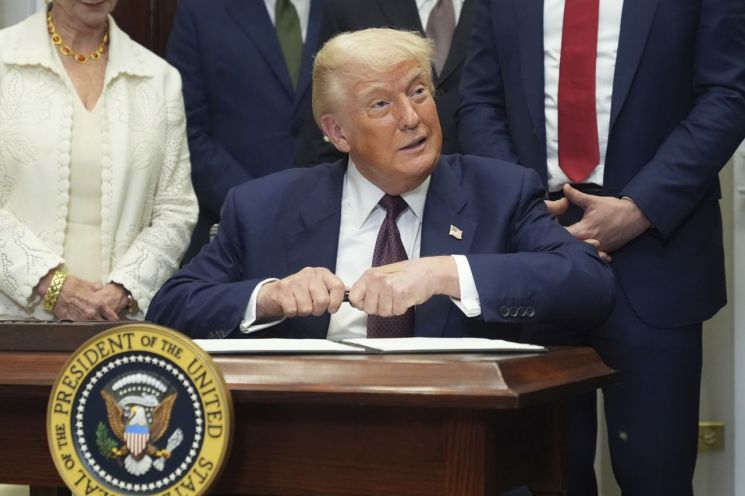
On July 31 (local time), President Trump posted a letter addressed to 17 pharmaceutical companies on his social networking service, Truth Social, stating, "The United States pays three times the global average for drug prices," and demanded, "Expand the 'most favored nation price' to existing drugs under Medicaid and apply it to new drugs as well." The 17 pharmaceutical companies that received the letter are Eli Lilly, Novo Nordisk, Pfizer, EMD Serono, Gilead, Novartis, Bristol Myers Squibb, Boehringer Ingelheim, AbbVie, Johnson & Johnson, Genentech, Amgen, AstraZeneca, Sanofi, Regeneron, Merck, and GSK.
President Trump demanded the following: apply the most favored nation drug price to Medicaid; guarantee the most favored nation price when launching new drugs; return a portion of overseas profits to American patients and taxpayers; and provide direct purchases based on the most favored nation price.
This action comes after President Trump signed an executive order in May to reinstate the so-called "most favored nation drug price policy." This policy sets the price of prescription drugs in the United States equal to the price in the country with the lowest drug price. At the time, President Trump claimed that prescription drug prices in the United States were two to three times higher than the average in developed countries and as much as ten times higher than in some countries.
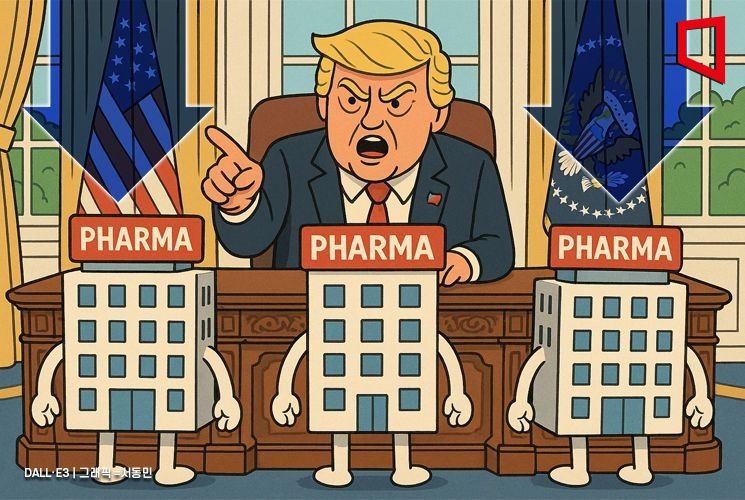
President Trump stated that binding commitments must be submitted by September 29, and warned that if the companies refuse, he will use every means available to protect Americans from "abusive drug pricing practices." In the letter, he warned, "If pharmaceutical companies refuse to step up, we will use all means at our disposal to protect American families from malicious drug pricing practices."
President Trump has publicly pressured pharmaceutical companies because the proposals they submitted to lower drug prices fell far short of expectations. After issuing the executive order demanding drug price reductions in May, he reviewed the responses from each company but criticized most of the proposals as "merely demands to hand out billions of dollars to the industry while shirking responsibility."
Pharmaceutical companies now face the dual challenge of both tariffs on imported pharmaceuticals and pressure to lower drug prices. Previously, U.S. Secretary of Commerce Howard Lutnick announced on July 29 that he would unveil plans to impose tariffs on imported pharmaceuticals within two weeks.
Following President Trump's announcement, pharmaceutical stocks fell across the board. The share prices of Bristol Myers Squibb and Novo Nordisk dropped by about 5%, while GSK and Merck shares fell by more than 3%. Sanofi shares also fell by more than 8%.
Meanwhile, Secretary Lutnick promised that Korea would not be treated less favorably than other countries in the pharmaceutical sector, but since specific tariff rates have not yet been determined, the situation remains uncertain. If high tariffs are imposed on Korean pharmaceuticals, it is expected to impact the country's export strategy, which is centered on biosimilars.
Kim Min
© The Asia Business Daily(www.asiae.co.kr). All rights reserved.


















