Time Gap Between Earthquake and Tsunami Arrival
Some Residents Went Out for Gas and Supplies
Severe Traffic Congestion Worsened by Rush Hour
On the 30th (local time), a tsunami triggered by a magnitude 8.8 earthquake on the Kamchatka Peninsula in Russia did not cause significant damage in Hawaii. However, there have been criticisms that a kind of "over-evacuation" led to major traffic chaos.
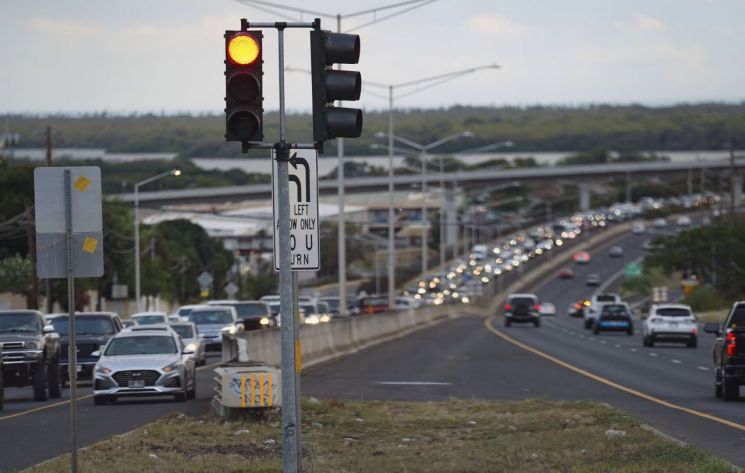
According to the Associated Press, severe traffic congestion occurred in Hawaii after news of the earthquake spread and a tsunami warning was issued. The outlet analyzed that multiple factors overlapped, resulting in too many cars pouring onto the roads at once and overwhelming Hawaii's road network in many areas.
First, the time gap between the earthquake and the expected arrival of the tsunami in Hawaii was identified as a cause. The earthquake struck at 1:24 p.m. local time in Hawaii on the 29th, and the tsunami was forecast to reach Hawaii around 7 p.m. that day.
Although many people in Hawaii decided they should evacuate, they judged that the situation was not urgent enough to require immediate evacuation with only the clothes on their backs. As a result, some residents drove out to buy supplies at supermarkets or to meet family members before evacuating. These factors, combined with the evening rush hour, caused severe traffic congestion.
It was also pointed out that people in areas where evacuation was not necessary still chose to evacuate. Molly Pearce, from the disaster response department on Oahu Island?where about 80% of Hawaii's population lives?explained that some residents may have been confused about whether they truly needed to evacuate. She added that some people may have evacuated even though they were already in safe areas.
Ed Sniffen, Director of the Hawaii Department of Transportation, said he did not regret warning residents as early as possible, but stated that if a similar situation occurs in the future, the state will strengthen education on how people should use their preparation time.
He said, "Many people wanted to leave as quickly as possible as soon as they heard the news, and in other areas, people who were already in safe zones went to get gas or shop at supermarkets. If only those in flood-risk areas had used the roads and those already in safe zones had stayed put, the evacuation would have been more efficient." He also added that the state government should inform tourists that walking to higher ground can also be an option.
Adrian Tam, a member of the Hawaii House of Representatives, expressed concern about traffic congestion in the Waikiki beach area, which is very popular with tourists but has only four access roads. He said, "It is fortunate that the situation was not as serious as expected," and added, "This is a warning sign that we need to look for ways to improve the situation more systematically."
© The Asia Business Daily(www.asiae.co.kr). All rights reserved.
![Clutching a Stolen Dior Bag, Saying "I Hate Being Poor but Real"... The Grotesque Con of a "Human Knockoff" [Slate]](https://cwcontent.asiae.co.kr/asiaresize/183/2026021902243444107_1771435474.jpg)
















