Resolving the 'Supply Cliff' and Reforming LH Are Top Priorities
Accelerating Balanced Development with a Sense of Mission from a 'Local-Origin' Minister
Leading the Reform of the Preliminary Feasibility Study System for Non-Metropolitan Regions
Extraordinary Commitment to 'Eradicate Fatal Accidents at Construction Sites'
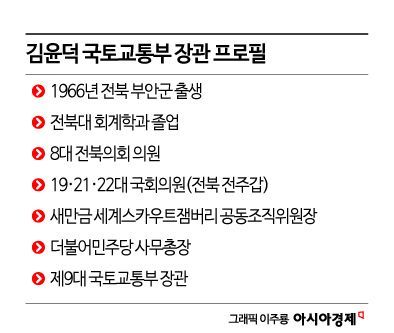
Kim Yoonduk, the newly appointed Minister of Land, Infrastructure and Transport, officially took office on July 31. In his inaugural address, Minister Kim stated, "The Ministry of Land, Infrastructure and Transport must lay the foundation for the recovery of people's livelihoods and become a platform for innovation that drives economic growth and national competitiveness." He expressed a strong determination to directly tackle key tasks such as real estate supply, balanced national development, and ensuring public safety. In particular, he emphasized, "The results of policies are determined not in meeting rooms, but in the field," signaling a commitment to pursue field-oriented and executable policies.
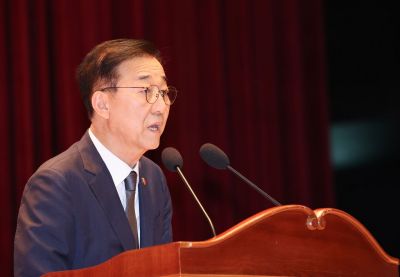 Kim Yoonduk, the newly appointed Minister of Land, Infrastructure and Transport, is delivering his inaugural speech at the inauguration ceremony held at the main auditorium of the Government Sejong Complex on the 31st. Photo by Yonhap News.
Real Estate Market: Resolving the 'Supply Cliff' and 'Restoring Trust' Are Top Priorities
Addressing the housing supply shortage is expected to be Minister Kim's top priority. During his confirmation hearing, Minister Kim diagnosed that the housing market in the Seoul metropolitan area is facing a 'supply cliff.' He stressed that stabilizing housing prices hinges not merely on suppressing demand but on providing 'quality housing' in a timely manner. It is anticipated that the pace of supplying the 3rd New Towns will be accelerated, and idle sites in urban areas will be actively identified for development.
He is particularly committed to redefining the role of Korea Land and Housing Corporation (LH). Minister Kim has argued that LH must shift from a 'land sales' model to a 'public rental-centered' approach, and he has hinted at bold reforms, including increased fiscal investment, to achieve this transition.
To revitalize the private sector, Minister Kim intends to simplify redevelopment and reconstruction procedures and review floor area ratio adjustments, while maintaining a balanced pursuit of both private and public interests. However, he has not presented a clear direction regarding the Reconstruction Excess Profit Reclamation System and the adjustment of the officially assessed land price ratio, indicating that these issues will be reviewed carefully. Regarding the issue of unsold housing in provincial areas, the government is expected to strengthen its 'control tower role' and implement 'extraordinary measures' such as fiscal investment, tax benefits, and relaxation of the Debt Service Ratio (DSR) regulation.
'A Promise from a Minister with Local Roots... Accelerated Balanced Development and Reform of the Preliminary Feasibility Study System'
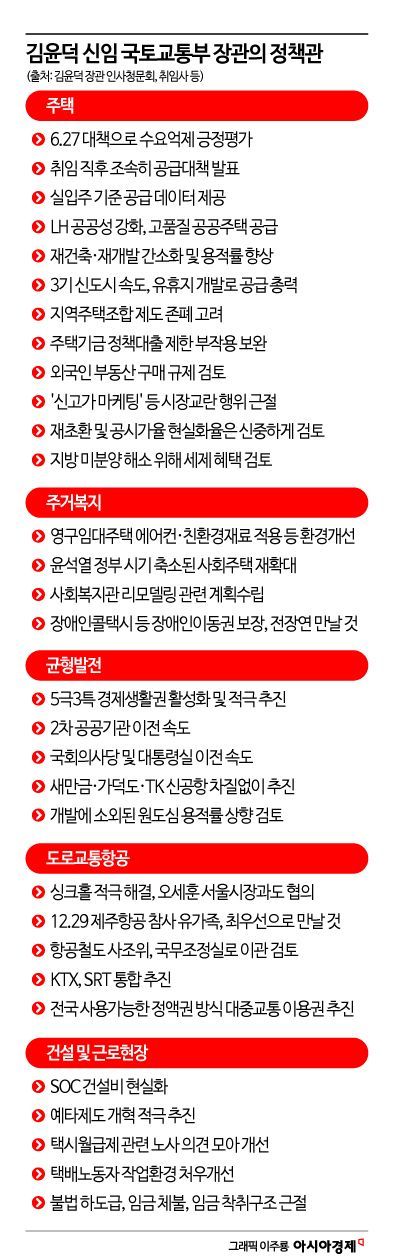
As a minister from a non-metropolitan region, Minister Kim has expressed a deep sense of mission, stating, "Balanced development is not a choice but a matter of national survival." He presented a vision to foster 'five major and three special economic living zones' (the five major mega-regions: Seoul Metropolitan Area, Southeast Region, Daegu-Gyeongbuk Region, Central Region, Honam Region; and the three special self-governing provinces: Jeju, Gangwon, Jeonbuk) where the metropolitan area and local regions coexist and thrive. He pledged to "accelerate" the second phase of public institution relocations and pay special attention to regions that were left out during the first phase.
Regarding the relocation of the administrative capital, he expressed support for the 'complete relocation of the National Assembly' and stated that he would seek ways to expedite President Lee Jaemyung's pledge to move the presidential office to Sejong during his term. Notably, Minister Kim has a critical view of the current Preliminary Feasibility Study (Yeta) system, arguing that it disadvantages projects outside the metropolitan area and stating that it has "fulfilled its historical role." He emphasized that the Yeta system should be reformed and transformed into an 'institution for policy-based decision-making,' clearly expressing his commitment to institutional reform for balanced national development.
'Extraordinary Measures to Eradicate Construction Accidents'... Full-Scale Response to Public Safety Issues
Minister Kim stressed, "The lives and safety of the people must take precedence over any other value," pledging a comprehensive response to safety issues. He is particularly determined to root out chronic problems at construction sites, where fatal accidents continue to occur. During his confirmation hearing, he identified illegal multi-layer subcontracting and wage exploitation structures as the fundamental causes of these accidents and promised 'extraordinary measures' and the establishment of a 'legally perfect system' to 'completely eradicate' such practices. He also pledged to reorganize related personnel, organizations, and systems to prepare for new types of accidents, such as those caused by climate change and sinkholes.
In the field of aviation safety, he pointed out the excessive number of flights operated by low-cost carriers (LCCs) and stated his intention to strengthen standards and consider structural adjustments. He also drew attention by announcing plans to "prepare for the transfer of the Aviation and Railway Accident Investigation Board (Sajo Committee) to the Office of the Prime Minister" to enhance its independence. In addition, he expressed principled support for the integration of KTX and SR, the introduction of a nationwide flat-rate public transportation pass, improvement of working conditions for delivery workers, and strengthening regulations on real estate speculation by foreigners, pledging active efforts to resolve issues directly affecting people's livelihoods.
© The Asia Business Daily(www.asiae.co.kr). All rights reserved.



















