"Need to Consider the Absolute Burden of Tariffs Rising from 0% to 15%"
"Growth Rate and Trade Balance Require Resimulation"
On July 30 (local time), South Korea and the United States reached an agreement during trade negotiations to lower tariffs on South Korean products from 25% to 15%. With this agreement, South Korea has secured a tariff rate equivalent to that of Japan and the European Union (EU), thereby avoiding the worst-case scenario. However, as the tariff rate on exports to the US, which was previously at 0%, has now risen to 15%, there are concerns that this will inevitably place a burden on South Korea's economic growth rate and trade balance.
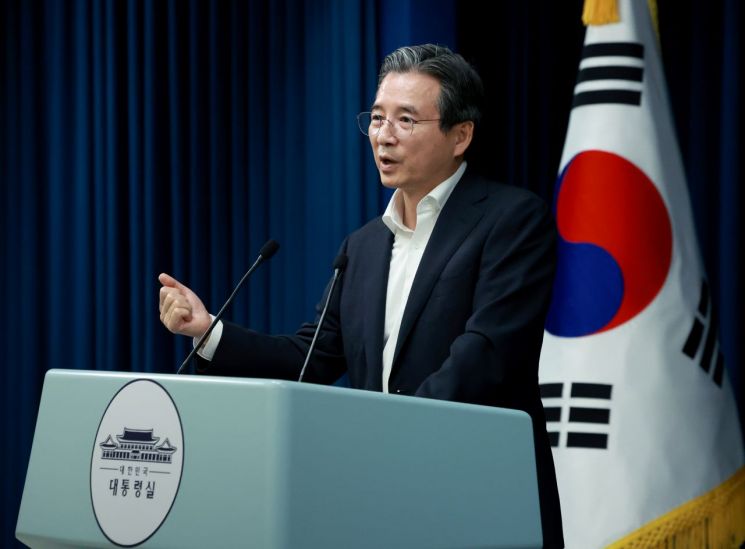
Kang Insu, a professor of economics at Sookmyung Women's University, stated, "Even though other countries have also lowered their tariffs to 15%, from our perspective, the rate has increased from 0% to 15%." He added, "Even if there is no relative disadvantage, it will inevitably be a burden when competing with American companies." He also noted, "In the past, the Korea Institute for International Economic Policy estimated that if a 25% tariff were imposed, South Korea's gross domestic product (GDP) would decrease by about 0.4%," emphasizing, "It is necessary to run new simulations reflecting the latest results."
Experts acknowledge that tariffs themselves can still act as a constraint on export competitiveness. However, they also evaluate that this agreement clearly helps mitigate downside risks to growth and reduces trade uncertainty. Previously, the Bank of Korea analyzed that easing tariff risks could potentially raise the growth rate by about 0.1 to 0.3 percentage points. The International Monetary Fund (IMF) also analyzed that if the effective US tariff rate falls to around 17%, global growth could increase by 0.2 percentage points. Had the previously estimated 25% tariff been imposed, South Korea's growth rate could have dropped by about 0.4 percentage points. With this agreement, however, that burden has been partially alleviated.
Kang Sungjin, professor of economics at Korea University and the incoming president of the Korean Economic Association, stated, "This trade agreement will affect South Korea's trade balance and growth rate." However, he also predicted, "The 0.8% growth rate projected by major institutions for this year is likely to remain unchanged." He added, "Although there are efforts for cooperation in shipbuilding and other sectors, there is concern that the domestic industrial ecosystem could be disrupted. As South Korea is a manufacturing-oriented country and relies on exports, any impact on the industry could have prolonged effects." He further explained, "Looking at current industrial activity indicators, production and consumption are increasing, but investment is declining. Investment is for the future, so a decrease suggests that companies have a rather negative outlook on the economy."
The impact on exports and the trade balance is also drawing attention. Hong Sungwook, director of economic trends and outlook at the Korea Institute for Industrial Economics and Trade, commented, "We previously forecasted that the environment would worsen in the second half of the year compared to the first half, and that outlook does not seem to have changed." He continued, "We projected that customs-cleared exports for this year ($670.6 billion) would decrease by 1.9% and the trade balance ($52.4 billion) would increase compared to last year due to falling energy prices. At this point, those forecasts are unlikely to change." He added, "Although exports have declined, the current account will only deteriorate and the growth rate will be affected if the trade balance also decreases. Since imports are decreasing, the growth rate is unlikely to fall below the current projections."
Director Hong explained, "For the impact of the US tariff negotiations to affect the growth rate, exports to the US would have to deteriorate significantly." He added, "Looking at the results for the first half of the year, exports to the US have definitely decreased compared to last year, but exports to other regions such as Europe have increased. As a result, South Korea's overall exports have not contracted, so it will take more time before this leads to a decline in the growth rate."
The automotive industry has gained some relief from this agreement. Hyundai Motor and Kia have secured conditions in the US market equivalent to those of Japanese and European companies. However, expanding local production and securing price competitiveness remain challenges. Song Youngkwan, senior research fellow at the Korea Development Institute (KDI) in the Department of Industry and Market Policy Research, stated, "One-third of South Korea's exports to the US are automobiles and auto parts, so lowering the tariff from 25% to 15% is a positive development compared to before." He added, "Although uncertainty regarding exports to the US has not been completely eliminated, the reduction in uncertainty is also positive." However, he pointed out, "We had agreed to zero tariffs under the Korea-US Free Trade Agreement (FTA), but this agreement has undermined that, which is a loss."
However, high tariffs on steel, aluminum, and copper were not included in this agreement. The Trump administration is currently imposing a 50% tariff on steel and aluminum imports and plans to apply a 50% tariff to copper semi-finished and derivative products starting August 1. As a result, the steel industry continues to face significant burdens regarding exports to the US.
The business community expects that the tariff reduction will help improve corporate sentiment to some extent. However, given the likelihood of continued volatility in US trade policy, there are also calls for South Korea to reduce its export dependence and simultaneously pursue domestic market expansion and diversification of overseas markets over the long term.
In summary, this agreement aligns South Korea's tariff rate with that of Japan and the EU at 15%, which is significant in that South Korea has avoided relatively unfavorable conditions. Cho Sungdae, head of the Trade Policy Research Division at the Korea International Trade Association, commented, "Although there are some regrets given the Korea-US FTA, South Korea was already cornered since Japan and Europe had reached agreements first. Considering these circumstances, this outcome is not a bad result." He added, "What the industry demanded from the government was at least not to be placed at a disadvantage compared to competing countries, and this condition has been met."
The government plans to reorganize its export strategy to the US, taking advantage of the reduced trade uncertainty resulting from the tariff reduction. An official from the Ministry of Trade, Industry and Energy stated, "To alleviate the tariff burden on companies, we plan to simultaneously pursue expanded local production, supply chain stabilization, and US investment projects."
© The Asia Business Daily(www.asiae.co.kr). All rights reserved.

















