Possibility of Renewed Push for the Onple Law...
"Concerns Over Restrictions on Becoming an AI Power"
Second Round for High-Precision Map Exports...
Decision Set for August 11
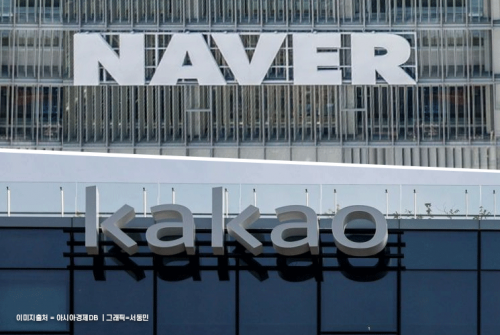
The Presidential Office announced on the 31st that the agreement on tariff negotiations with the United States did not include any provisions related to the Onple Law. Although the matter was discussed extensively during the negotiation process, it was not included in the final agreement.
The Onple Law was a presidential campaign pledge by President Lee Jaemyung and is aimed at regulating monopolistic practices by large platform companies. Although it was expected to gain rapid traction immediately after his election, it was subject to a complete review due to trade pressure from the United States. The United States used the fact that its own companies, such as Google and Apple, would be subject to regulation as grounds to make the Onple Law an obstacle in tariff negotiations. Legislation was also derailed in the previous 21st National Assembly due to both internal and external controversies.
Previously, the National Assembly postponed discussions on legislating the Onple Law until after trade negotiations. The platform industry stated that it was necessary to observe the developments. One industry official said, “It is difficult to predict the outcome,” but emphasized, “The Onple Law could restrict Korea’s advancement into becoming a leading nation in artificial intelligence (AI), which the government is highlighting.”
The government successfully defended against the export of high-precision maps, which it had opposed on grounds of national security. The Presidential Office stated, “There will be no further concessions.” However, it also announced plans to hold a Korea-US summit within two weeks to discuss security-related negotiations, raising the possibility that the United States may renew its request.
The issue arose in February when Google requested that the Korean government provide high-precision map data at a 1:5,000 scale, capable of displaying even narrow alleyways. Experts in industry and academia believe Google’s intent is to leverage Korea’s core assets in order to gain dominance in advanced industries.
An industry official said, “Exporting high-precision maps would not only raise concerns about national security but also make it difficult for numerous small and medium-sized enterprises working in the spatial information industry. Since high-precision maps are key assets directly linked to industrial competitiveness, there should be no concessions. Given that the government has expressed the same stance, I believe export is unlikely.”
Meanwhile, the “Survey Results Export Consultation Body,” which includes the Ministry of Land, Infrastructure and Transport, the Ministry of National Defense, and the Ministry of Foreign Affairs, plans to decide by August 11 whether to ultimately allow the export of high-precision maps. Google previously requested map exports in 2011 and 2016, but the government denied these requests, citing concerns over the potential leakage of information about military bases and other security facilities.
© The Asia Business Daily(www.asiae.co.kr). All rights reserved.

















