Benchmark Rate Held at 4.25~4.5% for Fifth Consecutive Time
Two Members Oppose Hold Amid Trump’s Pressure
First Multiple Dissenting Votes in FOMC in 32 Years
Waller and Bowman Advocate 0.25% Rate Cut
The United States Federal Reserve (Fed) has kept its benchmark interest rate unchanged for the fifth consecutive time, as widely expected, despite pressure from President Donald Trump to cut rates. The Fed reaffirmed its existing policy of maintaining a wait-and-see stance, citing the continued strength of the U.S. economy. The central bank also indicated that, despite recent trends of price stability, it will continue to monitor the impact of tariffs.
However, two Fed board members considered to be 'pro-Trump' advocated for a rate cut and cast dissenting votes against the majority decision to hold rates steady, revealing internal disagreements within the Fed. This marks the first time in 32 years, since 1993, that multiple dissenting votes have been cast in a Federal Open Market Committee (FOMC) rate decision. Analysts suggest that President Trump's overt pressure for rate cuts is causing divisions within the Fed and influencing its monetary policy.
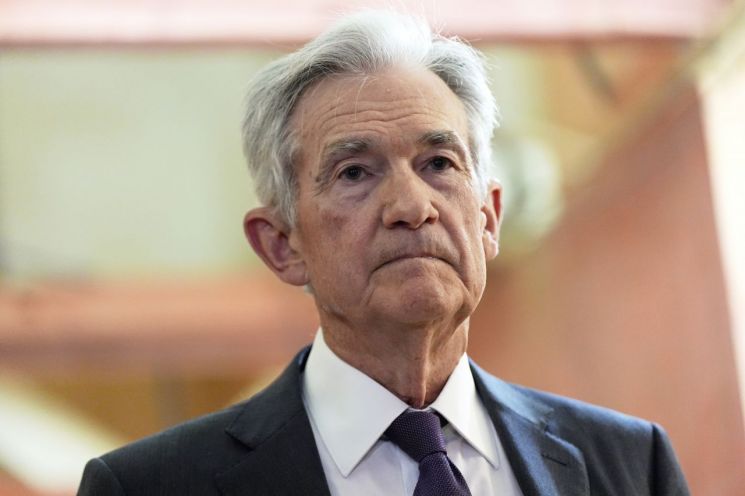
On July 30 (local time), the Fed announced in a policy statement released immediately after the regular FOMC meeting that it had decided to keep the federal funds rate unchanged at 4.25?4.5% per annum. As a result, the benchmark interest rate has remained steady at all five FOMC meetings held since President Trump took office this year. The interest rate gap with South Korea remains at 2.0 percentage points at the upper end.
In its statement, the Fed noted, "Uncertainty about the economic outlook remains elevated," and added, "The Committee is paying attention to both sides of its dual mandate (price stability and maximum employment)." The Fed further assessed, "The unemployment rate remains low and the labor market is still strong," and "The inflation rate remains somewhat elevated."
However, the Fed signaled a more cautious economic outlook by revising some of its language in this meeting. While the June meeting described economic activity as "continuing to expand at a solid pace," the latest statement said, "While fluctuations in net exports are affecting the data, recent indicators suggest that economic activity growth moderated in the first half of the year." The assessment of economic uncertainty was also adjusted to be more conservative. In June, the Fed said uncertainty had "declined but remains elevated," but in this meeting, it was revised to "remains elevated."
Unlike the unanimous decision to hold rates steady in June, two members dissented in this meeting. Vice Chair Michelle Bowman and Governor Christopher Waller both supported a 0.25 percentage point rate cut. Vice Chair Bowman was directly appointed by President Trump, and Governor Waller is considered a potential successor to Chair Jerome Powell, classifying both as pro-Trump figures. As a result, there is growing evaluation that President Trump's pressure for rate cuts is creating divisions within the Fed. It is the first time in 32 years that more than one member has cast a dissenting vote against the majority in an FOMC decision.
However, the interest rate futures market had already taken the rate hold as a given before this meeting. Just before the meeting, the market saw a 97% probability of a rate hold. The prevailing analysis was that, with employment and growth rates remaining robust, the Fed would continue its wait-and-see approach to respond to tariff-driven inflation.
The Fed added, "The Committee's assessment will be based on a wide range of information, including labor market conditions, inflation pressures and inflation expectations, as well as financial and international developments."
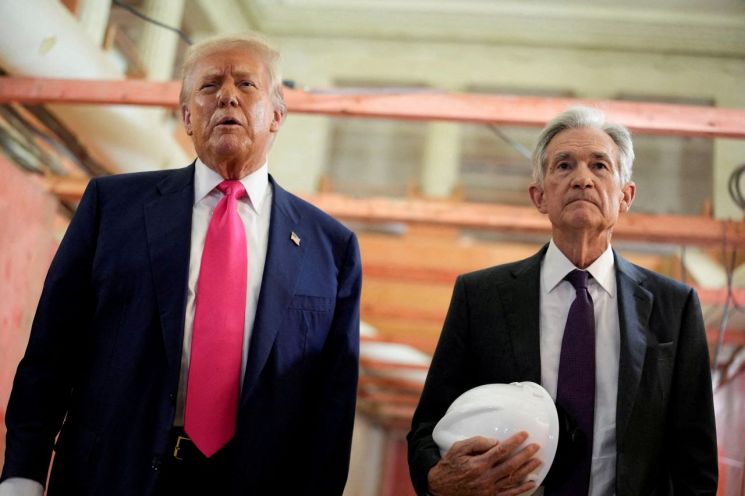
Meanwhile, this decision to hold rates steady is notable because it comes amid even more explicit demands from President Trump for a rate cut. On July 24, President Trump made a surprise visit to the Fed headquarters?becoming the first sitting president to do so in 19 years?and told Chair Jerome Powell, "I hope you can lower the rates a bit." Although he publicly cited excessive spending on renovations of the Fed headquarters as an issue, the dominant interpretation is that the visit was essentially intended to pressure for a rate cut.
© The Asia Business Daily(www.asiae.co.kr). All rights reserved.


















