Bipartisan Cooperation Begins to Overcome Regionalism
and Expand Political Diversity
Discussions on electoral system reform to overcome the structural limitations of local politics have begun in earnest.
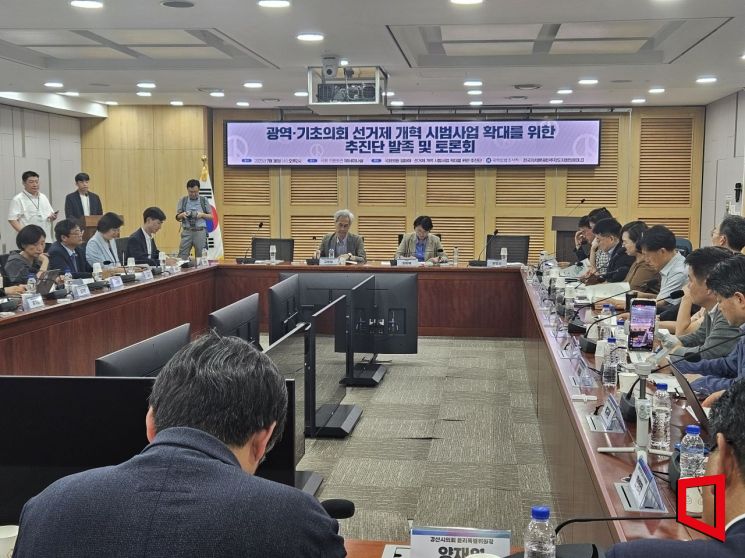 As local election system reform gains momentum, the 'Metropolitan Basic Council Election System Reform Task Force' is launched. Provided by the task force
On July 30, the National Assembly held the launch ceremony and forum for the "Task Force for Expanding Pilot Projects on Metropolitan and Basic Council Electoral System Reform," marking the first step toward innovation in local autonomy.
This task force is comprised of a total of 86 members, including lawmakers from the Democratic Party, the Cho Kuk Innovation Party, the Progressive Party, the Social Democratic Party, independent lawmakers, as well as metropolitan and basic council members, experts, and party members. They pledged bipartisan cooperation and practical action. The task force plans to further expand participation even after its launch, aiming to broaden the scope of institutional reform discussions ahead of the 2026 local elections.
◆ "Without institutional reform, it is difficult to revive local politics"
The forum, held following the launch ceremony, was attended by numerous lawmakers, officials from the National Assembly Research Service, current local council members, experts, and party activists, who shared a consensus on the realities of local politics and the need for reform.
The panelists pointed out the structural crises facing local politics, such as population decline, the disappearance of local communities, and the monopoly of single parties. They unanimously stated that in order for local politics to create practical alternatives, electoral system reform that guarantees political diversity and fair competition must be pursued in parallel.
Lawmaker Lim Mi-ae emphasized, "In order for local communities to survive, we must create a political environment that ensures diversity beyond regionalism," adding, "With only 10 months left until the 2026 local elections, now is the golden time for institutional reform."
◆ Securing momentum for institutional transition through bipartisan cooperation
The task force, as a bipartisan body involving various parties and independent lawmakers, plans to prepare concrete alternatives such as electoral district reform, expansion of multi-member constituencies, and strengthening the participation of political parties and civil society.
A lawmaker who attended the launch ceremony stated, "Today marks the starting point of action toward institutional reform," and added, "Through the activities of the task force, we will establish an institutional foundation so that local politics can bring about tangible change in local communities."
The task force plans to continue holding regular forums and policy proposals to expand social consensus and secure momentum for institutional reform aimed at reviving local politics and strengthening democracy.
© The Asia Business Daily(www.asiae.co.kr). All rights reserved.

















