Reducing Household Childcare Costs...
Tuition Ranges from 192,000 to 385,000 KRW, Creating a Heavy Burden
Facing a birth rate crisis, China has proposed free kindergarten education as a solution.
According to multiple Chinese media outlets, including People’s Daily and Xin Jing Bao, the State Council executive meeting chaired by Premier Li Qiang on July 25 discussed matters related to the gradual implementation of free kindergarten education.
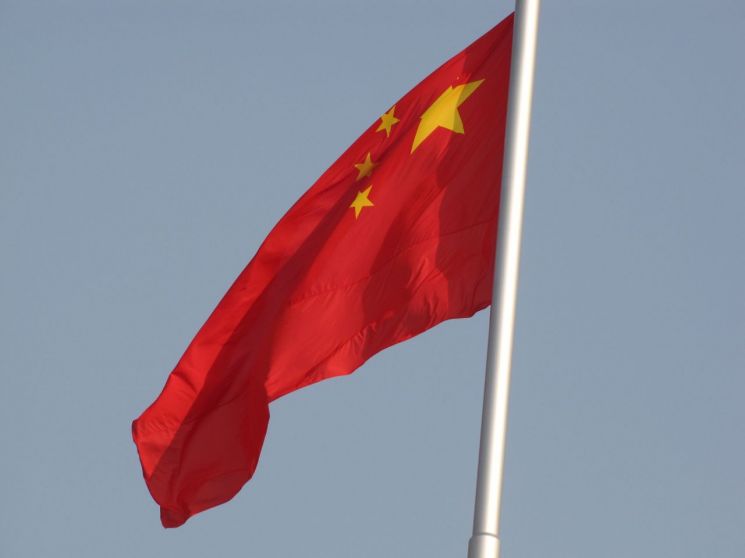
Reducing Household Childcare Costs... Early Benefits Expected for Children in Economically Underdeveloped Regions
Free kindergarten education is seen as a measure by the Chinese authorities to address the low birth rate crisis. Wang Jian, a researcher at the Institute of Educational Finance at the Chinese Academy of Educational Sciences, explained, "Early childhood education is a crucial stage for children before they begin formal schooling, but due to economic development and rising prices, the burden of childcare and education expenses has increased." He pointed out that the introduction of free education would reduce the economic burden on parents.
According to the "Outline for the Construction of an Educational Powerhouse (2024-2035)" announced in January this year, China plans to expand the scope of free education. The "Preschool Education Law of the People’s Republic of China," which came into effect on June 1, includes provisions to "gradually promote free education to lower household childcare and education costs." The State Council executive meeting held on July 25 was a venue to further specify these relevant laws and policy regulations.
Once free kindergarten education is implemented, expectations are high that children from low-income families and economically underdeveloped regions will also have access to stable education. Director Wang Jian explained, "Taking into account factors such as demographic changes and fiscal conditions, and based on the principles of basic security and universality, the policy will be systematically promoted in accordance with guidelines for policy linkage and minimum livelihood guarantees for vulnerable groups, such as children from disadvantaged families, orphans, and children with disabilities."
China is experiencing pronounced trends of low birth rates, an aging population, and regional polarization in population growth and decline, all of which have emerged as major social issues. The continued decline in birth rates has also led to a decrease in the number of kindergartens. According to the "2024 National Education Development Statistical Bulletin," as of last year, there were a total of 253,300 kindergartens nationwide, with 25.84 million kindergarten students recorded.
"Kindergarten Tuition Remains a Heavy Burden"
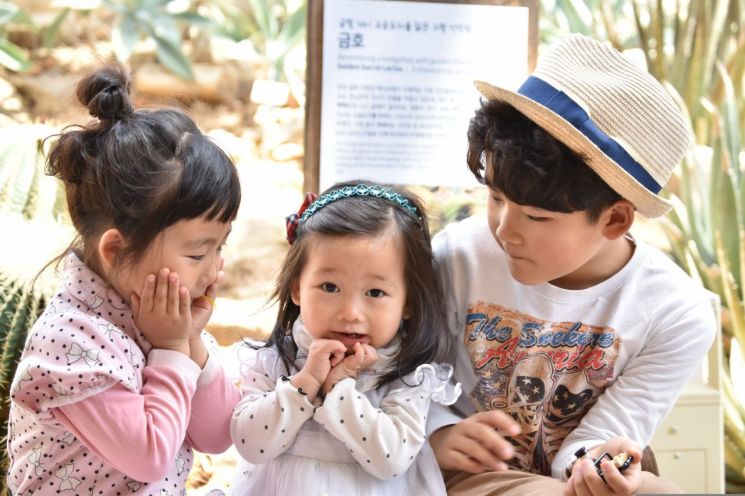
Currently, kindergarten tuition in China varies by region, but in Beijing and Shanghai, the monthly tuition for public kindergartens ranges from 1,000 to 2,000 yuan (approximately 192,000 to 385,000 KRW). For private kindergartens, the monthly fee is 5,000 to 10,000 yuan (about 960,000 to 1,920,000 KRW). Compared to the monthly minimum wage announced this year?2,520 yuan (485,000 KRW) in Beijing and 2,740 yuan (528,000 KRW) in Shanghai?the tuition burden is inevitably high.
Mr. Wang, who lives in Guangzhou, told Guangmingwang, "When you add up the monthly childcare fee, meal expenses, extracurricular activities, and textbook costs, it exceeds 1,000 yuan (about 192,000 KRW)." He expressed hope that, "If free education begins, our family could save more than 10,000 yuan (about 1,920,000 KRW) per year." Mr. Wang added, "Because kindergarten tuition is burdensome, many families opt for home education. If free education is implemented, more children will be able to attend kindergarten."
Director Wang Jian stated that for the implementation of free early childhood education, both the state and society must invest substantial financial, material, and human resources. The plan is to gradually expand the range of beneficiaries in four areas: promoting free education in daycare centers, prioritizing exemption of childcare fees, prioritizing vulnerable groups, and prioritizing specific regions.
Gao Bingcheng, associate researcher at the Institute of Basic Education at the Chinese Academy of Educational Sciences, emphasized that while free kindergarten education eases the burden on parents, it increases the government's responsibilities. He said, "It is necessary to further strengthen supervision over the operation of kindergartens, the level of financial support, childcare and education, educational direction, and teaching staff." He added, "Only then can kindergartens become safe educational environments where parents can be reassured and children can grow up happily."
China's annual number of newborns has remained below 10 million for three consecutive years since 2022, and the total population has also decreased for three consecutive years. The British daily Financial Times (FT), citing statistics from the Chinese Ministry of Education, reported that the number of registered kindergarten children in China decreased by 25% (12 million), from 48 million in 2020 to 36 million in 2024. The number of kindergartens peaked at 295,000 in 2021, but by the end of last year, 41,500 had closed.
© The Asia Business Daily(www.asiae.co.kr). All rights reserved.


















