Rural Development Administration Applies for Plant Patent for 'Sumdeul' Perilla Leaves
Bronchial Inflammation Caused by Fine Dust Improved by up to 2.8 Times
Contract Cultivation with Farmers Contributes to Increased Income
Rural Development Administration Aims to Establish Stable Supply Chain and Expand Market
It has been scientifically proven that perilla leaves, a representative leafy vegetable used for wraps, can alleviate bronchial inflammation caused by fine dust and are effective in improving respiratory health.
The Rural Development Administration announced on July 30 that it has applied for a plant patent for the 'Sumdeul' perilla seed, which is intended for use in compositions to prevent and improve respiratory diseases, as well as for extracts derived from it.
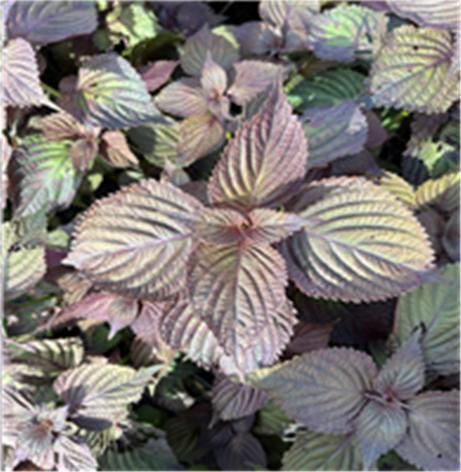
Domestic perilla leaves are known to contain large amounts of antioxidant compounds such as rosmarinic acid, as well as essential oil components. The Donguibogam, a medical book from the Joseon Dynasty, also records that "perilla leaves (soyeop) facilitate the circulation of qi and treat cough and asthma." Based on this, the Rural Development Administration developed the domestic perilla variety Sumdeul, which is effective in alleviating bronchial inflammation caused by fine dust and improving respiratory health, and scientifically verified its efficacy.
The name Sumdeul means "perilla that makes breathing easier." The Rural Development Administration initially selected 56 varieties with outstanding respiratory health benefits from about 200 domestic perilla resources. Through large-scale screening, they finally selected a perilla variety that not only had excellent cell-protective effects against fine dust but also effectively improved inflammation and excessive mucus secretion, and developed it as a plant patent.
According to the Rural Development Administration, when Sumdeul leaf extract was applied to human nasal cells stimulated with fine dust (PM2.5) in cell experiments, bronchial inflammation decreased by 2.8 times compared to the control variety (Namcheon). In cells induced to produce excessive mucus, mucus secretion was suppressed by 1.8 times. In animal experiments where Sumdeul extract was administered orally to laboratory mice exposed to fine dust in their respiratory tract, lung tissue fibrosis was alleviated by 2.1 times compared to the control variety, and the levels of biological markers (biomarkers) that induce inflammatory responses also showed a significant decrease. These research results were published in the international journal 'Food Science and Nutrition.'
To industrialize Sumdeul as a functional health food ingredient, the Rural Development Administration selected four types of active substances, isolated and structurally identified from the leaves, as indicator compounds and is developing technology to produce them stably. Cultivation experiments also confirmed that the content of these indicator compounds can be stably maintained.
Based on this, the Rural Development Administration plans to further advance research on the functionality of Sumdeul, support the registration of individually recognized functional raw materials for health functional foods in collaboration with industry, and promote the development of various respiratory health products. In addition, they plan to establish a stable supply chain of domestic raw materials through contract cultivation with farmers and expand the market by developing a variety of processed foods.
Kwak Doyeon, Director of the National Institute of Crop Science at the Rural Development Administration, said, "Through research on Sumdeul, we will secure functional raw materials for improving respiratory health, which have been lacking in Korea, and establish a foundation to connect them to health functional foods and industrialization."
© The Asia Business Daily(www.asiae.co.kr). All rights reserved.
![Clutching a Stolen Dior Bag, Saying "I Hate Being Poor but Real"... The Grotesque Con of a "Human Knockoff" [Slate]](https://cwcontent.asiae.co.kr/asiaresize/183/2026021902243444107_1771435474.jpg)
















