72% of Officetel Rental Contracts in the Seoul Metropolitan Area Are Monthly Rent
Incheon’s Share of Monthly Rent Rises by 8 Percentage Points in One Year
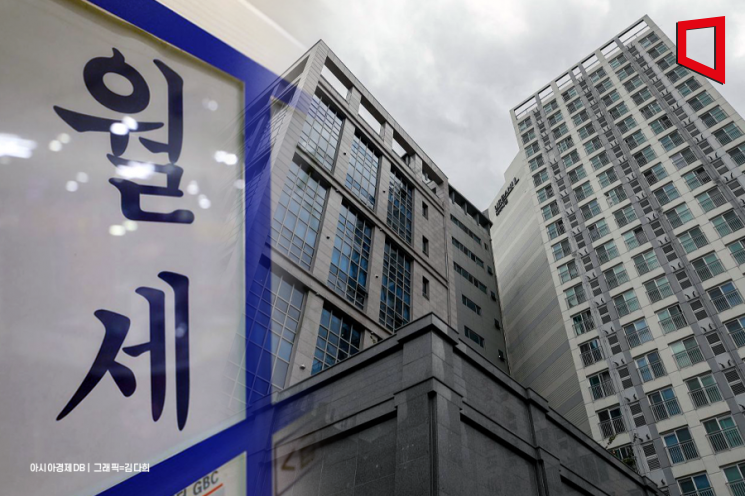
The trend toward monthly rent is intensifying in the officetel rental market in the Seoul metropolitan area. Ongoing distrust in jeonse transactions, due to issues such as scams, and the decline in interest income that landlords can earn from depositing jeonse deposits have led to a stronger preference for monthly rent.
According to Real Estate R114 on July 30, monthly rent accounted for 72% of all officetel rental contracts signed in the Seoul metropolitan area last month.
In Seoul and Gyeonggi Province, the share of monthly rent was 75% and 71% respectively, meaning that 7 out of every 10 rental transactions were monthly rent contracts. In Incheon, the share was 62%, which is lower than in the other regions, but this figure rose by 8 percentage points over the past year compared to 54% in June of last year, marking the largest increase in the metropolitan area.
According to data from the Korea Real Estate Board's officetel price trend survey, the average jeonse price for officetels in the metropolitan area dropped slightly by 0.3% over the past year, from 192.36 million won in June of last year to 191.74 million won last month.
However, during the same period, the average deposit for monthly rent contracts increased by 0.2% (from 18 million won to 18.04 million won), and the average monthly rent rose by 2.1% (from 826,000 won to 843,000 won). While jeonse prices declined, both the deposit and the monthly rent for monthly rent contracts increased, raising the overall housing cost burden.
As of last month, the 'jeonse-to-monthly rent conversion rate' for officetels in the metropolitan area stood at 6.30%. This rate had risen from 6.06% in September of last year to 6.30% in April, and has remained at that level for three consecutive months. The jeonse-to-monthly rent conversion rate refers to the rate applied when converting a jeonse deposit to monthly rent. For landlords, it is an indicator for estimating monthly rental income, while tenants use it to calculate opportunity costs when choosing between jeonse and monthly rent or when signing a monthly rent contract.
The regular deposit interest rate that landlords receive when depositing jeonse deposits in a bank has continued to decline since 3.41% per year in September of last year, and has remained in the 2% range since February of this year.
Real Estate R114 stated, "Officetel rental contracts have always been more active for monthly rent than for jeonse, but the proportion has expanded further recently," adding, "As landlords' preference for monthly rent strengthens, upward pressure on monthly rent is expected to increase. In a situation where demand suppression measures in the apartment market may lead to additional rental demand flowing into the non-residential officetel market, monthly rent prices are expected to rise steeply."
© The Asia Business Daily(www.asiae.co.kr). All rights reserved.

















