Lutnick Urges South Korea to "Bring It All to the Table"
Seoul Mobilizes Top-Level Channels for Final Push
The Donald Trump administration has effectively issued a 'final ultimatum' to the South Korean government, which is making an all-out effort to secure a trade agreement, by demanding that Seoul present its best and last offer. With the expiration of the mutual tariff suspension set for August 1 and the United States raising its demands for further concessions, Washington has ramped up the pressure to its highest level. In response, the South Korean government has mobilized its highest-level negotiation channels and launched a comprehensive response.
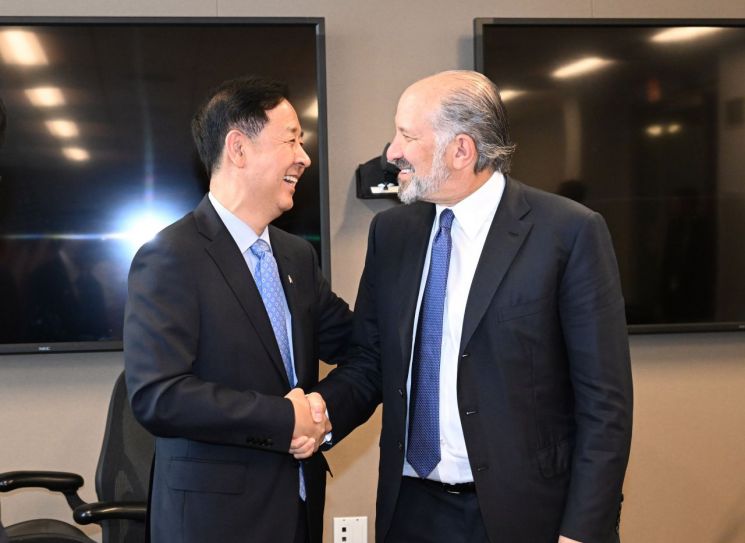
On July 29 (local time), the Wall Street Journal (WSJ), citing sources, reported that U.S. Secretary of Commerce Howard Lutnick recently met with South Korean officials, including Minister of Trade, Industry and Energy Kim Jeonggwan, in Scotland. During the meeting, Lutnick emphasized that South Korea must "bring it all" to the table for the final trade proposal to be presented to President Trump.
Secretary Lutnick reportedly stressed that, given the United States has already concluded trade agreements with major partners such as the European Union (EU), Japan, and the United Kingdom, South Korea must be able to persuade President Trump why a new agreement with Seoul is necessary.
In a Fox News interview the previous day, Lutnick also mentioned that the South Korean negotiation team had traveled all the way to Scotland to meet with him and Jamieson Greer, the U.S. Trade Representative (USTR). With little time left before the negotiation deadline, Minister Kim and the South Korean delegation followed Lutnick's itinerary during President Trump's visit to Scotland to continue additional negotiations on site.
Currently, the United States has concluded trade agreements with the United Kingdom, Japan, the EU, Vietnam, Indonesia, and the Philippines. In particular, the U.S. has agreed with Japan and the EU to lower mutual tariffs and automobile tariffs to 15%, and has also pledged to apply the same tariff rate to semiconductor products in the future. This exerts significant pressure on South Korea, where negotiations are still ongoing.
For South Korean companies to avoid disadvantages compared to competitors in the world's largest market, reducing tariffs to below 15% is considered the minimum acceptable outcome in the negotiations. However, since President Trump has effectively set 15% as the lower limit for tariffs, even this may only be achievable if South Korea offers large-scale investments and market opening measures.
There is a significant gap in investment scale between South Korea and the United States. The South Korean government previously proposed a U.S. investment plan of $100 billion plus alpha, but this falls far short of Japan's $550 billion, the EU's $600 billion, and the $400 billion initially demanded by the United States. Ultimately, closing this investment gap is the key to concluding the negotiations. Currently, South Korea is deploying all possible options?including expanding U.S.-bound investment, opening markets for agricultural products, and cooperation in shipbuilding?to lower mutual tariffs and automobile tariffs, which currently reach 25%, to around 15%. In particular, Seoul is highlighting the 'MASGA' (Make American Shipbuilding Great Again) project to persuade the U.S. by supporting the revival of the U.S. shipbuilding industry.
In this context, Secretary Lutnick's ongoing consultations with the South Korean side are being interpreted as a positive sign indicating the possibility of a successful agreement.
The South Korean government has activated its highest-level negotiation channels in economic, industrial, trade, and diplomatic sectors, launching a full-scale effort to reduce U.S. tariffs to below 15% before the mutual tariff suspension ends. On this day, Deputy Prime Minister and Minister of Economy and Finance Koo Yooncheol arrived in Washington, D.C. and held trade talks with Secretary Lutnick for two hours starting at 3 p.m. Minister Kim and Yeo Hankoo, head of trade negotiations at the Ministry of Trade, Industry and Energy, were also present. Minister of Foreign Affairs Cho Hyun is scheduled to arrive in Washington, D.C. on July 30 to meet with Secretary of State Marco Rubio and lend further support.
Deputy Prime Minister Koo will hold final negotiations to conclude the trade deal with U.S. Secretary of the Treasury Scott Besant on July 31. Speaking to reporters at Dulles International Airport near Washington, D.C., he stated, "When I meet Secretary Besant, I will thoroughly explain the programs South Korea has prepared, the current situation, and the projects for economic cooperation between South Korea and the United States. While prioritizing our national interest, I will do my utmost to ensure negotiations are conducted in areas that benefit both countries."
South Korean business leaders who are key players in U.S.-bound investments, including Samsung Electronics Chairman Lee Jaeyong and Hanwha Group Vice Chairman Kim Dongkwan, are also gathering in Washington, D.C. to provide support for the negotiations.
© The Asia Business Daily(www.asiae.co.kr). All rights reserved.
![Clutching a Stolen Dior Bag, Saying "I Hate Being Poor but Real"... The Grotesque Con of a "Human Knockoff" [Slate]](https://cwcontent.asiae.co.kr/asiaresize/183/2026021902243444107_1771435474.jpg)
















