Business Leaders Rush to the U.S. Ahead of Tariff Talks
National Assembly Fast-Tracks Yellow Envelope Act
Business Community Warns of "Constant Labor Disputes"
Concerns Raised: "Negotiations May Stall Operations"
As the government emphasizes cooperation with private companies ahead of tariff negotiations with the United States, the business community is expressing strong opposition as regulatory legislation, such as the so-called "Yellow Envelope Act" (Amendment to Articles 2 and 3 of the Trade Union and Labor Relations Adjustment Act), is being rapidly pushed forward in the National Assembly. While the government is highlighting domestic companies' investment and cooperation to prevent U.S. tariffs, legislative changes led by the ruling party are instead signaling unfavorable institutional changes for businesses, leading to criticism of a double standard.
Unlike in the past, a "new public-private cooperation system" is operating, where the public and private sectors strategically collaborate to respond to global supply chain restructuring and changes in the trade environment. In this situation, the business community and others are voicing concerns that the National Assembly's concurrent pursuit of regulatory legislation, without considering timing and consistency, could undermine not only the momentum for negotiations but also national competitiveness.
On July 30, the Korea Employers Federation and major industry associations issued a joint statement at the KEF Hall in Mapo-gu, Seoul, calling for a halt to the amendment of the Trade Union Act. Lee Donggeun, Executive Vice Chairman of KEF, stated, "If the amendment passes, even high-level management decisions such as investment, relocation of business sites, and restructuring could become subjects of labor disputes," and added, "According to the amendment, even if a union commits illegal acts, it would be virtually impossible to claim damages, so industrial sites would face severe chaos from labor disputes and illegal activities throughout the year."
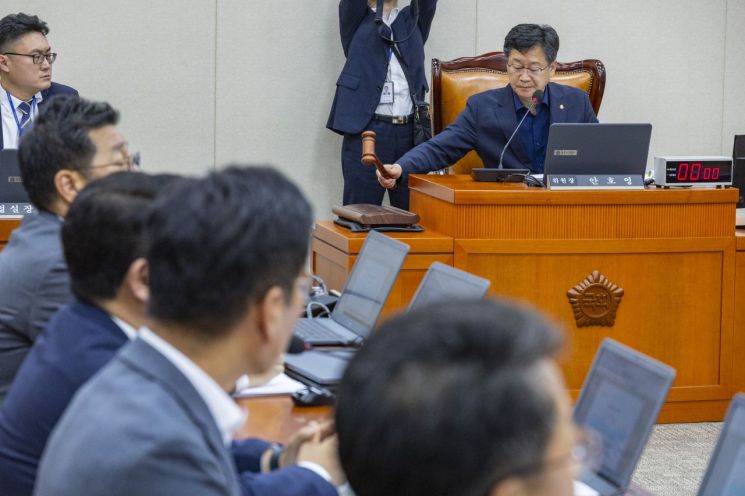
The KEF expressed concern that industries such as shipbuilding and construction would be hit particularly hard. The associations stated, "Korean manufacturing is structured as a multi-tiered collaboration system in sectors such as automotive, shipbuilding, and construction. If constant labor disputes arise against prime contractors, the industrial ecosystem between main and subcontractors will inevitably collapse," and added, "In particular, the shipbuilding industry, which is under the spotlight in tariff negotiations with the United States, has a high proportion of subcontractors among manufacturing industries, so it is expected to suffer the most from the amendment of the union law."
On the previous day, eight major economic organizations, including the Federation of Korean Industries and the Korea Chamber of Commerce and Industry, also issued a joint statement pointing out, "At this critical time when the government, National Assembly, and companies must unite to overcome the crisis, the National Assembly's successive introduction of regulatory legislation that restricts business activities could cause extreme confusion for companies," and added, "It is regrettable that, with the outcome of tariff negotiations still uncertain, we may be tying our own hands."
Among companies in shipbuilding, steel, and semiconductors that are planning investments in the United States, concerns are growing that regulatory legislation could worsen the negotiation environment. A company official said, "Industries like shipbuilding and construction are subject to economic cycles, so it is difficult to directly employ everyone, and there are inevitably many partner companies. If the Yellow Envelope Act is implemented, all our time for company operations could be consumed by negotiations with hundreds of partner companies." The official also expressed concern, "Since the advent of artificial intelligence (AI), the pace of change in all industries has accelerated significantly, and if strikes become routine, management decisions could be delayed." Another industry representative commented, "Regulation should be set at a level that companies can withstand, but I worry that simultaneous multiple measures could be fatal. While I understand the intent to some extent, I think there needs to be some adjustment in speed."
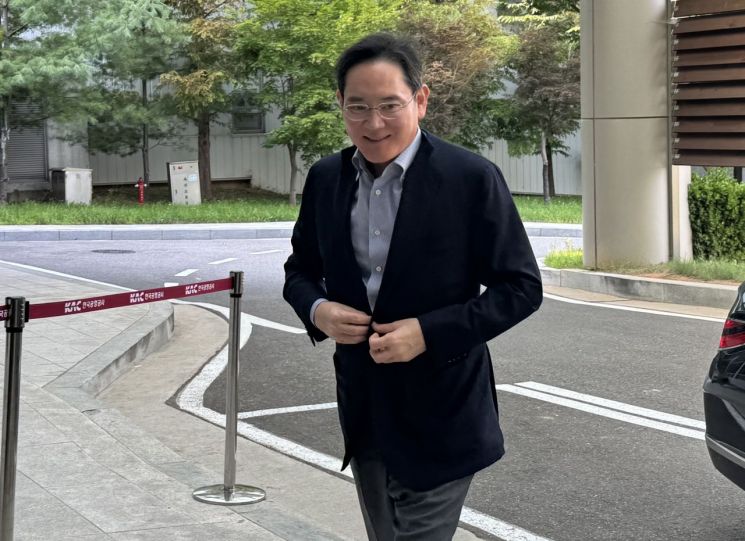
With the deadline for tariff negotiations with the United States (August 1) fast approaching, key figures in Korea's economic and industrial sectors have also departed for the U.S. to support government negotiations. Samsung Electronics Chairman Lee Jae-yong and Hanwha Group Vice Chairman Kim Dongkwan are reportedly coordinating investment plans and cooperation measures during their respective business trips to Washington, D.C. Samsung Electronics has already announced plans to expand its U.S. semiconductor plant with an investment of $37 billion (about 54 trillion won) and has signed a foundry (semiconductor contract manufacturing) deal with Tesla worth 22.8 trillion won. Hanwha Group also completed the acquisition of the Philly Shipyard in the U.S. earlier this year and is reportedly participating in the government-led Korea-U.S. shipbuilding cooperation project, "Make American Shipbuilding Great Again (MASGA)."
The business community points out that, while they are making substantial contributions to government negotiations through local plant expansion, technology cooperation, and supply chain strengthening, the separate regulatory legislation being pursued by the National Assembly could undermine policy credibility and consistency. In particular, the Yellow Envelope Act expands the collective bargaining rights of subcontracted workers to include prime contractors and restricts claims for damages arising from strikes, raising concerns that it could have a significant impact on the entire manufacturing sector, which operates on a main-subcontractor structure. There are also concerns that, if the establishment of local plants?considered a key bargaining chip in tariff negotiations?is pursued, strikes could become a major obstacle.
The Yellow Envelope Act extends corporate responsibility to include subcontracted workers, allowing them to negotiate directly with prime contractors. It also broadens the scope of restrictions on claims for damages resulting from strikes. Currently, strikes are only allowed in cases such as the breakdown of wage negotiations, but if the amendment takes effect, strikes could also occur due to restructuring or the relocation of factories overseas. A business community representative said, "Even if the government and companies are working in step, the prospects for survival are uncertain, so it is concerning that the legislative direction of the National Assembly is out of sync with these efforts."
© The Asia Business Daily(www.asiae.co.kr). All rights reserved.
![Clutching a Stolen Dior Bag, Saying "I Hate Being Poor but Real"... The Grotesque Con of a "Human Knockoff" [Slate]](https://cwcontent.asiae.co.kr/asiaresize/183/2026021902243444107_1771435474.jpg)

















