Controversy Over Japanese-Themed Festival in Dongducheon, Gyeonggi Province
Kimono and Samurai Experiences Scheduled on Liberation Day
Controversy has arisen after it was revealed that a themed festival highlighting traditional Japanese culture is being held in South Korea around Liberation Day. On the very day that South Korea regained its sovereignty from Japan, events such as a Japanese-style samurai show and a kimono contest are scheduled to take place, prompting criticism that this is an act of "forgetting historical awareness."
The event in question is the "Natsumatsuri Summer Festival," which opened on July 26 at "Nijimori Studio" in Dongducheon, Gyeonggi Province, and will run until August 17. Nijimori Studio is a cultural space that recreates the atmosphere of Japan's Edo period. It originally started as a set for dramas and movies but has recently expanded its business to offer experiential content for general tourists.
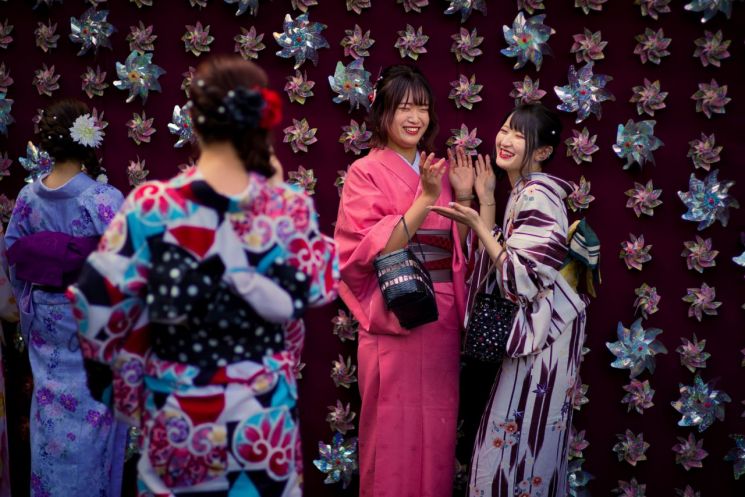 This is a reference photo to aid understanding of the article and is unrelated to the main content. Pixabay
The festival program consists of performances and participatory events that reinterpret authentic Japanese summer festivals in a modern way. It includes a samurai duel performance, a traditional mikoshi parade, kimono and cosplay contests, enka live performances, fireworks, and a wish lantern performance. In addition, there will be a Japanese beer brand's beer-drinking contest and a raffle for ryokan accommodation vouchers.
Admission is set at 20,000 won on weekdays and 25,000 won on weekends and public holidays. The issue is that the only public holiday during the festival period is Liberation Day. In other words, on the day commemorating liberation and independence, people are expected to pay a higher price than on weekdays to enjoy a Japanese traditional festival, creating a paradoxical situation.
Liberation Day is a national holiday that marks the day in 1945 when the Republic of Korea regained sovereignty from Japanese rule. It is a legally designated holiday that embodies the meaning of national identity and the restoration of sovereignty. The fact that a large-scale festival featuring traditional Japanese culture is being held on such a day has led to criticism of "a lack of historical sensitivity." Online, there has been a flood of criticism, including comments such as "Is this really Korea, not Japan?", "There is a limit to ignorance," "Do they really not understand the meaning of Liberation Day?", "They should have refrained at least for one day," "Even if we can't make sacrifices for our country, we should at least remember those who died for it," and "What is the intention behind planning such an event specifically on Liberation Day?"
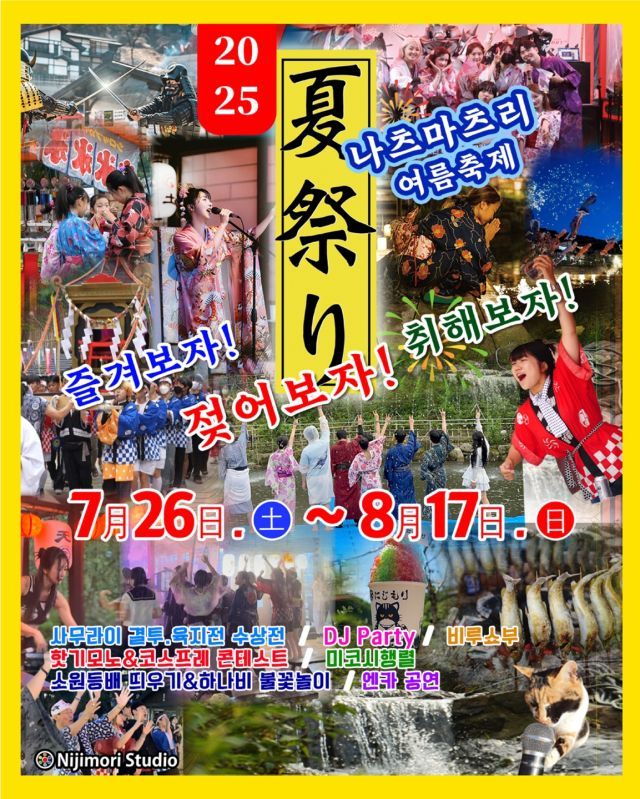 'Nijimori Studio Natsumatsuri Summer Festival' Information Poster. Nijimori Studio Natsumatsuri Official Website
This is not the first time Nijimori Studio has faced controversy. Last year, the studio also held events during the period including Liberation Day, which caused a stir. In 2022, the Jochan Village Management Committee, as well as the senior citizens' association, women's association, and youth association in Tapdong-dong, Dongducheon, where the studio is located, requested that the studio close or take similar measures only on Liberation Day, but these requests were ignored.
© The Asia Business Daily(www.asiae.co.kr). All rights reserved.
![Clutching a Stolen Dior Bag, Saying "I Hate Being Poor but Real"... The Grotesque Con of a "Human Knockoff" [Slate]](https://cwcontent.asiae.co.kr/asiaresize/183/2026021902243444107_1771435474.jpg)

















