The U.S. government responded on July 29 (local time) to a statement by Kim Yo-jong, Vice Department Director of the Workers' Party of Korea, who said that although the personal relationship between the North Korean and U.S. leaders is not bad, denuclearization negotiations are impossible. The government stated, "President Donald Trump is willing to talk to anyone to provide peace, prosperity, and a normal life to people around the world."
State Department spokesperson Tammy Bruce made this comment during a briefing when asked about the content of Kim's statement.
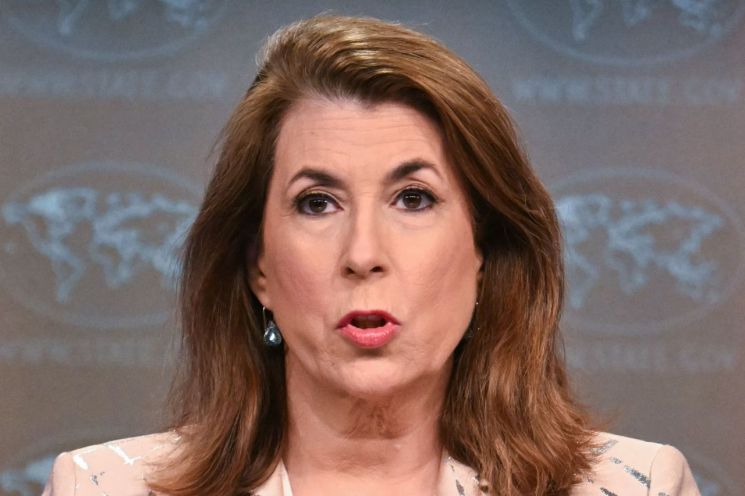
However, she avoided further comment, saying, "It would be better to refer questions regarding the relationship between the President and other (leaders) to the White House."
During his first term, President Trump met with North Korean leader Kim Jong-un three times (in Singapore, Hanoi, and Panmunjom), but failed to achieve the goal of denuclearization.
According to Reuters the previous day, a White House official responded to Kim's statement that "negotiations between North Korea and the U.S. for denuclearization are impossible" by saying that President Trump is still willing to talk with Chairman Kim for North Korea's denuclearization and remains open to dialogue with North Korea for denuclearization.
Regarding the discussion on the "two-state solution for Israel and Palestine" led by France and Saudi Arabia at the United Nations headquarters in New York, spokesperson Bruce criticized it as "an unproductive and ill-timed meeting," adding that "it is nothing more than a publicity event."
In response to concerns about the severe famine in the Gaza Strip, she stated, "Our focus is on getting more aid into Gaza and achieving a ceasefire," and added, "That ceasefire has not been achieved so far because Hamas is rejecting it."
Regarding the controversy over Taiwanese President Lai Ching-te canceling his trip to Central and South America via a stopover in New York after President Trump denied permission, Bruce said, "The issue of transits by senior officials, including the President of Taiwan, is fully consistent with the long-standing U.S. policy and practice," and added, "The United States has long adhered to the 'One China' policy, and this policy has never changed."
Meanwhile, the Taiwanese Ministry of Foreign Affairs stated the previous day through its spokesperson that "the President of Taiwan does not have any plans to travel overseas for the time being," and "the U.S. side has never denied a transit request."
© The Asia Business Daily(www.asiae.co.kr). All rights reserved.

















