WSJ Reports:
Deputy Prime Minister Koo Arrives in the U.S. Ahead of Final Negotiations on the 31st
The Wall Street Journal (WSJ) reported on July 29 (local time) that Howard Lutnick, the U.S. Secretary of Commerce, recently met with Kim Jungkwan, the Minister of Trade, Industry and Energy of South Korea, and other Korean officials in Scotland, urging them to bring their best and final trade offer. With the expiration of the mutual tariff suspension set for August 1, the United States is ramping up pressure on South Korea by demanding additional concessions.
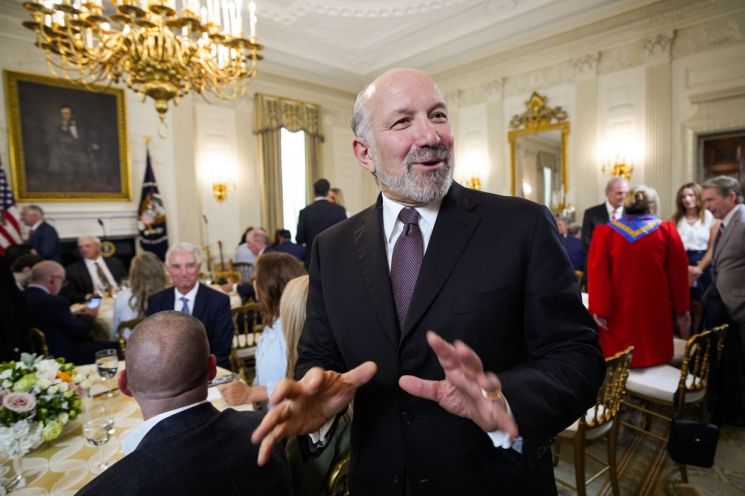
Citing sources, WSJ reported that Secretary Lutnick emphasized to the Korean trade negotiation delegation during the meeting in Scotland that they must "bring it all" for the final trade proposal to be presented to President Trump.
Secretary Lutnick reportedly stated that Korea must persuade President Trump of the need to sign a new agreement with South Korea, especially given that the United States has already concluded trade deals in succession with major trading partners such as the European Union (EU), Japan, and the United Kingdom.
He also revealed in a Fox News interview the previous day that the Korean negotiation team had traveled to Scotland to meet with him and Jamison Greer, the U.S. Trade Representative (USTR). Minister Kim and the negotiation team continued additional negotiations on-site, following Secretary Lutnick’s itinerary as he accompanied President Trump during his visit to Scotland.
The Korean government is currently making a final all-out effort to reach an agreement before the mutual tariff suspension expires. The United States has so far concluded trade agreements in succession with the United Kingdom, Japan, the EU, Vietnam, Indonesia, and the Philippines. In particular, for Japan and the EU, the mutual tariff and automobile tariffs were lowered to 15%, and future tariffs on semiconductor items were also promised to be set at the same level. This places significant pressure on South Korea, where negotiations are still ongoing.
For Korean companies to avoid disadvantages in the U.S. market, the world’s largest, lowering tariffs to 15% or less is considered the minimum acceptable outcome in the negotiations. However, with President Trump effectively setting 15% as the lower limit for tariffs, even this may only be possible if South Korea offers large-scale investments and market opening measures.
There is a significant gap between South Korea and the United States in terms of investment scale. The Korean government previously proposed a U.S. investment plan worth $100 billion plus alpha, but this falls far short of the $400 billion originally demanded by the United States, as well as the levels agreed to by Japan ($550 billion) and Europe ($600 billion). Ultimately, closing this investment gap is a key challenge. Currently, South Korea is deploying a variety of negotiation strategies?including expanding U.S. investments, opening its market to agricultural products, and cooperating in the shipbuilding industry?to lower the 25% tariff to 15%.
However, the fact that Secretary Lutnick is continuing discussions with the Korean side is being interpreted as a positive sign, suggesting the possibility of reaching an agreement.
Meanwhile, Deputy Prime Minister and Minister of Economy and Finance Koo Yooncheol arrived in Washington D.C. on this day ahead of the final negotiations scheduled with U.S. Treasury Secretary Scott Besant on July 31. Deputy Prime Minister Koo told reporters, "When I meet Secretary Besant, I will thoroughly explain the programs South Korea has prepared, the current situation in Korea, and the projects for economic cooperation between South Korea and the United States," adding, "While prioritizing our national interest, I will do my best to ensure the negotiations focus on areas that are mutually beneficial for both countries." Korean business leaders directly responsible for U.S. investments, such as Lee Jaeyong, Chairman of Samsung Electronics, and Kim Dongkwan, Vice Chairman of Hanwha Group, are also gathering in Washington D.C. to provide support.
© The Asia Business Daily(www.asiae.co.kr). All rights reserved.

















