Proof of 4 Billion KRW in Assets Required for Entry
Only Cash Assets Accepted, Real Estate Excluded
Controversy has arisen in China after it was revealed that a business lounge at a Chinese airport required proof of assets worth approximately 4 billion KRW as a condition for entry for visiting customers.
On the 26th, the South China Morning Post (SCMP) reported that the international business lounge at Chengdu Tianfu International Airport in Sichuan Province, China, launched a service in collaboration with a Chinese bank, requiring users to provide proof of financial assets totaling 20 million yuan (about 3.88 billion KRW).
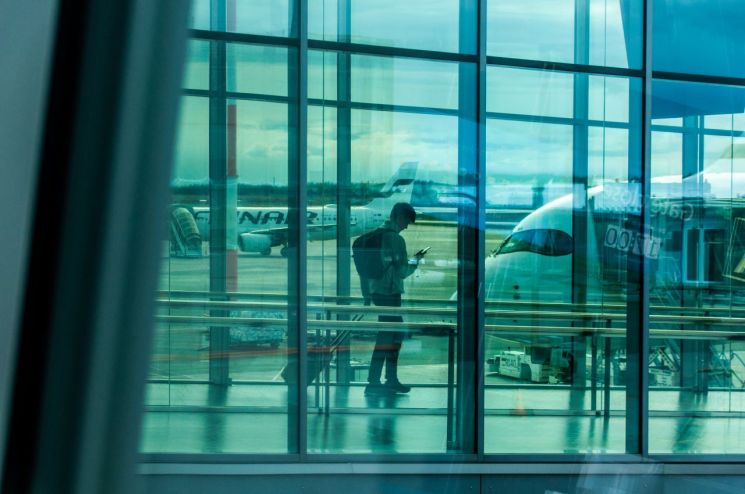
This lounge, operated under the name 'Golden Sunflower,' is an exclusive space run by a bank in partnership with the airport authorities. Passengers holding international first class or business class tickets can use the lounge without any additional requirements, while other customers must either pay 600 yuan (about 120,000 KRW) or go through the asset verification process.
The bank has promoted the airport lounge service as one of its core benefits, introducing it as a premium membership available to customers who maintain an average monthly deposit of over 500,000 yuan (about 100 million KRW). However, controversy has arisen in China as it was revealed that the actual asset verification requirement is 40 times higher than this amount.
This situation came to light through a whistleblower post by a Chinese internet user. The user claimed, "As a member of the bank, I tried to use the lounge with points, but was asked to provide proof of assets. Only liquid assets of at least about 4 billion KRW were accepted; real estate and vehicles were not recognized. If someone has that much in assets, why would they use points instead of simply buying a business class ticket?"
In response, a local lawyer pointed out, "Retroactively applying new restrictions to customers who already meet the existing requirements could be considered an unfair contract term."
© The Asia Business Daily(www.asiae.co.kr). All rights reserved.

















