Increase in Inquiries and Disappearance of Quick Sales
Busan Real Estate Market Stirred by "Arctic Shipping Route Development"
Dong-gu Apartment Transactions Near North Port Up 29% in Past Two Months
Rising Demand Amid Decreasing Supply... Potential for Market Revitalization
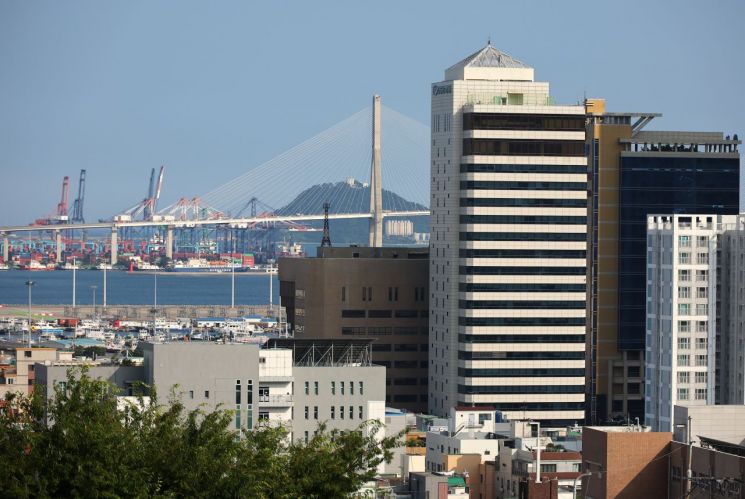
"Since the news broke about the relocation of the Ministry of Oceans and Fisheries, I can feel an increase in calls from potential buyers. The atmosphere is definitely heating up." (Real estate agent A, Dong-gu, Busan)
"There are no more sellers looking for a quick sale of their apartments. Even homeowners who might have considered lowering their prices are holding back, hoping the local market will recover." (Real estate agent B, Dong-gu, Busan)
Housing prices in Busan are showing signs of movement. The market is warming up as the Ministry of Oceans and Fisheries is set to relocate near Busan North Port and the development of the Arctic shipping route is being actively discussed. Additionally, the 6·27 loan regulations have curbed investment demand in the Seoul metropolitan area, providing a foundation for revitalizing the local market.
According to the actual transaction price disclosure system of the Ministry of Land, Infrastructure and Transport on July 29, the number of apartment transactions in Dong-gu, adjacent to North Port, reached 107 from June 1 to July 28?about two months. This represents an increase of approximately 29% compared to 83 transactions during the same period last year. Apartment transactions in Jung-gu, also near North Port, increased as well. From June 1 to July 28, there were 15 transactions, up by 2 (15.4%) from the same period last year.
The volume of transactions has increased significantly as the relocation of the Ministry of Oceans and Fisheries progresses. In Jung-gu, where there are relatively fewer apartment complexes, the increase was limited to 15%, but Dong-gu, with more complexes, saw a larger jump. In particular, expectations are rising that real estate demand will further increase if the ministry proceeds with its move, as it has selected a building in Sujeong-dong, Dong-gu, near North Port, as a temporary office. Considering the approximately 850 ministry employees, their families, and related organizations, thousands of people may eventually relocate to Busan. The government has also expressed its intention to promote the relocation of shipping companies such as HMM, as well as the establishment of a maritime court and a Southeast Investment Bank, sending positive signals to the real estate market.
Furthermore, the possibility of Busan benefiting from investment regulations in the Seoul metropolitan area is increasing. Local areas are exempt from loan restrictions, and the third phase of the stress-based Debt Service Ratio (DSR), implemented this month, will be deferred for six months. This trend is also reflected in the provisional index of actual apartment transactions in local areas for June: Busan's index rose by 0.68%. This is the highest among the five major metropolitan cities, exceeding their average of 0.36% by 0.32 percentage points.
Experts believe that if demand increases while housing supply decreases, the market atmosphere will improve. According to the Ministry of Land, Infrastructure and Transport, housing pre-sales from January to May this year totaled 4,269 units, a 39% decrease from the same period last year. In May alone, pre-sales dropped to 728 units, down 74.2% from a year earlier, and housing starts fell to 1,095 units, a 28.7% decrease. As of May, there were 5,420 unsold homes in Busan, the second highest among metropolitan cities after Daegu (8,586 units). However, supply is being restricted as pre-sales and housing starts are reduced.
Yoon Sumin, a real estate expert at NH Nonghyup Bank, explained, "The most immediate way for the real estate market to recover in local cities experiencing continuous population outflow is to create more jobs. If the number of actual homebuyers increases due to the relocation of the Ministry of Oceans and Fisheries and other factors, and transaction volumes rise while apartment supply decreases, the market itself can naturally revive."
© The Asia Business Daily(www.asiae.co.kr). All rights reserved.

















