Cheongyang and Buyeo Suffer Disaster Zone Designation for Three Consecutive Years
62.9% Support Dam Construction in Public Opinion Survey
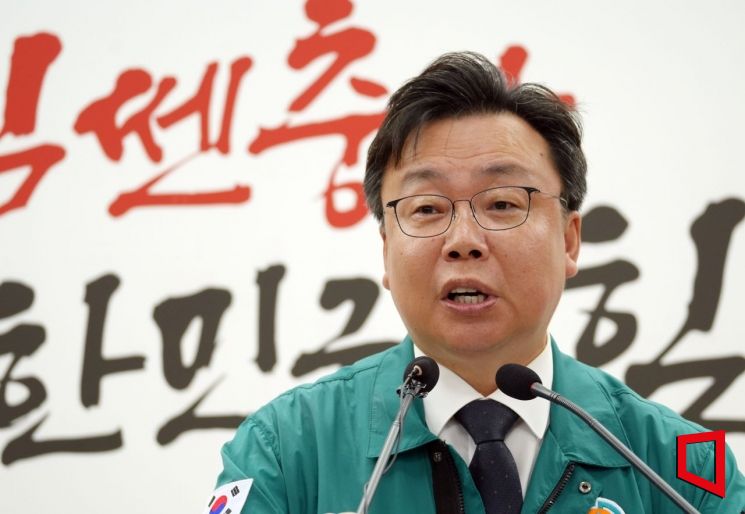 Kim Youngmyung, Director of Environment and Forestry Bureau of Chungnam Province, is holding a press conference on the construction of Jicheon Dam on the 28th. Photo by Lee Byungryul
Chungnam Province is set to actively pursue the construction of the Jicheon Dam to address water shortages and recurring flood damage in the Cheongyang and Buyeo regions.
On July 28, Kim Youngmyung, Director of the Environment and Forestry Bureau of Chungnam Province, stated at a press conference, "The Jicheon Dam is not simply a water storage facility, but a comprehensive strategy that will secure the next 100 years for Chungnam."
He continued, "This year alone, heavy rainfall caused damage exceeding 320 billion won in Chungnam, and Cheongyang and Buyeo have been designated or proposed as special disaster zones for three consecutive years. The government can no longer ignore the urgency of this situation."
According to a public opinion survey jointly conducted by three media outlets in the Chungcheong region on July 16, 62.9% of all respondents supported the construction of the dam.
Support was even higher in Jangpyeong-myeon (73.3%) and Eunsan-myeon (74.1%), which are within the dam's area of influence.
The main reasons cited for supporting the dam were 'regional economic development' (32.9%), 'addressing population decline' (31.3%), and 'solving water shortages' (19.9%).
Kim stated, "This is not just public opinion, but a desperate survival strategy and a choice for the future by local residents."
However, some residents and environmental groups have raised concerns about ecosystem destruction and have argued that a full-scale survey or a resident vote is needed instead of a public opinion poll.
In response, Kim said, "The survey was conducted by a professional institution and is sufficiently reliable. If the residents' council raises the need for a full-scale survey or a resident vote, we will consider it."
Regarding cost comparisons with seawater desalination, he explained, "Seawater desalination costs about 2,000 won per ton, while the dam costs about 500 won per ton, a difference of around four times. Dams based on natural water flow are also more suitable for responding to the climate crisis than energy-intensive seawater desalination."
Addressing concerns that emotional remarks by some members of the promotion committee could cause conflict among residents, he said, "We are collecting opinions from the opposition through an open residents' council and will seek solutions through dialogue, not conflict."
The province plans to establish a 'Comprehensive Support Plan for the Jicheon Dam' in the second half of this year, which will include customized policies such as ▲resident profit-generating projects ▲relocation measures ▲ecological preservation and tourism revitalization.
Kim stated, "The Jicheon Dam is no longer a choice, but a necessity," and appealed, "We ask for the deep interest and cooperation of all residents in this project to protect lives and property."
© The Asia Business Daily(www.asiae.co.kr). All rights reserved.

















