Improving the Disaster Victim Protection System
Clarifying the Definitions and Scope of Victims and Bereaved Families
Expanding Participation in the Disaster Recovery Process
Accelerating the Enactment of the Basic Act on Life and Safety
The government is set to implement institutional reforms to strengthen the rights of victims and bereaved families affected by major disasters. This initiative aims to support the enactment of the Basic Act on Life and Safety, one of President Lee Jaemyung's ten key campaign pledges. The core of the plan is to clarify the scope of victims and bereaved families and to maximize the protection of their rights throughout the recovery process.
According to government ministries on July 28, the Ministry of the Interior and Safety recently began internal discussions to revise the current disaster victim protection system.
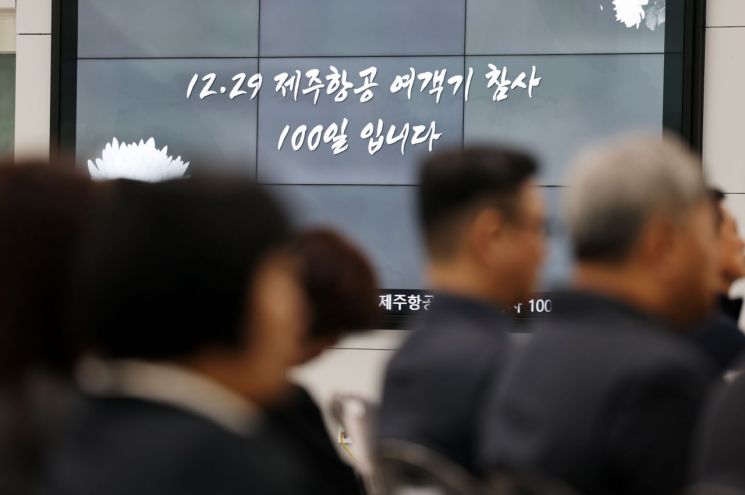
The Ministry of the Interior and Safety has focused on the reality that victims and bereaved families have not been adequately protected following major disasters such as the Osong disaster, the Itaewon disaster, and the Muan passenger plane disaster. For example, the Muan Passenger Plane Disaster Bereaved Families Association requested the Aviation and Railway Accident Investigation Board to guarantee their participation rights, including disclosing the damaged engine parts, releasing black box records, and allowing opinions from investigators recommended by bereaved families. However, these requests were not properly reflected, leading to controversy during the investigation process. The Osong disaster presents a similar case. Bereaved families continue to demand not only a thorough investigation and punishment of those responsible but also the legalization of a support manual for bereaved families.
President Lee’s recent meetings with the bereaved families of the Sewol ferry, Itaewon, Muan passenger plane, and Osong disasters, during which he promised additional support, have also influenced these developments. President Lee pledged to the Itaewon disaster bereaved families the formation of an investigation team including prosecutors and police. In response to the Osong underpass disaster bereaved families’ request for a parliamentary investigation, he stated, "It is meaningful and necessary to discuss this in the public sphere," and promised to review the matter.
The Ministry of the Interior and Safety plans to clarify the definitions and scope of disaster victims and bereaved families in these discussions. Until now, the lack of detailed regulations has led to repeated controversies over the selection of support recipients and scope, and the range of victims and bereaved families has varied depending on the content of special laws. For example, the special law for the Itaewon disaster, passed after much debate in May last year through bipartisan agreement, limited the scope of victims to "the spouse, direct ascendants or descendants, and siblings of the deceased." However, some argued that "those who suffered psychological harm as witnesses to the accident" should also be included.
Guaranteeing the participation of these individuals in the recovery process after a disaster is also under consideration. The ministry intends to establish a legal basis to guarantee the rights of victims and bereaved families, such as reflecting their opinions during investigation and compensation procedures. A ministry official added, "We plan to further detail the current basic support system, codify it into law and manuals, and use it as foundational data for legal and institutional improvements."
The enactment of the Basic Act on Life and Safety, a 'top ten pledge' of President Lee and a current initiative of the ruling party, is also expected to gain momentum. The Basic Act on Life and Safety includes the following: the establishment of a comprehensive national plan to guarantee safety rights every five years; the obligation for the state and local governments to conduct safety accident investigations; the 'right to relief' for victims, including compensation and damages; and efforts by the state and local governments to secure funding for safety projects. Yoon Hojoong, Minister of the Interior and Safety, also stated during his confirmation hearing prior to taking office, "We will revise legal frameworks such as the Basic Act on Life and Safety to realize the people's right to safety," signaling support for the legislation. Minister Yoon also delivered a message to victims and bereaved families of social disasters, saying, "I will do my utmost to comfort your pain, remember your loss, and ensure that innocent citizens are never needlessly sacrificed again."
However, practical issues remain controversial, such as determining the scope of victims and bereaved families and securing funding for support. The bill includes not only 'the deceased' and 'those who have suffered physical, psychological, or economic harm from an accident' as disaster victims, but also 'those who have suffered psychological harm as witnesses to an accident.' A ministry official stated, "At a time when the government's role and responsibility are increasingly emphasized in the event of a disaster, detailed research is needed to systematically support victims and bereaved families," and added, "Through this discussion process, we will strive to develop actionable policies and institutional improvements."
© The Asia Business Daily(www.asiae.co.kr). All rights reserved.

















