The "next-generation sleep algorithm" technology developed by KAIST is being applied to the smartwatch industry. This achievement is drawing attention as a model case of industry-academia cooperation, as it demonstrates the expansion of pure mathematics-based research into practical industrial technology.
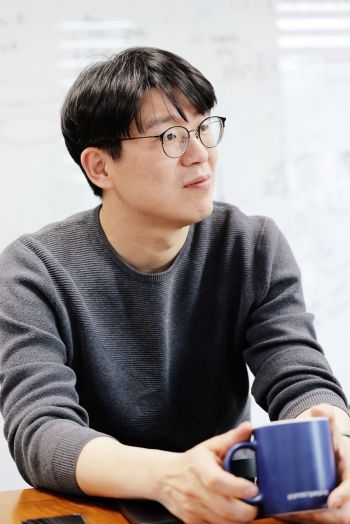
On July 28, KAIST announced that a personalized sleep guidance algorithm developed by Professor Kim Jaekyung's research team from the Department of Mathematical Sciences (IBS Biomedical Mathematics Group CI) will be provided to global users in collaboration with Samsung Electronics.
The algorithm developed by the research team analyzes users' sleep patterns to suggest optimal bedtimes, helping to establish regular sleep habits and aiding recovery from daily fatigue.
This technology is a sleep time recommendation algorithm based on mathematical modeling and circadian rhythm theory. It analyzes past sleep data, considering both sleep pressure and the biological clock.
Its distinguishing feature is that it does not simply recommend sleep duration, but presents a personalized "time window" for each individual.
For example, while existing smartwatch sleep functions focus solely on analyzing past data, such as "How many hours did you sleep last night?", the sleep guidance algorithm developed by the research team goes further by analyzing past data and then suggesting, for instance, "It is ideal to fall asleep between 11:10 p.m. and 11:40 p.m."?thus helping users plan their future sleep.
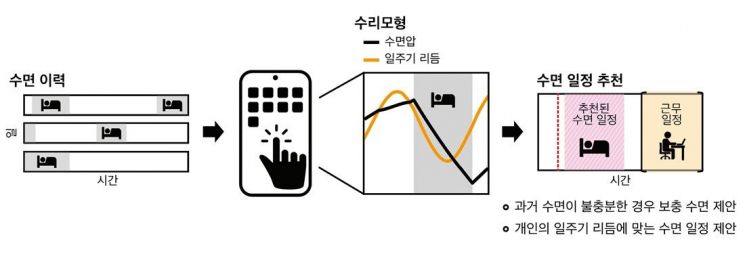
The strength of the algorithm developed by the research team lies in its ability to analyze users' past sleep patterns, consider accumulated sleep pressure and circadian rhythm status, and then recommend "the optimal time to go to bed tonight to feel most refreshed tomorrow."
This approach is significant because it does not simply record and evaluate sleep, but actively provides users with sleep strategies for "a better day." It is similar to not only analyzing yesterday's and today's weather, but also predicting tomorrow's weather and advising, for example, "Bring an umbrella."
This algorithm technology is being made available to users worldwide through Samsung Galaxy Watches, including the Galaxy Watch8 released this month.
Professor Kim Jaekyung said, "Through collaboration with Samsung Electronics, our research team has been able to implement the 'sleep algorithm' as a broad real-world service. I am grateful and proud that the 'sleep algorithm,' which until now existed only in papers and formulas, can now help improve users' sleep habits and quality of life through smartwatches."
Meanwhile, the research team's sleep algorithm will be presented at the "World Sleep 2025" conference to be held in Singapore this September. Prior to this, last month Professor Kim Jaekyung participated in the international sleep conference "SLEEP 2025" held in the United States, where he gave a lecture on the sleep algorithm and was selected for the "Hot Topics" session.
© The Asia Business Daily(www.asiae.co.kr). All rights reserved.
![Clutching a Stolen Dior Bag, Saying "I Hate Being Poor but Real"... The Grotesque Con of a "Human Knockoff" [Slate]](https://cwcontent.asiae.co.kr/asiaresize/183/2026021902243444107_1771435474.jpg)

















