Lutnick: "We Will Bring Semiconductor Manufacturing Back to the United States"
Concerns Rise Over Potential U.S. Tariffs on Korean Semiconductor Exports
Howard Lutnick, the U.S. Secretary of Commerce, announced on July 27 (local time) that the United States will announce semiconductor tariff measures based on Section 232 of the Trade Expansion Act within the next two weeks. As semiconductors, along with automobiles, are among Korea's main export items to the United States, there are growing concerns that if tariffs are actually imposed, Korean companies will be hit hard.
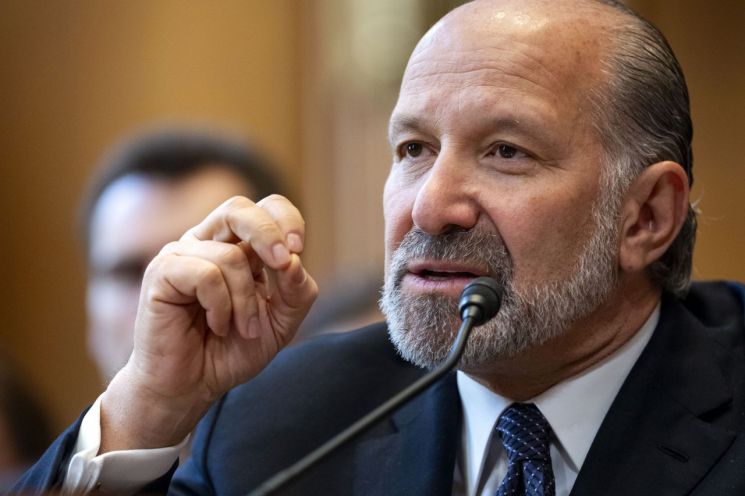
At the site of the U.S.-European Union (EU) trade agreement announcement held in Turnberry, Scotland, Lutnick indicated the intention to impose semiconductor tariffs, stating, "This was one of the main reasons why the EU met with President (Donald) Trump to resolve all issues at once."
He emphasized his strong commitment to rebuilding the domestic semiconductor industry, saying, "We will bring semiconductor manufacturing back to the United States."
President Trump, immediately following Secretary Lutnick's remarks, said, "Many companies from Taiwan and other countries are coming to the United States to avoid tariffs," and added, "(Ursula) von der Leyen, President of the European Commission, avoided tariffs in a much better, more certain, and profitable way." On this day, after final negotiations with President von der Leyen, he agreed to impose a 15% tariff on all EU imports except for pharmaceuticals and steel and aluminum. As a result, even if the United States imposes tariffs on semiconductor items in the future, tariffs on EU-made semiconductors are expected to be capped at 15%.
Section 232 of the Trade Expansion Act, which Secretary Lutnick cited as the basis for the announced semiconductor tariffs, is a law that allows the President to take import restriction measures such as tariffs if the import of certain items is deemed a threat to national security. The U.S. Department of Commerce is currently investigating not only semiconductors but also strategic items such as pharmaceuticals and copper, and Secretary Lutnick previously stated that the related investigations would be completed by the end of this month.
Semiconductors are a key export item for Korea, so if the United States actually imposes tariffs, domestic companies such as Samsung Electronics and SK hynix are likely to suffer significant losses in the U.S. market. Since the United States is already imposing a 25% tariff on automobiles, the addition of semiconductor tariffs is expected to cause considerable disruption to overall exports to the United States. The Korean government, which is currently negotiating tariffs with the United States, is making every effort to lower reciprocal tariffs and automobile tariffs to 15%, the same level as Japan and the EU.
© The Asia Business Daily(www.asiae.co.kr). All rights reserved.

















