Mosquitoes Active at 15-30 Degrees Celsius
Heatwaves Over 35 Degrees and Record Rainfall
Predictions of a Surge After September
Severity of Autumn Mosquitoes Expected to Mirror Last Year
This summer, as record-breaking heatwaves continue, mosquitoes?which are usually most active from mid-July to August?have virtually disappeared. However, there are predictions that mosquito populations will increase starting in September as temperatures begin to drop.
According to Seoul City's mosquito forecast on July 27, the mosquito occurrence index as of July 25 was at Level 2, classified as "Attention." The mosquito forecast is divided into four levels: Pleasant, Attention, Caution, and Discomfort. Typically, during mid to late July, the index is at Caution or Discomfort, but this summer, as with last year, it has dropped to the Attention level.
 As this summer's record-breaking heatwave continues, mosquitoes that usually thrive from mid-July to August have disappeared. Photo by Getty Images
When the mosquito activity index is "100," standing outdoors at night for about 10 minutes can result in being bitten more than five times. This year, however, the mosquito activity index is only 38.9. Looking at the past week's mosquito activity index, it rose slightly from 52.8 on July 19 to 65.3 on July 21, but then sharply dropped to 23.1 on July 22.
Generally, mosquitoes are active at temperatures between 15 and 30 degrees Celsius. An environment with periodic rainfall, rather than heavy downpours, is more favorable for mosquitoes. Normally, mosquito populations begin to increase in mid-June, peak in mid-August, and then gradually decline.
However, experts evaluate that this year, the number of mosquitoes sharply decreased because the heatwave, which started in early June, continued into early July with temperatures exceeding 35 degrees Celsius. During the rainy season from early June to early July, mosquitoes usually lay eggs in puddles, but the heatwave dried up these water sources, and even when it rained, the heavy downpours created an environment unsuitable for mosquitoes to survive.
In fact, while the mosquito activity index soared to "100" in June last year, it consistently remained below 100 throughout June this year. The highest day was June 28, with a value of 77.2. On June 6, it was as low as 27.4. On July 10, the mosquito activity index even recorded "0."
However, there are also predictions that autumn mosquitoes will become rampant starting in September as temperatures fall, replacing summer mosquitoes. Last year, which had similar weather conditions, autumn mosquitoes were also a serious issue instead of summer mosquitoes.
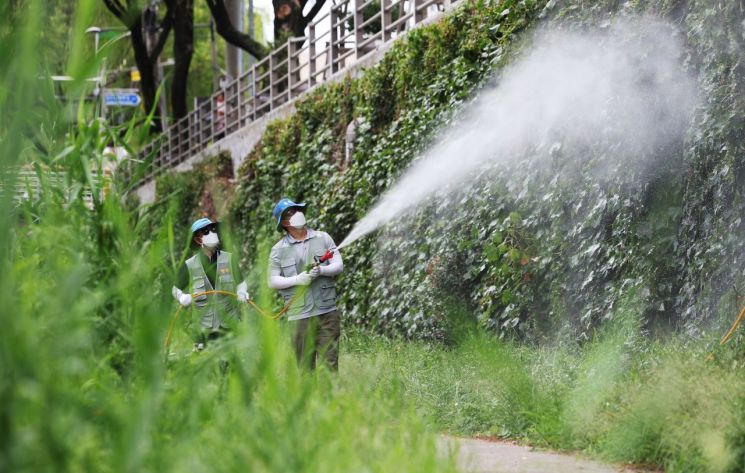
Meanwhile, if the mosquito occurrence level remains at the current "Attention" stage, it is advisable to use screens on windows and doors and to avoid ventilating your home late at night. Entry points for mosquitoes, such as door and window screens, should be repaired. In each region, it is important to eliminate potential standing water and to manage and control outdoor mosquito larvae habitats.
If the mosquito occurrence level rises to the "Caution" stage, it is recommended to avoid opening doors and windows for ventilation indoors, and especially to use mosquito nets for baby cribs. Outdoors, standing water should be emptied, and if mosquitoes are found around the house, household aerosol sprays should be used for control.
© The Asia Business Daily(www.asiae.co.kr). All rights reserved.


















