Hyundai Motor, Over the Mobility (25)
Hyundai's Next-Generation Hybrid Technology Strengths
Enhanced Driving Performance and Fuel Efficiency with Additional Motor
Expansion of Hybrid Systems from 3 to 5 Types
A Head-to-Head Battle with "Hybrid Pioneer" Toyota
Genesis Developing Rear-Wheel-Drive Hybrid and EREV Models
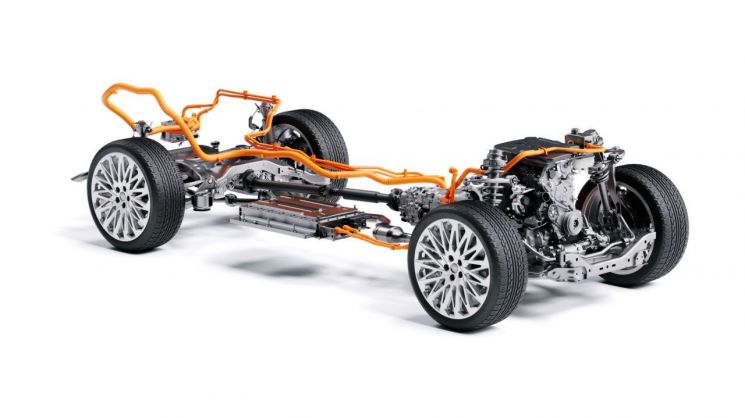
As the chasm?a temporary stagnation of demand?in the electric vehicle (EV) market lengthens, hybrids (HEVs) are gaining attention as the next-generation eco-friendly powertrain. The electric vehicle market, which had grown rapidly over the past few years, has seen its growth slow, especially in the United States and Europe, due to realistic constraints such as reduced subsidies, limited charging infrastructure, and high prices. Global market research agencies are also defining 2024 to 2026 as a transition period for EV adoption. As consumers opt for hybrids instead of EVs, a new trend is emerging.
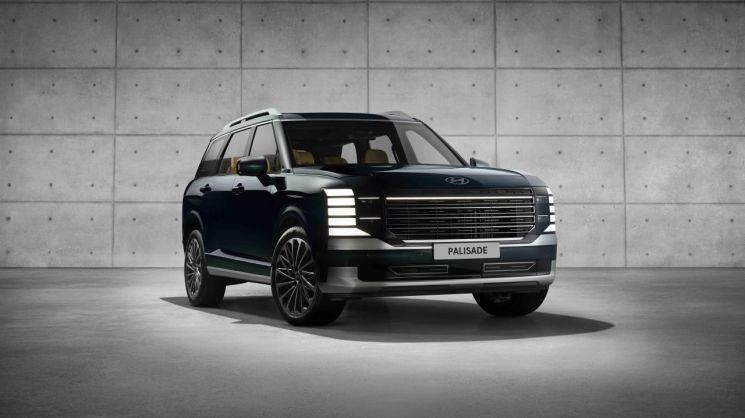
Hyundai Motor Group is also accelerating its global market strategy, including in the United States and Europe, by focusing on hybrids. In particular, the new Palisade, which has been fully redesigned for the first time in seven years, features the group’s newly developed next-generation hybrid system, drawing significant attention. Hyundai plans to launch the hybrid Palisade in the U.S. market in the second half of this year. By equipping its flagship large SUV?a key segment in the U.S. market?with a new hybrid system, the Palisade is expected to become a core model for Hyundai’s U.S. sales. Hyundai Motor Group will also increase local hybrid production by adding hybrid facilities to its dedicated EV plant (HMGMA) in Georgia, USA. Through these efforts, Hyundai is making a full-fledged challenge to Toyota’s dominance in the U.S. hybrid market.
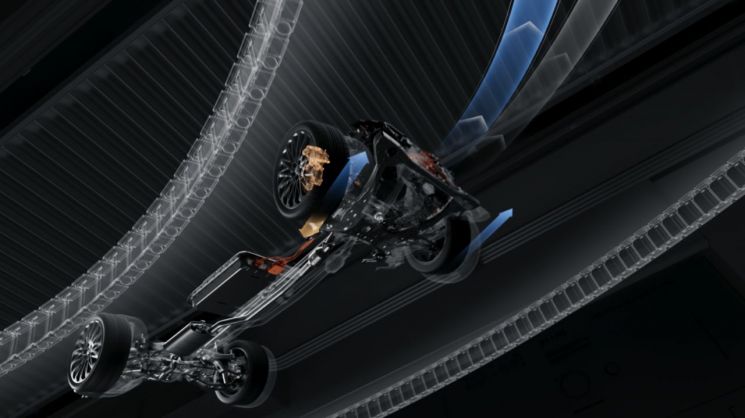
In the first half of this year, a total of 136,180 Hyundai and Kia hybrid models were sold in the United States, a 45.2% increase compared to the same period last year. During the same period, EV sales fell by 28% to 44,533 units. The growth rates alone confirm that hybrids are rapidly emerging as an alternative to the EV chasm. Especially as the Trump administration in the U.S. has announced that EV tax credits (subsidies) will end after September this year, uncertainty surrounding EVs is increasing. In this environment, hybrids are drawing attention as a new eco-friendly alternative and are driving improved results for Hyundai and Kia.
In response to market changes, Hyundai Motor Group has significantly revised its strategy. The company has slowed the pace of its EV transition and greatly increased the proportion of hybrids. In 2023, the group’s mid- to long-term vision, the “Hyundai Way” strategy, focused mainly on EVs, but the following year’s Hyundai Way announcement greatly reinforced hybrid-related content. Hyundai plans to expand its hybrid lineup from the current seven models to 14, and Genesis will build a hybrid lineup for all models except dedicated EVs. Previously, the Genesis brand had declared it would transition directly to EVs without a hybrid “stepping stone,” but it has now changed course and will develop a separate hybrid system exclusively for Genesis. Kia also plans to add hybrid variants to popular models such as the Seltos and Telluride, increasing its hybrid lineup to 10 models.
Hyundai Motor Group Expands Hybrid Systems from 3 to 5 Types
The next-generation hybrid system unveiled this year boasts a 45% improvement in fuel efficiency and increases in maximum output and peak torque by 19% and 9%, respectively, compared to the previous gasoline engine (based on the 2.5T hybrid). The new Palisade’s gasoline 2.5T hybrid system achieves a maximum fuel efficiency of 14.1 km/l, a system output of 334 horsepower, and a peak torque of 46.9 kgf·m.
Previously, Hyundai Motor Group’s hybrid systems consisted of three types: 1.6T gasoline HEV, 2.0 gasoline HEV, and 1.6 gasoline HEV. These systems, based on mid-size gasoline engines with displacements of 1.6 to 2.0 liters, had to cover all models from Avante to Carnival. As a result, there were criticisms that the hybrid system’s output was insufficient for large models like the Carnival.
To address this, Hyundai Motor Group has decided to increase the number of next-generation hybrid system options from three to five. In addition to the 2.5 turbo hybrid, the group will develop five systems (four front-wheel-drive HEVs and one rear-wheel-drive HEV) applicable to a wide range of models, including rear-wheel-drive hybrids. This will allow the company to build a hybrid lineup that covers everything from small models with just over 100 horsepower to large models requiring over 300 horsepower.
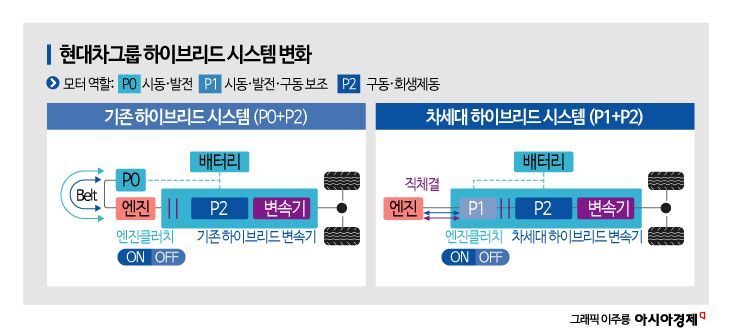
What’s New in Hyundai Motor Group’s Next-Generation Hybrid?
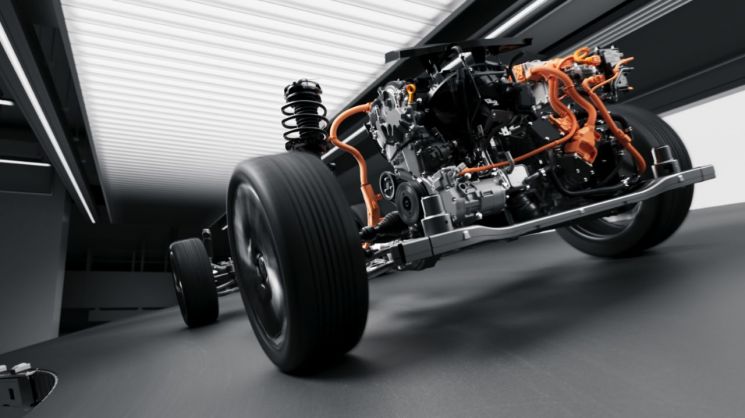
The hallmark of Hyundai Motor Group’s next-generation hybrid system is the addition of an auxiliary drive motor to enhance driving performance. Of course, fuel efficiency has also improved. Hyundai’s hybrid system is a parallel type. Hybrid systems are classified as P0 to P4 depending on the location of the drive motor. In the previous system, there was one motor responsible for driving. There was also a motor (P0) that assisted with starting and generating electricity, but it had little impact on driving. The new hybrid system adds another motor (P1) that directly assists with driving. This P1 motor is directly connected to the engine, improving energy transfer efficiency.
Between the auxiliary drive motor (P1) and the main drive motor (P2) is the engine clutch. Hyundai hybrid vehicles engage and disengage the clutch to control the connection between the engine, motors, and wheels. In electric (EV) mode, which uses only battery power, the engine clutch is disengaged and the vehicle runs solely on the P2 motor. When entering high-speed zones, the engine clutch is engaged so that both the engine and the two motors (P1 and P2) work together to drive the wheels. Thanks to this system, Hyundai’s hybrid approach has an advantage in high-speed driving compared to competitors.
While adding an extra motor to the new system increases output, minimizing the size and volume of the powertrain was the biggest challenge for developers. To address this, they adopted high-density design and enhanced cooling systems to reduce the motor’s size, and applied various technologies such as an integrated damper, electric oil pump, and unified casing. As a result, even with the addition of the P1 motor, the total length of the transmission increased by only 8.5 mm.
Ride comfort has also improved. Early Hyundai hybrid systems were often criticized for poor driving feel, as the shift shock from the engine clutch engaging and disengaging was transmitted to the driver. Drivers could immediately sense the difference when the engine started and intervened after quietly driving in electric mode.
However, thanks to continuous improvements, the technology has advanced to the point where shift shock is now barely noticeable. In this next-generation hybrid system, the sense of difference when the engine intervenes and the level of interior quietness have both been significantly improved. Hyundai Motor Group has achieved smooth and fast shifting by further utilizing the P1 motor in its hybrid shift logic (ASC) and has reduced the sense of difference when the engine intervenes by improving engine clutch control. Additionally, a new technology uses the P1 motor to reduce engine vibration and low-frequency noise when charging the battery with the engine while stopped, further enhancing interior quietness.
Hyundai vs. Toyota: Comparing Hybrid Strengths and Weaknesses
What differentiates Hyundai Motor Group’s hybrid system from its competitors? Let’s compare it to Toyota’s system, which is known as the originator and undisputed leader of hybrids. Both Toyota and Hyundai, which possess their own hybrid technologies, have established a two-top system in the global market. Although both companies are recognized worldwide for their technological prowess, their systems are different. Hyundai uses a parallel hybrid system, while Toyota employs a series-parallel hybrid system.
Toyota, the “originator of hybrids,” adopted the series-parallel approach and launched the world’s first mass-produced hybrid, the Prius, in 1997. At the time, competitors considered Toyota’s series-parallel system to be a “complete hybrid,” so advanced was its technology. However, Hyundai, to avoid Toyota’s patents, chose a different approach?parallel type?and developed its own hybrid technology. In the early stages, the greatest criticism was the sense of difference when the engine intervened, leading to complaints about driving quality. However, by sticking to its own path and continuously focusing on technology development, Hyundai’s hybrid technology is now regarded as being at the top level.
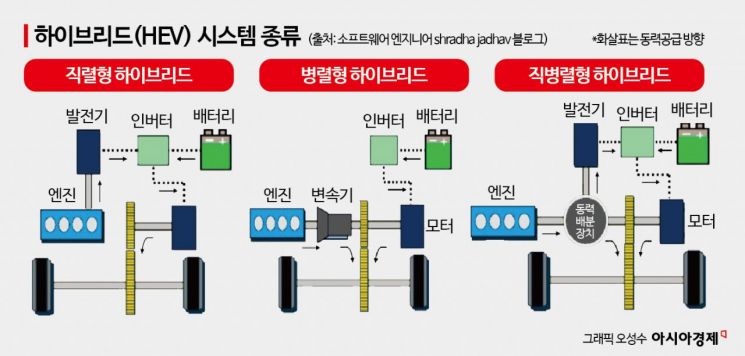
Both companies’ hybrid systems operate similarly in that they use the electric motor at low speeds and the engine intervenes at higher speeds, allowing both the engine and motor to power the vehicle together. However, there are differences in power transmission methods and components. The biggest difference is the presence or absence of a clutch and transmission. Toyota’s series-parallel HEV lacks a clutch or multi-speed transmission, instead using a planetary gear-based power split device to distribute power between the engine and motor. This device optimally controls whether the vehicle runs on motor power or engine power. The transition between engine and motor is almost seamless, making it ideal for low-speed urban driving. Additionally, by charging the battery with surplus engine power during acceleration, energy efficiency and fuel economy are improved.
In contrast, Hyundai’s parallel system has a clutch between the engine and motor. The clutch engages and disengages according to driving speed. At low speeds, the clutch is disengaged and the vehicle runs solely on the motor; at higher speeds or during strong acceleration, the clutch engages so that both the engine and motor can be used together. By using a transmission with multiple gear ratios, the system can maximize engine performance at high speeds.
Hyundai’s New Hybrid Development: EREV
Recently, Hyundai Motor Group has been actively developing a new type of hybrid: the EREV (Extended-Range EV), also known as a series hybrid or range-extended electric vehicle. Hyundai has announced plans to mass-produce EREVs capable of driving more than 900 km on a single charge in North America and China by the end of next year. The first models to feature the EREV system will be D-segment (mid-size) SUVs from Hyundai and Genesis, with a sales target of over 80,000 units.
The EREV system has characteristics that fall between conventional hybrids (HEVs) and electric vehicles (EVs). It is closer to an EV than a full hybrid, and is also called a series hybrid or range-extended EV. In simple terms, an EREV is an electric vehicle that uses fuel. It has an engine, battery, and motor, but only the motor powers the wheels. The engine does not drive the wheels but acts as a generator to charge the battery. Once refueled, the engine generates electricity to charge the battery, and the stored power is used to run the motor and move the wheels. You can either refuel and run the engine to charge the battery, or plug in the vehicle to charge the battery directly.
Recently, EREVs have been gaining attention in countries such as China and the United States. The main reason is concern over charging. Consumers worried about inadequate charging infrastructure or limited driving range are choosing EREVs, which offer long range and can be refueled directly. Last year, EREV sales in China reached 1.2 million units, a 79% increase over the previous year?much higher than the 23% growth rate for pure EVs. Leading global market research agencies project a high annual growth rate of 16?18% for the EREV market through 2030.
© The Asia Business Daily(www.asiae.co.kr). All rights reserved.



















