66% of Online Malls Use Proprietary Review Sorting...
"Concerns Over Declining Trust"
US and Japan Prioritize Consumer-Friendly Review Policies
It has been found that 6 out of 10 domestic online malls provide review sorting based on their own algorithms. More than half of these online malls did not clearly explain the criteria used by their proprietary algorithms.
The Seoul Metropolitan Government announced the results of this survey on the basic review sorting and selection options on the 25th. The survey was conducted from May 16 to June 30, targeting 50 major domestic online malls in seven categories, including clothing, general merchandise, food, and cosmetics.
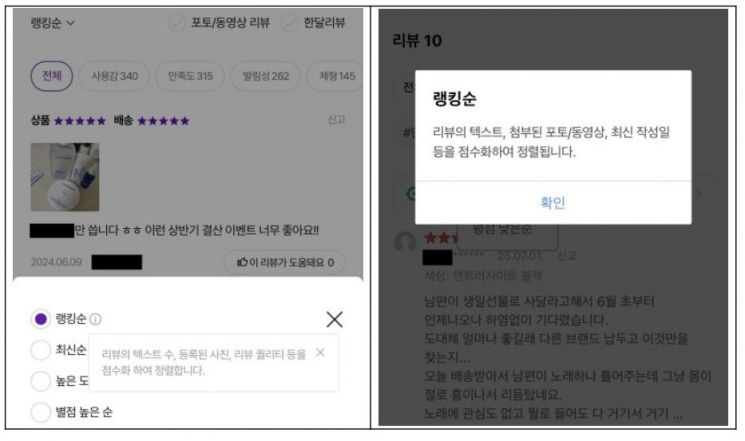
The survey found that out of 50 online malls, 33 displayed reviews by default using proprietary algorithms such as popularity, ranking, or best. Among these, 18 did not disclose the criteria for their algorithms.
The proprietary algorithm sorting methods varied, with criteria such as the number of characters in the review, date of posting, rating, and whether photos were included. However, in most cases, reviews with higher ratings or those describing advantages were displayed first.
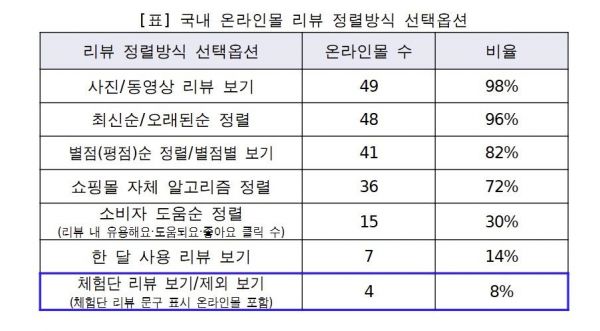
The standards for selecting review sorting methods were also found to be insufficient. While most online malls provided basic functions such as "view photo/video reviews" and "sort by newest/oldest," only one offered an option to sort by "most comments," and only four provided functions to indicate or exclude incentivized reviews (such as product testing groups).
In contrast, major overseas online malls operate consumer-friendly policies by simultaneously displaying both positive and critical reviews or by providing features to filter incentivized reviews. The US 'Costco' online mall and Japan's 'Rakuten' each select one positive and one critical review to display separately at the top. The US cosmetics specialty mall 'Sephora' marks incentivized reviews with a label and offers an option to view reviews excluding those. 'Amazon' provides an option to automatically select and display positive and critical reviews that consumers have rated as helpful.
Based on the results of this survey, the city plans to promote policies to enhance the reliability of online mall review sorting criteria, such as recommending institutional improvements to require explanation of algorithm criteria to relevant agencies and strengthening related monitoring.
Kim Myungseon, Director of the Fair Economy Division at the Seoul Metropolitan Government, said, "A balanced review policy in online malls allows consumers to easily check reviews that include product shortcomings, which can shorten the time spent making purchasing decisions and has the positive effect of reducing unnecessary returns and quality-related disputes. Seoul will continue to create an environment where consumers can easily access the information they need and will steadily pursue policies to protect consumer rights and interests."
© The Asia Business Daily(www.asiae.co.kr). All rights reserved.


















