Korea Educational Development Institute Report
"Policies Must Be Established in Connection with Local Communities"
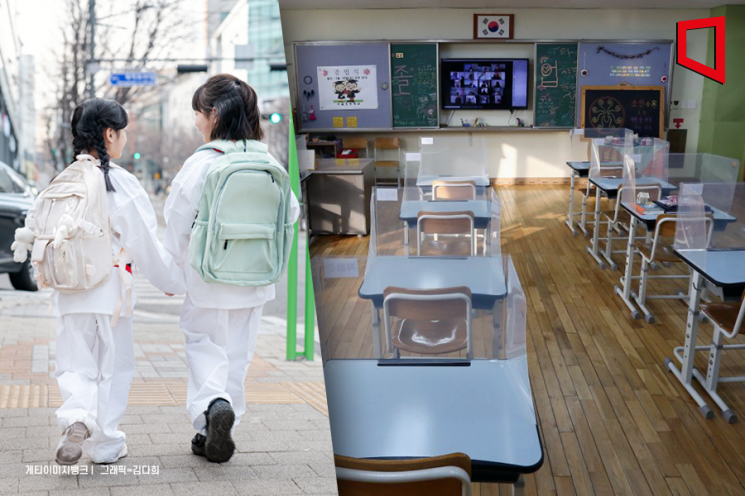
It has been predicted that in ten years, one out of every three elementary schools will have 60 or fewer students. If these schools are consolidated or closed, it could impact the potential disappearance of local communities, leading to suggestions that policies for small-scale schools connected to local communities need to be established.
According to the Korea Educational Development Institute's report released on July 25, titled "Directions and Tasks for the Integration, Development, and Support Policies of Small-Scale Schools in Korea," it is projected that by 2035, about 34% of elementary schools will have 60 or fewer students. This represents an increase of approximately 1.5 to 2 times from about 25% in 2023. With the number of births last year at 242,443 and the total fertility rate remaining at 0.7 to 0.8, the school-age population is expected to continue declining, leading to a continued increase in the number of small-scale schools.
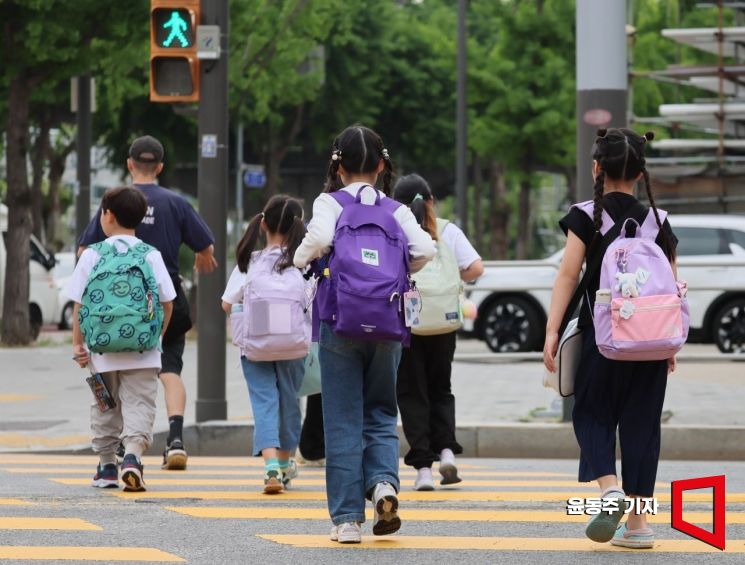
Kwon Soonhyung, senior research fellow at the Korea Educational Development Institute who conducted the study, stated, "It is predicted that by 2035, the number of small-scale schools will more than double compared to now, so a different approach from previous methods may be necessary." There is an analysis that the government’s previous policies for consolidating and supporting small-scale schools have had certain limitations. Although school consolidation has been promoted for its financial benefits, for every additional school closure, the number of students in city and county areas can decrease by up to 130, and the number of parents can decrease by 110, which may accelerate the disappearance of local communities. In response, policies to support small-scale schools have also been implemented, but as these have focused mainly on financial support, the actual effect on increasing student numbers has been minimal.
The research team noted that the existence or closure of a school has a significant impact on the local community, so decision-making centered on local residents is necessary. Kwon stated, "In the past, education authorities often persuaded local communities to consolidate schools, especially 20 to 30 years ago. However, if a government-led approach is pushed now, local opposition is inevitable." He added, "Rather than trying to persuade the community, it is better to designate a specialized research institute to provide information so that the community can make its own choice, and for education offices to have professional staff explain in detail to residents about the schools before and after integration."
Additionally, the need for policy development linked to regional planning was mentioned. The research team analyzed data from 25,764 elementary and middle schools nationwide from 2017 to 2019 and found that changes in student numbers were influenced by educational factors such as the number of teachers, but also by community variables such as access to medical facilities near the school. Kwon stated, "Since changes in school size are strongly influenced by community and industrial policy factors, it is necessary for the central government, local governments, metropolitan and provincial offices of education, and education support offices to coordinate their policies."
© The Asia Business Daily(www.asiae.co.kr). All rights reserved.
![Clutching a Stolen Dior Bag, Saying "I Hate Being Poor but Real"... The Grotesque Con of a "Human Knockoff" [Slate]](https://cwcontent.asiae.co.kr/asiaresize/183/2026021902243444107_1771435474.jpg)

















