50% Tariff Maintained in US-Japan Trade Talks
① Duty-Free Quota Like Trump’s First Term
② Lower Tariff by Conceding Part of Quota
③ Exceptions for High Value-Added Steel Products
The domestic steel industry is on edge as the United States has decided to maintain a high 50% tariff on steel in its trade negotiations with Japan. The industry believes that if this tariff regime continues for an extended period, it will inevitably impact exports to the United States. As a result, they are urging the government to develop negotiation strategies centered around three main alternatives.
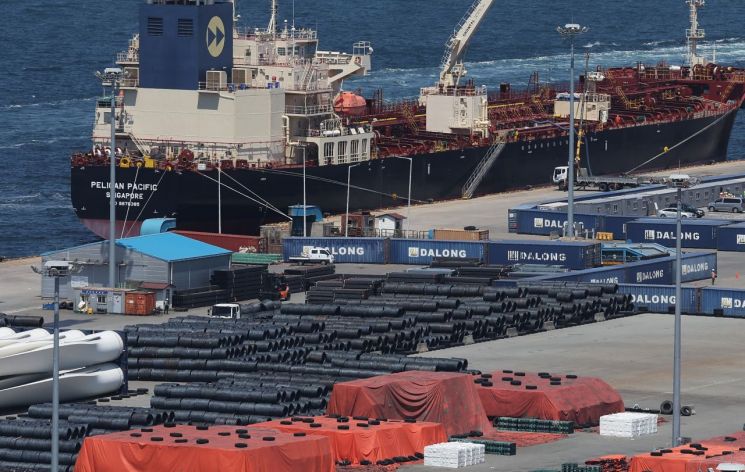
According to industry sources on the 25th, integrated trade negotiations between South Korea and the United States are expected to take place soon. Originally, a working-level negotiation through a '2+2 trade dialogue' was scheduled for this day, but it was postponed due to a change in schedule by U.S. Treasury Secretary Scott Besant. The industry hopes that these negotiations will provide a breakthrough for tariff relief. However, there is a prevailing conservative outlook, as Japan, regarded as a 'barometer,' has already taken the initiative in negotiations, yet steel tariffs have been maintained.
The first solution the industry points to in this situation is the revival of the previous 'tariff-free quota' system. This would reinstate a system in which a certain volume of exports is subject to a 0% tariff. The domestic steel industry was granted an annual tariff-free quota of 2.63 million tons during the Trump administration in 2018. This system has been evaluated as an effective alternative in terms of controlling export volumes and securing price competitiveness.
An industry official stated, "At the time, the quota system was the only solution that allowed us to avoid comprehensive high tariffs on Korean steel," adding, "Given the current situation, where an unusually high 50% tariff is being applied, we should at least pursue the revival of this model."
The second alternative is a compromise that would lower the tariff rate even if it means conceding part of the quota. For example, only a portion of the annual 2.63 million tons would be recognized as tariff-free, while the remainder would be subject to a mid-level tariff of 15-25%. This is considered a realistic alternative if the complete abolition of tariffs is difficult. However, there is considerable skepticism within the industry about this option as well. Since a quota system is essentially still in place, simply lowering the tariff rate could actually reduce the practical benefits.
The third alternative is to request exceptions only for high value-added steel products. This would focus on securing tariff exemptions for strategic items with steady demand in the U.S., such as automotive steel sheets, energy pipes, and special steel. This strategy is interpreted as pursuing 'tailored negotiations' for items that directly benefit U.S. industry. An industry official commented, "For premium products, there are few substitutes in the United States, so there is a possibility of securing exceptions based on technological capability and quality."
© The Asia Business Daily(www.asiae.co.kr). All rights reserved.
![Clutching a Stolen Dior Bag, Saying "I Hate Being Poor but Real"... The Grotesque Con of a "Human Knockoff" [Slate]](https://cwcontent.asiae.co.kr/asiaresize/183/2026021902243444107_1771435474.jpg)
















