The Office of the President has stated regarding the push to raise corporate taxes, "Please view this as a normalization of the tax system, returning to the state before the tax cuts for the super-rich."
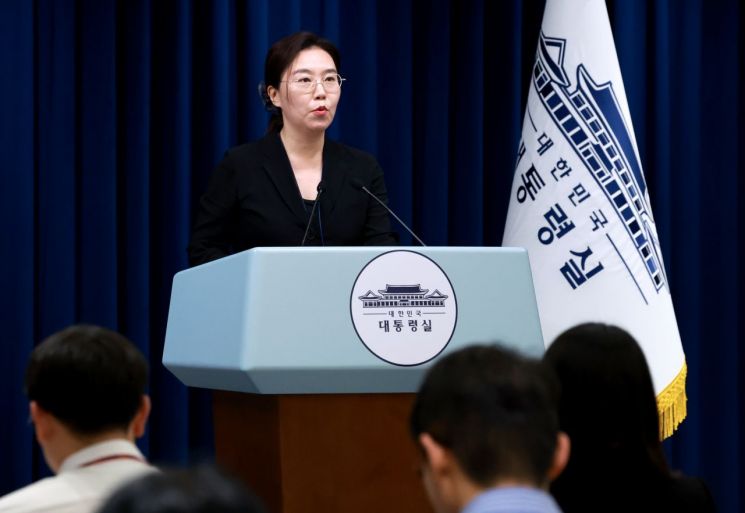
On the 24th, spokesperson Kang Yoo-jung responded to questions about the tax reform plan during a briefing, saying, "Although the media has mentioned the corporate tax issue, this should be seen as restoring tax fairness and as a concept of tax normalization."
Kang added, "Due to the policy of tax cuts for the wealthy, the previous administration experienced an excessive shortfall in tax revenue." When asked if the current policy is indeed a move to raise corporate taxes, she replied, "We need to change the terminology itself," and emphasized, "This is not a corporate tax increase, but a normalization of the tax system."
Previously, the Office of the President received reports on the tax reform plan from the Ministry of Economy and Finance and other relevant ministries, and began a comprehensive review of issues such as adjusting the top corporate tax rate and the timing of implementation. There are also plans to gradually consider reducing 'tax exemptions and deductions' to secure additional tax revenue.
Once discussions with the Office of the President are concluded, the Ministry of Economy and Finance and other relevant ministries will announce the tax reform plan, and after passing through a Cabinet meeting, will submit a tax law amendment bill to the National Assembly. The 'normalization of the national tax base' mentioned by the Office of the President appears to refer to the tax reform plan recently reported by the Ministry of Economy and Finance. It is known that the ministry reported a plan to the Office of the President to raise the top corporate tax rate by 1 percentage point, from 24% to 25%. This would restore the top corporate tax rate that was lowered by the previous administration.
The background for these discussions is the worsening tax revenue situation. Corporate tax revenue reached a record high of 103.6 trillion won in 2022, but fell to 80.4 trillion won in 2023, and further to 62.5 trillion won last year, marking a two-year consecutive decline. The decrease in corporate tax revenue led to a tax revenue shortfall of 56.4 trillion won in 2023 and 30.8 trillion won last year, negatively impacting the country's finances.
© The Asia Business Daily(www.asiae.co.kr). All rights reserved.

















