Representative Proposal of Four Bills to Enhance Public Benefit Functions of Forests
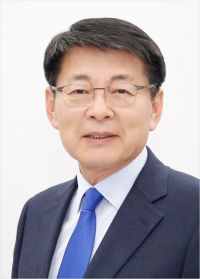 Seo Samsuk, member of the Democratic Party of Korea.
Despite the introduction of a direct payment system by the government to enhance the public benefit functions of forests, there have been limitations in the participation of forestry workers, prompting legislative amendments to address this issue.
Seo Samseok, a member of the Democratic Party of Korea representing Yeongam, Muan, and Sinan in South Jeolla Province, announced on the 24th that he had submitted four proposed amendments as the lead sponsor, including the "Act on the Operation of Direct Payment System for the Enhancement of Public Benefit Functions of Forestry and Forests," the "National Finance Act," and the "Special Account Act for Improving Agricultural and Fishing Village Structures."
In 2021, the government enacted the "Act on the Operation of Direct Payment System for the Enhancement of Public Benefit Functions of Forestry and Forests" to promote various public values such as water source conservation, air purification, disaster prevention, recreation and healing, conservation of forest biodiversity, preservation of forest landscapes, and carbon absorption. Under this law, direct payments (hereafter "forestry direct payment system") are provided to forestry workers engaged in the production of forest products or silviculture.
However, participation in the forestry direct payment system by forestry workers has been slow. As of the end of last year, only 20,336 payments had been made, which is just 10% of the total forestry household population of 199,801. The eligible area also amounted to only 64,873 hectares, which is 2% of the total 4,162,196 hectares of private forests.
One reason for the low participation in the forestry direct payment system is the uniform payment criteria. While there are four types of direct payments in agriculture and six in fisheries, the forestry direct payment system is provided solely based on area to those engaged in the production of forest products such as jujube and chestnuts or in silviculture, leading to criticisms that this limits participation.
In addition, despite policies encouraging people to move to mountain villages, the depopulation of these areas has continued to accelerate each year. Last year, the mountain village population was 1,403,045, a decrease of 166,851 (10%) compared to 1,569,896 nine years ago. Meanwhile, the number of people who moved to mountain villages fell by about 20,000 (30%), from 69,244 to 49,310 over the same period.
The proposed amendments would allow direct payments to be made for the production of eco-friendly forest products and for planting nectar-producing trees that serve as sources for honey. They would also introduce a "mountain land bank" system, similar to the farmland bank that leases farmland, to lease mountain land.
Seo stated, "Unlike agriculture and fisheries, in forestry, payments are made only based on area, which leads to low participation by forestry workers and further economic difficulties, resulting in a continued decline in the mountain village population." He explained that the amendments aim to restore the public benefit functions of forests by introducing a selective direct payment system and a mountain land bank.
Meanwhile, Seo has also sponsored two other amendment bills in addition to the four bills for enhancing public benefit functions of forests. The "Veterinarian Act Amendment" stipulates that, except in cases where emergency treatment is needed for injured animals due to accidents or when the physical characteristics of elderly companion animals limit their mobility, medical treatment should, in principle, be provided within animal hospitals to ensure hygiene and safety. The "Plant Quarantine Act Amendment" allows private research institutions, such as universities, to conduct pilot studies and research on pests and diseases, such as fire blight in fruit trees, to develop vaccines.
© The Asia Business Daily(www.asiae.co.kr). All rights reserved.
















